
Posted on July 17, 2026
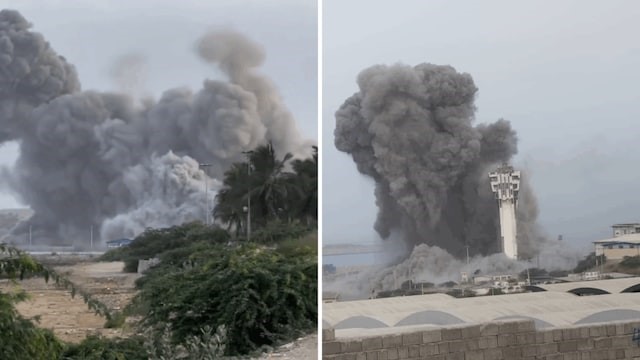
Once again, the dispute between the US and Iran has heated up, with the United States launching a new military campaign against Iran’s infrastructure in the south, namely bridges, an airport, and a train station. At least seven Iranian citizens have been reported dead, and some others have been injured due to the latest attacks. This is the most serious escalation of recent days, which may lead to a regional war.
It was revealed that the recent attack was mainly conducted around the Bandar Abbas region and the neighboring areas, close to the Strait of Hormuz, one of the most important oil-exporting channels in the world. According to CENTCOM, the United States conducted dozens of air strikes in overnight operations, targeting to weaken Iran militarily and reduce its threatening capacity towards the region’s security.
Strategic Infrastructure Comes Under Attack
Recently conducted strikes by the US have resulted in damaging a number of bridges, transport stations, and airports in the southern part of Iran. Iranian authorities have admitted that civilian facilities, such as a railway station in Bandar Abbas and some bridges in its vicinity, have been hit. Seven individuals died, whereas several other people got injured.
Bandar Abbas is an area that is of great strategic importance due to being the largest commercial port in Iran and located near the Strait of Hormuz. This territory contains some installations and logistic centers belonging to the military forces of Iran.
The information provided by the representatives of US military stated that the military objectives were the infrastructures that helped in organizing the activities connected to logistics, delivery of missiles and drones. CENTCOM has announced that dozens of targets have been destroyed within the framework of this strike.
Yet Iran has condemned these actions as assaults against civilian facilities and alleged that the U.S. has been acting in violation of international law. In addition, Iranian officials have stated that any ongoing military efforts can only result in destabilizing the Middle East and escalating the risk of broader regional confrontation.
These recent events follow days of consecutive military raids, which shows that the situation is no longer about isolated incidents, but has escalated to military action.
Rising Regional Risks and Global Economic Concerns
There are emerging new concerns about security in the Gulf region. The military operations near the Strait of Hormuz are among the major concerns for the international market since almost 20 percent of global oil supply passes through this strait.
It is possible that any disturbance in the passage of commercial ships can impact the supply of energy internationally as well as increase the cost of transportation and thus rise in oil prices internationally. There is already reaction of financial markets to the situation in the region.
There is information available that Iran has issued threats to the region about expansion of their military operations in case of continuing attacks. The officials of Iran have also said that the new steps of retaliation can target the US military posts or those assets which have been related to the United States’ allies in the region.
Diplomatic measures continue to face serious challenges even as several international governments and organizations make continued appeals for restraint. The analysts observe that both Washington and Tehran continue to be confronted by tougher choices owing to each subsequent military move which increases the likelihood of inadvertent escalation.
It is argued that military strikes on transport infrastructures create both military and economic implications as destruction of bridges, airports and railroads affect military operations but could also affect civil populations, economic transactions and emergencies.
In addition, humanitarian problems continue to escalate as civilians who live near conflict areas continue to be exposed to greater danger. Damage to infrastructure, disruption of transport services and insecurity has been observed in local communities.
International Response and What Comes Next
The governments in Europe, Asia, and the Middle East are paying attention to what is going on here. There have been appeals from several nations urging the US and Iran to be cautious, restrains from violence, and go back to negotiation talks.
International observers say that the prolonging of military activities would mean more than just another blow to Iran. The tension that will result from this could impact maritime commerce, logistics, air travel, and energy sector worldwide for months to come.
Military experts say that the course of events in the future will be determined by how one side decides to strike back or negotiate with the other. While the US says that the operation aimed at reducing security threats, Iran insists that this was an invasion of its territory.
This is one more proof of how rapidly the security environment in the Middle East is changing, where a military strike not only has consequences for the region under attack, but even for its neighboring regions and globally. With each passing day, the likelihood of additional military engagements is becoming higher.
Some international sources still claim that diplomatic lines are open, but it seems that negotiating anything becomes harder with each passing day due to the ongoing violence. It will become clear soon what will happen next.
Conclusion
These recent attacks by US military forces against various strategic targets such as bridges, an airport, and railways within Iran signal yet another important escalation in this conflict between the two nations, and with the reports about the deaths, destruction of infrastructure, and heightened tensions in the region, this conflict now has serious implications.
With the continuing military operations and the lack of progress in diplomatic negotiations, the rest of the world continues to watch out for any potential escalation of this situation.
Get more insights about international conflicts and developments by visiting our news section.