
Posted on August 13, 2026
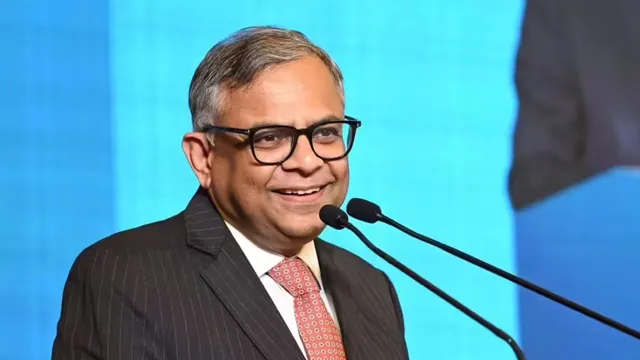
According to expectations, Tata Group will experience a leadership change soon since N Chandrasekaran has confirmed that he will not be seeking reappointment as the chairman of Tata Sons after his current tenure expires in February 2027. The N Chandrasekaran Resignation marks a significant development for the Tata Group and has drawn attention to the company’s future leadership. The news has come prior to Tata Sons’ annual general meeting set to take place on August 18, 2026, and marks the beginning of a new era for one of the most powerful business groups in India.
N Chandrasekaran has been serving as the chairman of Tata Sons since 2017. The N Chandrasekaran Resignation marks a significant leadership development for the Tata Group. Having spent about four decades with the Tata Group, he worked at Tata Consultancy Services (TCS), where he became its CEO prior to taking the top leadership role at the group. The leadership transition took place after Cyrus Mistry was sacked from the position of the chairman.
Why N Chandrasekaran Decided to Step Down
This is very important news as the resignation of Chandrasekaran is linked with the uncertainty about his reappointment. As per the reports, a plan to give him an extension of his appointment for five more years was not unanimously supported by the board of Tata Sons. Accordingly, Chandrasekaran announced that he will not put forward himself for reappointment when his term expires in February 2027.
It is noteworthy that the resignation from his position does not imply the fact that he will quit Tata Sons. According to the plans, he will serve as the chairman of the company until the expiration of his term, thereby giving the group sufficient time to find a new leader.
It also brings into light the differences amongst the key players in the Tata organization. The Tata Trusts own a controlling 66% in Tata Sons and have played a key role in the debate surrounding the leadership of the company. The reports suggest that there have been differences amongst the parties in relation to various matters like listing of Tata Sons, performance of Air India and other business decisions.
The timing makes the whole issue even more significant in light of the upcoming AGM of Tata Sons.
Chandrasekaran’s Legacy at Tata Group
During N Chandrasekaran’s decade-long leadership, his tenure has been characterized by aggressive expansion and transformation efforts. With his background in the technology industry, he found himself at the helm of a highly diversified conglomerate that had interests in automobiles, information technology, steel, aviation, hospitality, consumer products and many other industries.
Some of the most prominent initiatives under his leadership include Tata’s foray into aviation through its investment in Air India and integration of Vistara as part of a wider aviation platform within the Tata Group. His support to investments in new frontiers like electronics, semiconductors and digitization has shown how the group was trying to create new avenues for growth.
His tenure at the Tata Group has seen a complete overhaul of priorities both financially and strategically. While on one hand many businesses and investments have been created for the Tata Group’s long-term growth plans, there have been challenges in certain businesses that include losses and challenges in certain industries. Air India’s turnaround, Tata’s technology businesses and global operations will be key concerns for his successor.
The timing of Chandrasekaran’s exit is thus very complicated. For the Tata Group, it is not just about finding someone to replace Chandrasekaran; it needs to find someone who can walk the thin line between its existing business and its substantial investment in the future while coordinating all activities at Tata Sons, Tata Trusts, and other Tata Group firms.
Chandrasekaran’s exit could also generate investor interest. After the news of his exit became public, stock prices of various Tata Group companies were affected, which shows how linked the market is to his leadership.
What Comes Next for Tata Sons?
The most pressing concern at this point is that of the successor for Chandrasekaran. Tata Sons will have enough time to look for a suitable candidate who will be able to build trust among all stakeholders and carry forward the existing legacy while dealing with emerging challenges.
The importance of succession planning is particularly pronounced in view of the fact that Tata has a history of leadership conflicts. The changeover from Ratan Tata to Cyrus Mistry and later on to Chandrasekaran proved that this could be a very sensitive issue for the group. Hence, this appointment will be keenly watched by the staff, shareholders, business associates and corporate world in general.
It will be a time of great responsibility for the incoming chairman as Tata is well-established in sectors like technology, automobiles, aviation and industrial sectors. At the same time, he or she will need to review the issues of capital investment, profits, competition globally and the future of Tata Sons.
The other key issue concerns the possibility of listing the holding company. The problem of whether the company ought to be listed in the end has significant strategic and shareholder ramifications. The way the group would tackle this issue could turn out to be a key point for the next chairman to address.
It is crucial that Tata keeps its calm in the process of change. The company boasts good reputation and diversified portfolio, yet its future largely depends on how well the leadership transition would go.
Conclusion
The decision by N Chandrasekaran to forego a second term as the chairman of Tata Sons is one significant turning point in the Tata Group’s history. This comes after more than four decades spent working for the company and about ten years as its head, which has been characterized by growth, transformation, and investments in innovative sectors.
While N Chandrasekaran will serve as the chairman until February 2027, the succession process will become an important matter in Tata Sons. The success of the Tata Group in picking a competent successor will be very important for its future development.
These next few months may be critical for Tata. As the conglomerate is gearing up for a new chairman, there is considerable interest from the investment fraternity about whether the company can continue its tradition while developing a successful strategy for its next stage of growth.
Stay one step ahead with the latest updates on Indian business, corporate and industry news.