
Posted on August 26, 2026
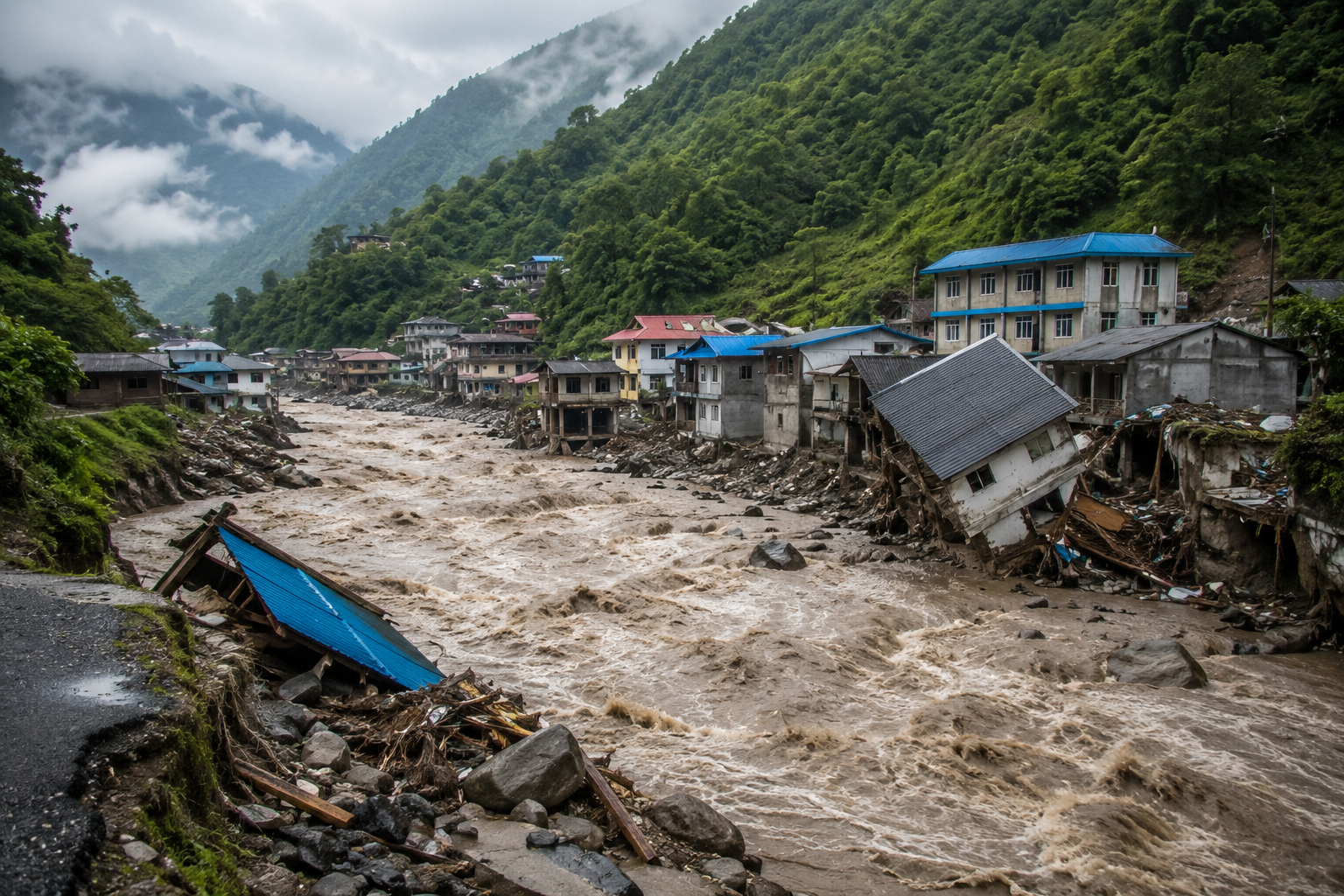
There have been numerous Nepal flash floods damages in the Himalayan region, as many villages have been washed away by rapidly rising waters in the Nepal-Tibet border region. These Nepal flash floods have hit parts of Rasuwa district, especially Syapru Besi and Timure, creating fears of loss of life and prompting rescue personnel to assess the extent of the damage. Rescue and relief efforts have been initiated as officials search for missing people and evacuate residents at risk.
These floods have happened in the fast flowing Bhote Koshi River, which passes through the Himalayan mountainous region.
Nepal Flash Floods Cause Severe Destruction in Himalayan Region
The flash flood events in Nepal have caused destruction of properties, villages, roads, bridges and project sites in Rasuwa District. Some of the places that have been hit hard by the flash floods include Syapru Besi and Timure, while destruction of transport infrastructure has rendered it hard to access some locations.
The area has several transport and energy projects within the region since it is close to the Nepal-China border. Destructive flash floods will cause more problems to relief efforts while disrupting the movement of people, aid and equipment. The Bhote Koshi River rises from Tibet and passes through Nepal’s mountain terrain. The mountainous and hilly terrain make such an area prone to destructive flash flooding since a quick rise in water level causes flooding very quickly.
Officials have asked residents in the nearby areas to relocate themselves to safer zones. Police and military personnel have been sent to assist in the rescue and relief mission, while officials are still evaluating the extent of damage caused by the disaster.
Currently, the total casualties and missing persons are unknown. However, officials believe that the effects will be severe especially given that some of the affected regions are hard to access. This creates logistical problems for emergency services in trying to assess the situation and provide help.
This incident has demonstrated the susceptibility of Himalayan communities to such natural disasters. Settlements in such communities are established in the valley area due to the geographic nature of the Himalayas. However, such settlements become highly risky during sudden floods.
There is also the potential for the damage of the hydropower development projects in the region and its associated effects. Nepal depends highly on hydropower development, which will result in the loss of local jobs and even infrastructural development.
Rescue Operations Continue as Flood Risks Remain High
The response to the current Nepal flood disaster involves efforts aimed at rescuing lives as well as finding any trapped people. The emergency team is making efforts to evaluate the affected areas and is advising people who live in dangerous areas to stay vigilant and follow all the evacuation guidelines.
This latest disaster has added to the worry about the safety and sustainability of the area because the Bhote Koshi river region had already faced flooding in 2025. This disaster led to casualties and loss of many people, not to mention the damages that took place to the Friendship Bridge between Nepal and China. This flood disaster has highlighted the vulnerability of the Himalayan area to sudden floods.
This repeated flood disaster is another indication about the general environmental dangers surrounding the Himalayas. Sudden flooding might happen in cases of heavy rainfall and sudden rise in the river level, as well as sometimes as a result of water discharge from high altitude glaciers.
Early warnings could prove useful for people staying in remote mountain areas as a few minutes could help them shift from the riversides and other hazardous sites. But apart from early warnings, an effective response also requires adequate communications networks and good road connectivity and bridges that would enable the rescue workers to access the affected communities.
These problems are made even more difficult by the geographical conditions in Nepal. Roads could be very small and susceptible to landslides and floods, while bridges would play a vital role in linking communities with medical facilities, markets, and rescue teams. Destruction of these channels would make it extremely hard for the rescue parties to get in touch with the affected people.
In essence, these flash floods in Nepal go beyond being a weather emergency situation. There is a need for improving disaster response strategies and developing resilient infrastructure in the Himalayan communities. This way, there will be more opportunities for authorities and communities to put flood-monitoring and evacuation channels in place.
With ongoing efforts for rescue, officials have to offer further details on casualties, missing individuals, people displaced, and damaged infrastructure. However, the situation is developing, and the full extent of its consequences can be known after emergency services are allowed access to the areas that are flooded.
Final Thoughts
The floods in Nepal are another major tragedy that is happening to communities located in the Himalayas. Villages are being washed away and there are casualties involved. The first thing that needs to be done is the rescue and evacuation of victims.
The floods show us again how dangerous life can be for communities that live near fast-flowing rivers in the Himalayas. Proper warning systems and planning will be necessary in order to minimize the damage of such disasters in the future.
Stay Informed with the Latest Breaking News, Global Events, and Important World Updates.