
Posted on September 11, 2026
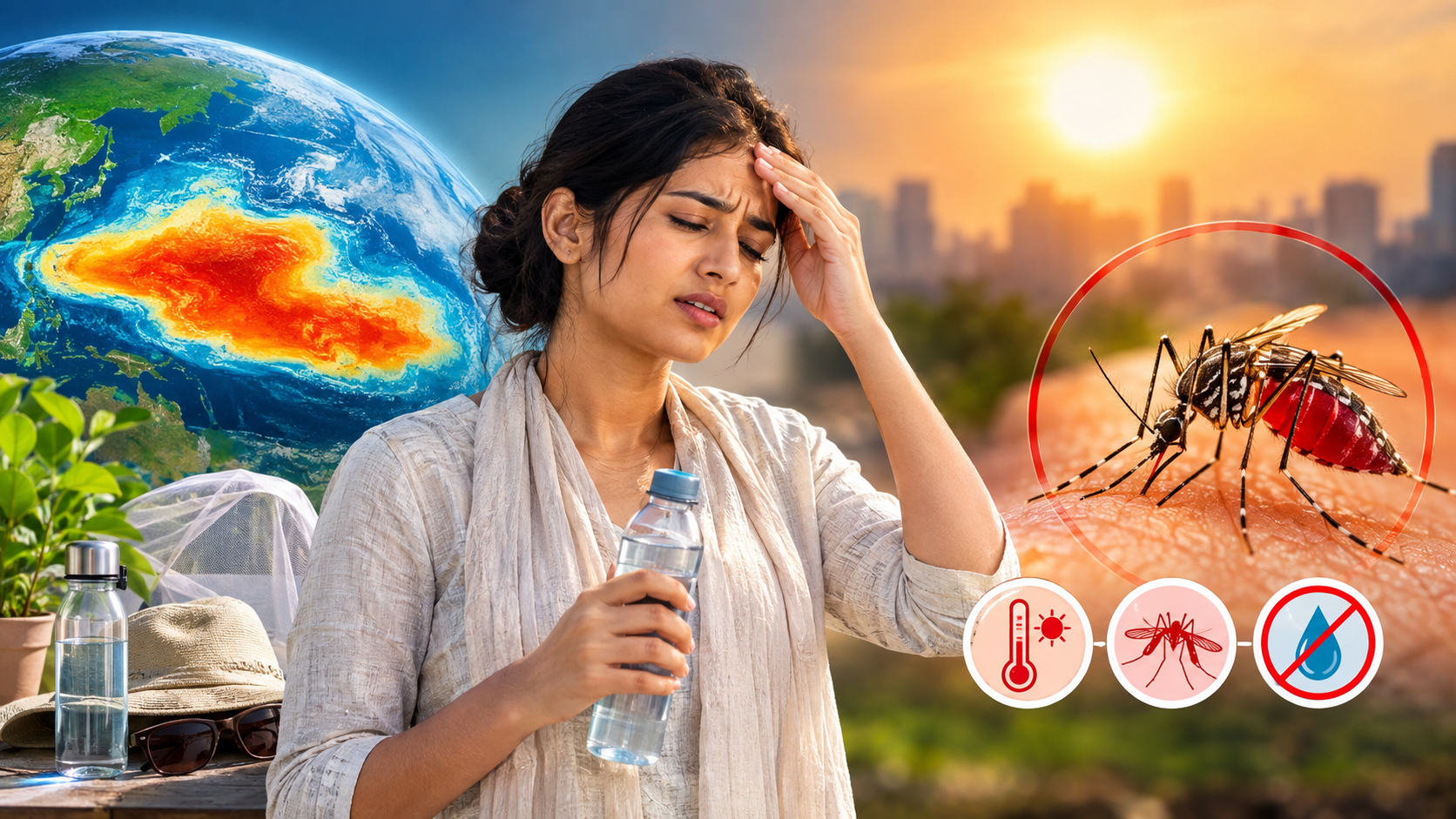
The effect of El Nino and dengue cases in India has emerged as a growing public health concern, considering the possible effects of changing weather on heat, precipitation, and mosquito-borne diseases. Experts believe that the emergence of El Nino could create conditions that contribute to heat waves and increase the risk of dengue and other diseases. In addition to heat waves, individuals may experience dehydration, heat exhaustion, heatstroke, and infections because of unpredictable weather conditions. Being informed about these risks can help individuals and communities take appropriate preventive measures.
El Nino is a phenomenon characterized by the increased temperature in the waters of the central and eastern part of the Pacific Ocean. Despite the fact that El Nino does not occur within India, it may affect the weather all over the globe. The World Health Organization reports the following effects on health: heat stress, disease outbreak, food and water insecurity and many others.
How El Nino Can Affect Dengue and Heat-Related Health Risks
There are many aspects that are of great concern regarding El Nino and dengue cases in India. Rainfall and temperature patterns might undergo change as far as the El Nino phenomenon goes, and the same may have adverse impacts on the dengue infection in India since dengue is mainly transmitted through Aedes mosquitoes, which breed in the stagnant water in homes and workplaces.
Climate does not affect dengue transmission in India in just one way. Temperature, rainfall, humidity, and mosquito breeding conditions can interact and influence the prevalence of the disease. Understanding the relationship between El Nino and dengue cases in India is therefore important because changes in environmental conditions may affect mosquito populations and disease transmission. WHO has highlighted the connection between climate variability and infectious disease risks, while dengue remains a significant public health concern worldwide.
Health impacts of the El Nino phenomenon are not limited to mosquito-borne diseases. Long or intense exposure to heat might lead to dehydration, heat exhaustion, and heat stroke in some individuals. This is especially the case for people working outdoors in the sun. Such occupations include construction workers, farmers, traffic police, and so forth.
Moreover, children, the elderly population and patients suffering from specific health conditions can also suffer more during the time when there is an excessive heat. According to WHO, the extremes of heat weather can cause additional problems for people suffering from heart-related diseases, respiratory issues, kidneys and other health problems.
However, an additional problem is associated with an abnormal amount of rainfalls. The reason is that in some locations, there will be water shortages, while in others – too much rain and flooding. This fact, combined with unsanitary conditions and polluted water sources, can lead to infections, including gastrointestinal diseases.
Such problems can also affect daily activities, causing difficulties with falling asleep and working on outdoor tasks. Thus, extreme heat can turn into a serious health issue and even social problem.
How to Reduce Dengue and Heat Illness Risks
Whereas it is impossible to control climate conditions individually, there is a lot that can be done in terms of prevention of most of the health problems. One of the key steps for preventing the spread of dengue is the prevention of mosquito breeding grounds. It means that water should not be kept in buckets, plant trays, empty containers, tires, coolers, etc.
In case the danger of dengue exists in particular area, people need to use repellents, to wear clothes which do not expose any parts of their body and use mosquito nets where possible. One should remember that AeDES mosquitoes bite even in daytime and protection measures should not be limited to nights.
Protection from heat is also very important. People should drink enough water and stay away from direct sun in the middle of the day. Special clothes will help the body to keep its temperature lower.
Those working outdoors should ensure that they make breaks and have water available. It is also vital that families ensure that they give special consideration to their children and older family members during times of extreme heat.
It is important for one to know how to identify signs of illnesses. These include severe weakness, dizziness, confusion, extreme thirst, fainting, or dehydration symptoms during extreme heat. Other symptoms include a continuous fever, body pains, vomiting, bleeding, or weakness. These symptoms may call for consultation especially in areas where there is a breakout of dengue.
It is important that individuals refrain from self-diagnosis of any disease including dengue. This is due to the fact that a health practitioner will tell whether testing is required.
Conclusion
The potential relationship between El Nino and dengue cases in India illustrates how climate patterns and public health can become closely interconnected. Variations in temperature and rainfall may contribute to heat-related illnesses and create environmental conditions that influence mosquito-borne diseases such as dengue. While El Nino itself cannot be controlled, individuals and communities can reduce potential risks through mosquito control, adequate hydration, heat protection, safe water practices, and timely medical attention.
Being prepared before the situation becomes critical is important. A little bit of prevention at personal level and community level can go a long way in safeguarding oneself from both heat related and mosquito-borne diseases.
Be aware of changes in weather and health risks, take precautionary measures and see your doctor immediately in case of any symptoms of diseases.