
Posted on September 28, 2026
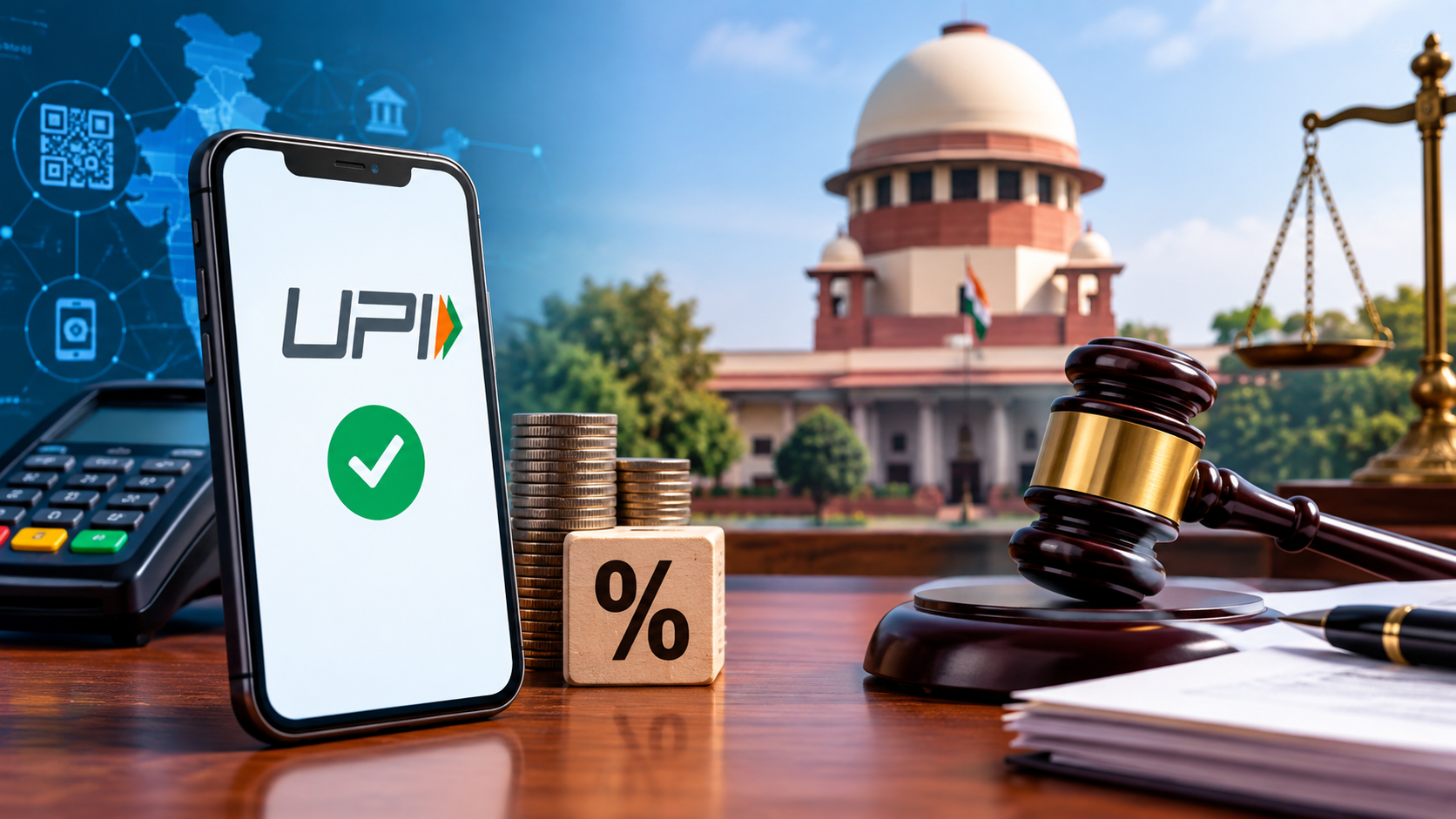
The Supreme Court’s questions have added a new dimension to the debate on UPI MDR charges regarding the legality and rationale of the Merchant Discount Rate (MDR) charged for some high-value UPI transactions made by merchants. On 28 September 2026, the Supreme Court rejected an interim stay on the newly proposed framework by the government but demanded clarification regarding the nature and legitimacy of the charge.
It is worth mentioning that the use of UPI was always a cheap way of conducting financial transactions digitally. But now in the case of government regulations, there will be an alteration in the position of some merchant transactions, while the person to person transactions will remain unaffected. The Ministry of Finance of the Government of India says that it is neither a tax nor a fee. It is merely a sharing of the cost among participants in the payments network, which includes banks and providers of payment apps.
What the New UPI MDR Framework Means
Under the new framework, all individual transactions made through UPI will continue to remain free irrespective of their value. Merchant transactions of up to ₹2,000 will also remain free within the context of the proposed framework. According to the government, about 96% of all person-to-merchant UPI transactions will continue to remain free while those beyond ₹2,000 will attract MDR.
In case of eligible transactions, the standard MDR would be 0.4%, with a ceiling limit of ₹300 per transaction amounting to ₹75,000 and higher. Some sectors such as railways, telecom, insurance, and fuel will use fixed charges a fixed price. There are also special provisions for some financial market transactions under the framework.
This is important in the context of UPI MDR charges because the proposed change does not imply that all UPI transactions will begin attracting a fee. The clarification by the government makes it clear that person-to-person transactions, smaller merchant transactions and certain exempt merchant categories are excluded from MDR.
Introduction of MDR is linked to the general issue of financing the rapidly developing payment ecosystem in India. Companies involved in making the transfers have costs associated with technology, processing, compliance, and other infrastructure-related expenses during providing services under the UPI system. This reform has been labeled by the government as an attempt to ensure the sustainability of the ecosystem.
However, along with this, there are also legal and policy issues associated with the development. Petition filed at the Supreme Court contests the decision of the Centre and the use of the statutory instrument to implement the MDR regime. Moreover, the petition also claims the power delegated under the Payment and Settlement Systems Act, 2007 was exceeded.
Why the UPI MDR Legal Review Is Important
With the hearing that happened on September 28 in the Supreme Court, there has come a lot of focus on one basic question, which is – What would be the exact nature of the MDR if it cannot be classified as either tax or government fee? In the hearing, Justice Joymalya Bagchi questioned the government’s lawyer regarding the nature of the levy. The court asked the government to clarify about the basis of the levy by filing an affidavit.
In this matter, the Supreme Court has not stayed the framework for now. It rejected the application for an interim stay and issued notice. This means that the legal case remains pending, and the hearing does not represent a final judgment on whether this charges under the new framework are legally valid.
As far as the merchants are concerned, it becomes relevant now how this new system will affect their payment costs and operations. The framework, as mentioned, is for merchant-side payments and not for person-to-person payments. Ultimately, the economic impact will depend upon the response of the payment providers and banks.
There is also the larger question of India’s digital payments system. The rise in the adoption rate of UPI has been attributed to its efficiency and low cost nature. By making MDR applicable to some of the transactions, the country introduces an entirely new economic system in which payment system stakeholders earn a fee for certain types of transactions. The proponents of the system can justify its need on the basis of the need to sustain the infrastructure, whereas the legality concerns the statute and the way the fee has been applied.
To the consumer, the immediate impression of the move by the government is that most of the use of the payment system remains exempted. Person-to-person transfers will be free of charge, and even merchant transfers of up to ₹2,000 will be exempted from the MDR.
Final Thoughts
The Supreme Court hearing on MDR charges introduces another critical legal angle to the ongoing discussion about this. The apex court has not reached a decision regarding the legality of the new framework. Until then, the government has to clarify the reasoning behind and nature of MDR, while the updated framework is slated to be implemented for certain transactions starting from October 15, 2026.
The upcoming proceedings of this case would thus matter for merchants, payment platforms, banks, and users who are waiting to see how much it is going to cost to use digital payment services in India.
Stay tuned for updates on India’s economic, digital payments, and financial landscape from our latest business and finance insights.