
Posted on April 4, 2026
Due to increased tensions between the USA and Iran, Iranian forces have hit several USA military aircraft so directly that a very dangerous rescue operation is needed and there is an escalating international crisis. This is a turning point in the war after 5 weeks, and many questions arise regarding how the next engagements will go and what strategy to use in future conflicts.
What Happened?
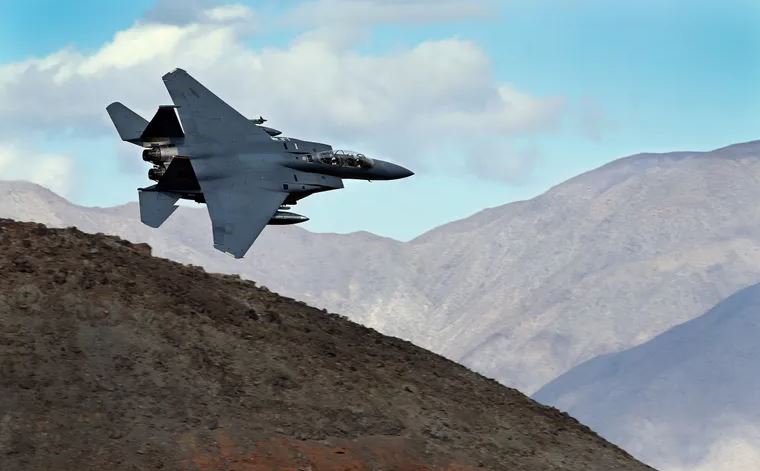
Iranian air defense forces successfully destroyed two United States warplanes separately flying through Iranian airspace and actually within Iranian territory on Friday, April 3, 2011. The first aircraft (U.S. Air Force F-15E Strike Eagle) was shot down while engaged in operations (operationally defined as flying with an objective) inside of Iran. The aircraft had a two-member crew consisting of a pilot and weapons system officer. Unfortunately, the aircraft crashed to the ground within Iranian territory.
As a result of this incident, U.S. and allied military forces have begun an immediate search and rescue (SAR) operation to recover the downed crew members. As reported by U.S. military and media sources, one member of the crew has been extracted by U.S. special operations forces and is currently in the custody of U.S. forces receiving medical care. However, the remaining crew member is still missing and the United States military continues its efforts to locate and recover them despite extremely difficult and dangerouse conditions.
Second Plane and Additional Attacks
An A-10 Thunderbolt II attack aircraft, which was flying in operational combat; was also damaged by enemy fire. Fortunately, the crew was able to successfully eject from the aircraft and was rescued (in Kuwaity airspace). This incident is one of the few success stories regarding United States Air Force aviation developments in the region.
Also, two Black Hawk helicopters from the United States were downed by Iranian ground fire while conducting search and rescue operations. Fortunately, both helicopters were able to depart Iranian airspace and were able to return to base without any injuries onboard.
The Missing Crew Member
Authorities haven’t been able to determine if the missing airman is still alive, and if so, where they may be located. U.S. officials won’t say for certain whether the individual has been killed or if they are safe, but there are enough conflicting reports that it is reasonable to conclude both possibilities exist.
The government of Iran has requested that its citizens help locate the missing airman and may offer rewards for any useful information provided about their whereabouts. Iranian state-run media and other pro-Iran outlets have indicated at times that the missing airman may have already been taken hostage by Iranian forces or that U.S. attempts to rescure them have been interrupted.
However, no evidence has been produced to support these assertions and there is widespread disagreement between U.S. and Western sources with respect to Iran’s claims about the missing airman.
Strategic and Political Implications
In the history of U.S. military operations on land, there’s never been this large a number of American airplanes shot down by an enemy in another country’s territory. Shortly before this happened, U.S. military leaders publicly asserted that they had destroyed Iran’s ability to use its airplanes for air assaults against U.S. and coalition forces, and that Iran had no more “air defense.” The shooting down of these jets holds the potential to destroy those assertions and demonstrate how Iran can maintain its capability to use missile and air defense systems against U.S. forces.
The incident has also created an increase in political tension within Washington. The statements of U.S. officials communicating to the President and senior officers indicate that the President has been briefed about this incident; as a result, there are an increasing number of political and military officials calling for a clearer strategy with respect to using force against these Iranian targets. The loss of aircraft and crew members, along with the uncertainty of whether or not the missing crew member was a casualty, has created an increase in domestic political pressure on how the U.S. has conducted itself in this conflict.
The Larger Conflict
The recent incident is another chapter in the overall conflict that has encompassed U.S. and Iranian military activities involved there is also a multitude of other countries (partners) engaged in this region. The combination of U.S. airstrikes, Iranian retaliation and the continued use of proxies has created a critical situation where the potential exists for additional escalation due to the number of variables involved. Experts indicate that downing a U.S. fighter could change how operations are performed in international airspace, and require an evaluation of all airman tactics employed in that arena.
Conclusion
An Iranian military strike against U.S. aircraft over Iran resulted in two of the downed pilots being rescued, with one pilot still missing. While search-and-rescue operations are ongoing, and there is diplomatic discussion around both negotiation and potential escalation, there’s no doubt that the situation has entered a critical, sobering phase of an escalating conflict. There is considerable international attention directed at the events and evolving circumstances due to the fact that each evolving situation can have an immediate and great influence on both regional stability and global security.