
Posted on March 5, 2026
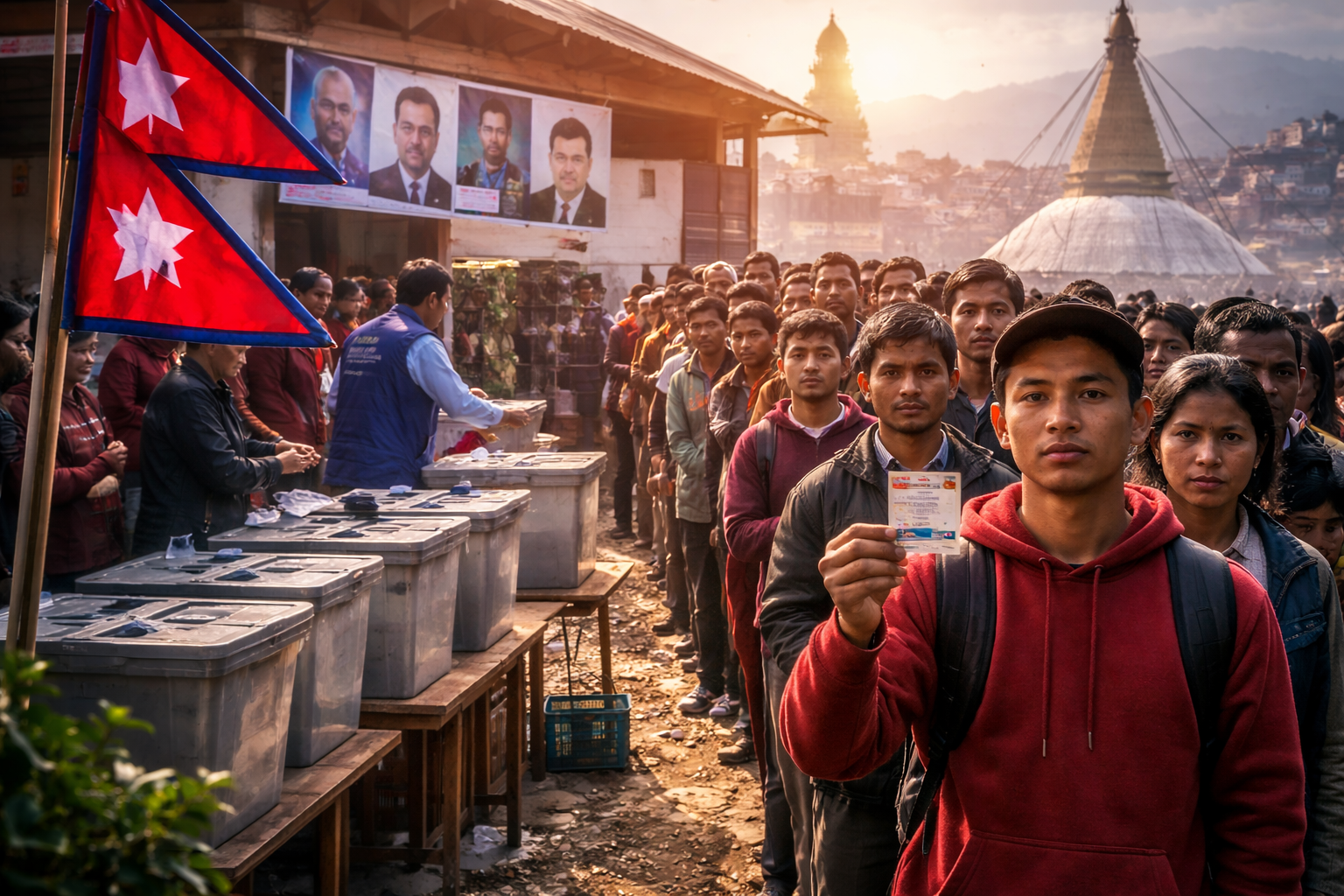
The nation of Nepal is in a political transition as voters go to polls in the 2026 general election, which is the first election since massive protests forced the resignation of the previous prime minister, K. P. Sharma Oli. The election is being seen as a crucial event in South Asia, particularly Nepal, as it could redefine the political landscape of the nation after months of unrest.
Close to 19 million voters are eligible to take part in the election to elect members of the 275-member House of Representatives in one of the most important democratic processes in Nepal in recent years.
Why the 2026 Nepal Elections Are So Important?
The 2026 election follows the violent protests of 2025, in which thousands of young Nepalis demonstrated on the streets against corruption, unemployment, and poor governance in the country.
The protests had taken a violent turn after the government’s move on social media restriction policies sparked anger in the young population of the country. The protests had resulted in the deaths of 77 people, and many had been injured, prompting Prime Minister K. P. Sharma Oli to resign from his position.
An interim government has been formed in the country after the political crisis, and the test for the traditional political leadership in the country or the emergence of new political forces from the protests will be in the elections scheduled for 2026.
Key Political Leaders and Parties in the Race
Some of the prominent political personalities and parties are in the race for the election.
The key candidates for the election are:
- Pushpa Kamal Dahal, popularly known as “Prachanda,” leader of the Communist Party of Nepal (Maoist Center).
- Sher Bahadur Deuba of Nepali Congress
- P. Sharma Oli of the Communist Party of Nepal (Unified Marxist-Leninist)
- Balendra Shah, a young political leader and a reformer, is a new political face in Nepal.
Of all these candidates, Balendra Shah, a 35-year-old politician and a rapper, is popular among young voters seeking political reforms in Nepal.
How Nepal’s Election System Works
Nepal uses a mixed electoral system in which two methods are used to elect lawmakers.
The following is how it works:
- Total seats in the House of Representatives: 275 seats
- Direct election through the first-past-the-post method: 165 seats
- Proportional representation: 110 seats
This allows voters to vote for one candidate in their local constituency and another for a political party.
Role of Youth and Gen Z in the Election
One of the most distinguishing characteristics of the 2026 election is the role played by Gen Z voters.
An additional one million voters have been registered on the electoral roll, and they include young people who took part in the protests.
Youth voters are seen as a decisive force in a number of constituencies.
Some of the expectations of young voters include:
- Stemming the tide of corruption in government
- Providing more employment opportunities
- Ensuring transparency in governance
- Promoting political accountability
Some young voters feel that this election could mark a new chapter in Nepal’s political history.
Why the World Is Watching Nepal’s Elections
The 2026 election not only has implications for Nepal but also has regional importance.
The political stability of Nepal has implications for other countries in the region, such as India and China, because of Nepal’s position in the Himalayan Mountains.
The impact of the election results is said to be felt in the following areas:
- Nepal’s economic policies
- Regional diplomatic ties
- Nepal’s development ties with regional countries
- Domestic political stability
The election is not just for a new government but also has implications for the future of Nepal itself.
What Happens Next?
After this, the counting of votes will commence, and results can be expected within a day or so. Parties will then start negotiations to form a government if none of them achieves a majority.
The results will show whether Nepal will continue with the same politics or whether there will be a new form of politics, led by Gen Z, inspired by the protest movement.
This election is a big opportunity for millions of Nepali citizens to determine the future of Nepali politics.
Look out on our page regularly for the latest international politics, elections, and news updates.