
Posted on March 2, 2026
In a dramatic escalation of Middle East conflict, Iran has entered what analysts are calling “survival mode” following the assassination of its long-time Supreme Leader Ayatollah Ali Khamenei in a joint United States and Israeli military strike in Tehran. The shock-waves of this operation are reverberating across the region, threatening broader instability and a recalibration of geopolitical alignments that have defined the area for decades.
Khamenei, 86, who had helmed the Islamic Republic since 1989, was killed when coordinated airstrikes hit his secure compound in central Tehran. Satellite images circulated by international news agencies showed his residence reduced to rubble, confirming reports that the strike was precise and calibrated to eliminate the cleric and high-level regime officials.
In state broadcasts shortly after the attack, Iranian authorities announced a 40-day period of national mourning, a traditional Islamic response to the death of a leader of Khamenei’s stature. The announcement underscored the gravity of the moment in Iranian society, where Khamenei had been the ultimate religious and political authority for nearly four decades.
A Leadership Vacuum and Survival Strategy
With the Supreme Leader gone, Iran’s political structure faces an unprecedented test. Constitutional arrangements activated swiftly: a temporary Leadership Council, including senior clerics and heads of state institutions, was appointed to steer the nation in the immediate aftermath. A cleric from the Guardian Council, Ayatollah Alireza Arafi, has been named to lead this transitional body, tasked with maintaining stability while the process for choosing a new supreme leader begins.
Despite the sudden vacuum at the top, Tehran insists the Islamic Republic’s institutions remain intact. State officials and advisers have emphasised that Iran’s military especially the powerful Islamic Revolutionary Guard Corps (IRGC) and civilian government organs continue to function, suggesting the regime’s core structure will endure even as leadership negotiations play out behind closed doors.
Escalating Conflict: Iran’s Retaliation and Regional Impact
Iran’s response to Khamenei’s assassination was swift and forceful. Within hours, the IRGC announced it had launched a series of ballistic missile and drone strikes against targets in Israel and military bases housing United States personnel across the Middle East. The strikes were widely reported, with explosions heard in cities and military zones stretching from the Gulf to Israeli territory, highlighting the broader reach of Tehran’s counteroffensive.
Regional capitals such as Doha and Dubai also experienced sirens and defensive activations, underscoring the risk that the conflict could spill beyond traditional combat zones. Reports from Gulf states indicated air defenses were engaged and that civilian infrastructure faced threats, prompting some nations to close portions of their airspace.
The United States and Israel, which coordinated the strike that killed Khamenei, have publicly maintained the operation was aimed at limiting Iran’s ability to project power through its nuclear ambitions, missile programs, and support for militant groups across the Middle East. Israel’s leadership framed the mission as a necessary preemptive strike to protect itself and its allies from future aggression.
Domestic Reactions: Fear, Defiance, and Uncertainty
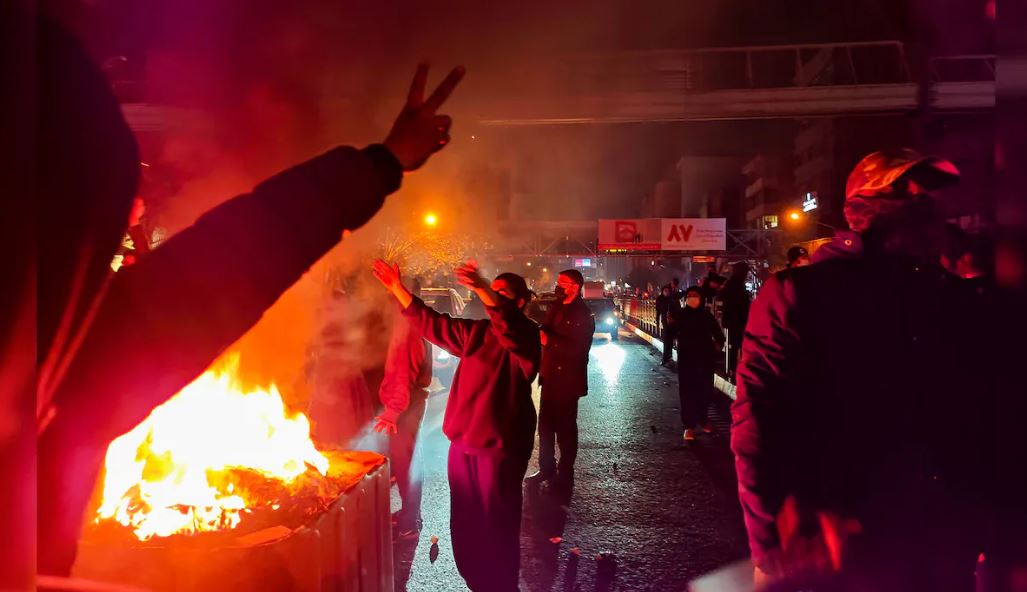
Inside Iran, reaction to Khamenei’s death and the escalation of conflict has been mixed. On one hand, state media and senior clerics have urged unity, portraying his assassination as martyrdom and a call to intensified resistance against adversaries. Hardline factions within the regime are now urging a continuation of his confrontational policies, arguing that confronting Israel and U.S. influence is central to the Islamic Republic’s identity.
On the other, there are signs of underlying anxiety among ordinary Iranians who remember only a life lived under Khamenei’s rule. Security has been visibly tightened in Tehran and other cities, with increased patrols and checkpoints appearing as authorities seek to prevent internal unrest during this highly sensitive transition. Some analysts believe Iranians may prioritize personal safety over political mobilisation in the short term due to fears of further external attacks or internal clampdowns.
Global Diplomatic Ripples
The assassination of Ayatollah Khamenei and subsequent escalation of hostilities have triggered urgent diplomatic activity worldwide. The United Nations Security Council convened emergency sessions, with global leaders expressing deep concern about the potential for a full-scale regional conflict. Many nations called for restraint and explored diplomatic avenues to de-escalate the crisis, while others condemned the strikes as violations of international norms.
European Union officials, for instance, highlighted the moment as a potential turning point for Iran’s future a scenario that could either cement further instability or open doors for internal reform if managed carefully. Meanwhile, neighbouring countries have scrambled to protect their airspaces and populations amid the unfolding military exchanges.
Conclusion: Uncertain Future, High Stakes
In the aftermath of Khamenei’s assassination, Iran’s leadership and society are navigating uncharted territory. The Islamic Republic’s ability to sustain its governance structures, manage internal tensions, and respond to continued military pressure from adversaries will shape not just Tehran’s future, but the broader geopolitical landscape of the Middle East in the months and years ahead.