
Posted on July 23, 2026
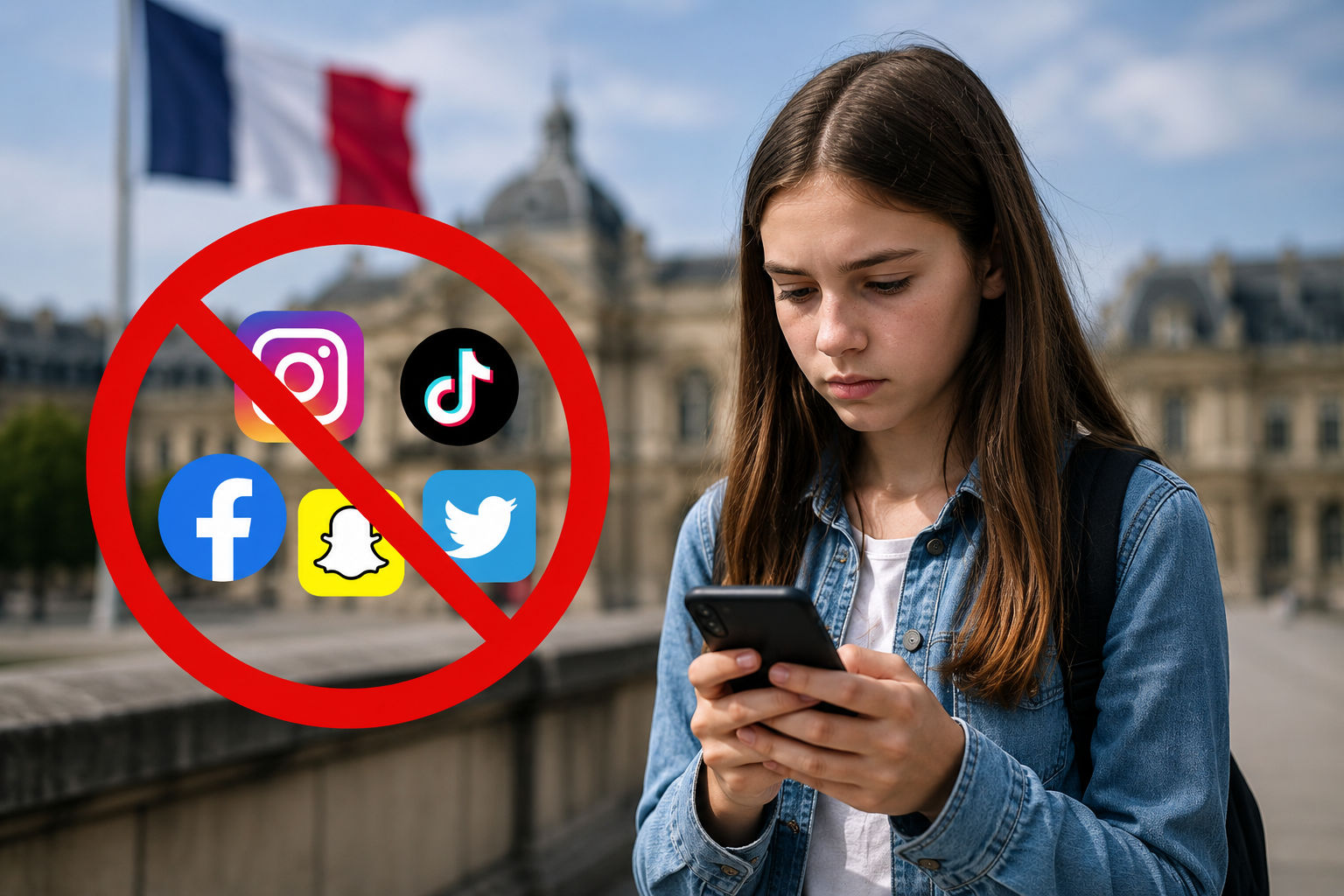
France is the first country in the European Union to enact the ban on social media use for children under 15 years of age across the nation. The new legislation is seen as the game changer in the way the governments deal with the problem of children’s protection against the dangers of social media and the negative consequences connected to that issue.
The issue of the ban became very actual as the concerns regarding the influence of social networks on the psychological and mental health of children increased among parents, teachers, psychologists, and policymakers. At the same time, the law has its detractors who see enforcement, privacy, and digital rights as problematic aspects.
Why Has France Introduced the Under-15 Social Media Ban?
Following months of discussion about the psychological and societal impact of digital platforms on children, the French Parliament enacted the law. The law states that people under the age of 15 years shall not be able to make any accounts on social media platforms anymore.
Starting from September 2026, making an account on behalf of a child under 15 years shall be illegal. Any existing accounts of people who are younger than the minimum age shall be deleted once the age verification process is implemented in the social media platforms.
Emmanuel Macron, president of France, has been a strong proponent of this bill, terming it as a vital step towards protecting children’s mental well-being and exposure to negativity online. This bill seeks to be consistent with the wider objectives of ensuring safety in the digital realm as per the EU Digital Services Act.
The bill was prompted by rising concerns about the link between prolonged usage of social media by teenagers and issues such as depression, anxiety, cyberbullying, addiction, insomnia, and low self-esteem.
How Will the New Law Work?
Unlike self-regulated parents’ controls, the new method adopted by the French authorities lays all the responsibility on social networks.
Instagram, TikTok, Snapchat, Facebook, and X will have to develop an age-verification mechanism that will enable them to identify if a user is older than 15 years of age before providing him with an opportunity to create an account or stay on their platform. There are certain educational websites and digital platforms that can be exempt from this new regulation.
Verifying the age of users without accumulating unnecessary personal data will turn out to be one of the most difficult tasks. Privacy campaigners say that the new age-verifying measures might require from social media platforms the use of ID cards or digital IDs.
It is known that technology companies have always been against age restrictions since they believe that better monitoring and improved safety functions might be even more efficient.
Global Impact and the Future of Child Online Safety
The French move will set a precedent for digital safety policies not only in Europe but also globally. In Australia, age limits were already imposed for children under 16 years old, and other European countries such as Greece, Denmark, Germany, and Austria have already started working on laws like this one. The European Union is also considering stricter rules for minor’s protection from digital technologies.
Proponents of the new regulation argue that the prevention of addiction to social networks algorithms by children will positively affect their mental health, grades at school, physical activities, and social skills. The problem of children’s smartphones’ misuse, online harassment, and exposure to inappropriate content has become more and more apparent for schools and parents.
Nevertheless, legislators warn that such regulation will not resolve all the problems. Persistent users may try to use false birthdates or some proxy servers and borrow accounts to avoid regulation. This problem occurred in countries where age restrictions were introduced earlier.
In addition to this, digital safety experts also stress the need for collaboration between governments, schools, parents, and technology firms. Enhanced digital literacy, better parental control, transparent platform rules, and overall positive online experience still form an integral part of ensuring protection for children online.
The discussion has also led to the emergence of larger issues in terms of balancing the safety of children with their right to privacy, freedom of speech, and proper technology design. With the rise of artificial intelligence and recommendation algorithms in online spaces, there is a belief that future legislation will address both age restrictions and platform accountability.
Conclusion
The French policy prohibiting the use of social media by kids younger than 15 years is among the most critical digital safety policies that have ever been enacted in Europe. The purpose of the policy is to protect kids from the negative impacts that arise from spending too much time on social media and to ensure that the kids grow up healthy.
What will happen in the future, whether the policy will become a model for other countries around the world or not, is yet to be determined. However, what is certain is that the French policy will definitely trigger discussions worldwide regarding the issue of online safety for children and governments’ role in the regulation of digital companies.
Keep up with the latest technological news and trends with our news and expert opinions.