
Posted on July 24, 2026
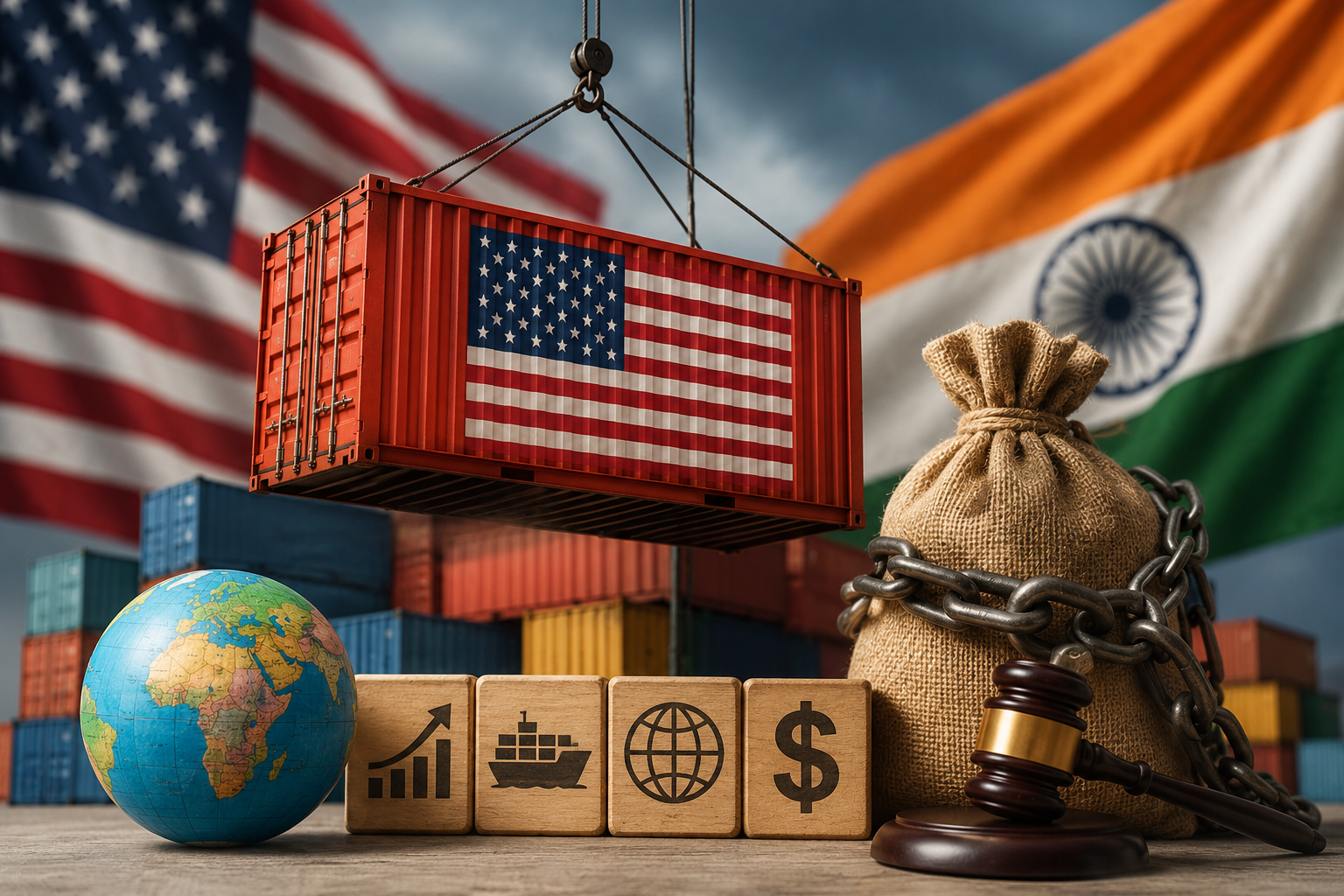
The U.S. once again has altered the global trade dynamics following the announcement made by President Donald Trump of new tariffs on countries which have been found not taking appropriate steps to deal with their supply chain’s forced labor issue. This new tariff regime, initiated under the Section 301 of the U.S. Trade Act of 1974, has imposed tariffs ranging from 10% to 12.5% on the imports coming from about 60 trading partners. Though this step is being considered as a human rights measure, its economic and geopolitical impacts cannot be ignored.
India is one of those countries on which the U.S. has imposed its tariffs recently. However, different from many other countries who have been subject to higher tariffs, India has apparently been included in the 10% tariff bracket due to recent initiatives taken by the country for handling the forced labor issue.
Now as the effects of the new U.S. tariffs are being assessed, the major question which arises is: What effect will this new U.S. tariff have on the Indian exports?
Why Has Donald Trump Introduced These New Tariffs?
According to the Trump administration, the tariffs should be used to convince countries to remove forced labor from the global supply chains. According to the officials of the U.S., the majority of the imported goods are produced in conditions where workers’ rights are violated and the tariffs are expected to push the countries to enforce their regulations.
The new tariff replaces the temporary 10% tariff that was set to expire this week. Contrary to the previous tariffs that were challenged in court, the new duties are established using Section 301 of the Trade Act which gives more solid grounds for taking such actions within the trade.
Generally speaking, countries with better systems to prevent forced labor from entering are to pay the lower 10% tariff while those countries with weak enforcement systems will be hit by tariffs of 12.5%. The list of excluded products includes energy resources, fertilizers, and products protected under current trade agreements.
However, opponents state that such a policy can be treated as another attempt to introduce protectionism rather than human rights protection campaign.
How Will the New U.S. Tariffs Impact India?
The classification of India as one of the low tariff nations does provide some respite in comparison to other countries paying high tariffs; however, exporters are bound to face certain expenses while exporting goods to the US.
These may include industries such as:
- Textile and garments
- Leather items
- Engineering goods
- Manufacturing exports
- Automobile parts
- Consumer goods
This is because the US happens to be one of India’s biggest export markets, and even a tariff of 10% will make an impact on pricing and profitability.
The Indian exporter will have to either cover a portion of this extra expense or pass it over to the consumer in America. This will cause a situation where Indian exports might become slightly more expensive than goods from countries who receive preferential treatment through trade agreements or have cheaper import tariffs.
On the other hand, the relatively lower tariffs of India compared to its competitors can be an advantage for preserving some of its export possibilities. The companies from India will still be attractive suppliers in certain industries due to higher duties of other countries.
It is believed that the Indian government will not stop working towards minimising any disruptions and negotiating other aspects of the trade. New Delhi has recently mentioned that there were talks with the U.S. side concerning tariff and cooperation issues.
Global Trade Gets into New Challenges
It has been taken in a period when global supply chains are being challenged due to geopolitical factors, policy shifts, and weak global economic growth.
Many nations have criticized the move by the U.S., claiming that the use of tariffs will negatively impact global business, thereby increasing costs for both firms and consumers. Economists have also pointed out that duties always increase costs since these costs trickle down the entire supply chain.
For multinational firms, the imposition of new tariffs will likely necessitate a redesign of their global supply chains, either sourcing products from countries where duties are low or increasing compliance in order to comply with labor requirements in the U.S.
This policy is likely to force governments around the world to tighten up their regulations concerning forced labor, transparency in the workplace, and ethical sourcing. Those companies who have already been adhering to their supply chains would be at an advantage because of this in the international market environment.
This development will emphasize the need for India to continue to improve in areas of supply chain transparency, labor compliance, and export competitiveness.
Conclusion
The current tariff imposition by President Donald Trump is not only a mere trade policy move, but it also shows that the focus is gradually shifting toward the association of trade with labour and human rights policies. Although in the short run, the imposition of tariffs will mean an increase in import duties, there may be drastic changes in the future regarding the supply chains of countries and the manner of regulation of labour.
In case of India, the better off position due to low 10% tariff will not be sufficient for retaining competitive pricing. It will largely depend on future trade talks of both New Delhi and Washington.
The next phase of trade negotiations between India and the United States is something to look out for in the coming weeks. This may prove whether this tariff imposition by both nations is going to be just a hurdle or a permanent trend in international trade.
Visit us for the latest news on world trade, India-US relations, economic policies, and business developments.