
Posted on October 7, 2026
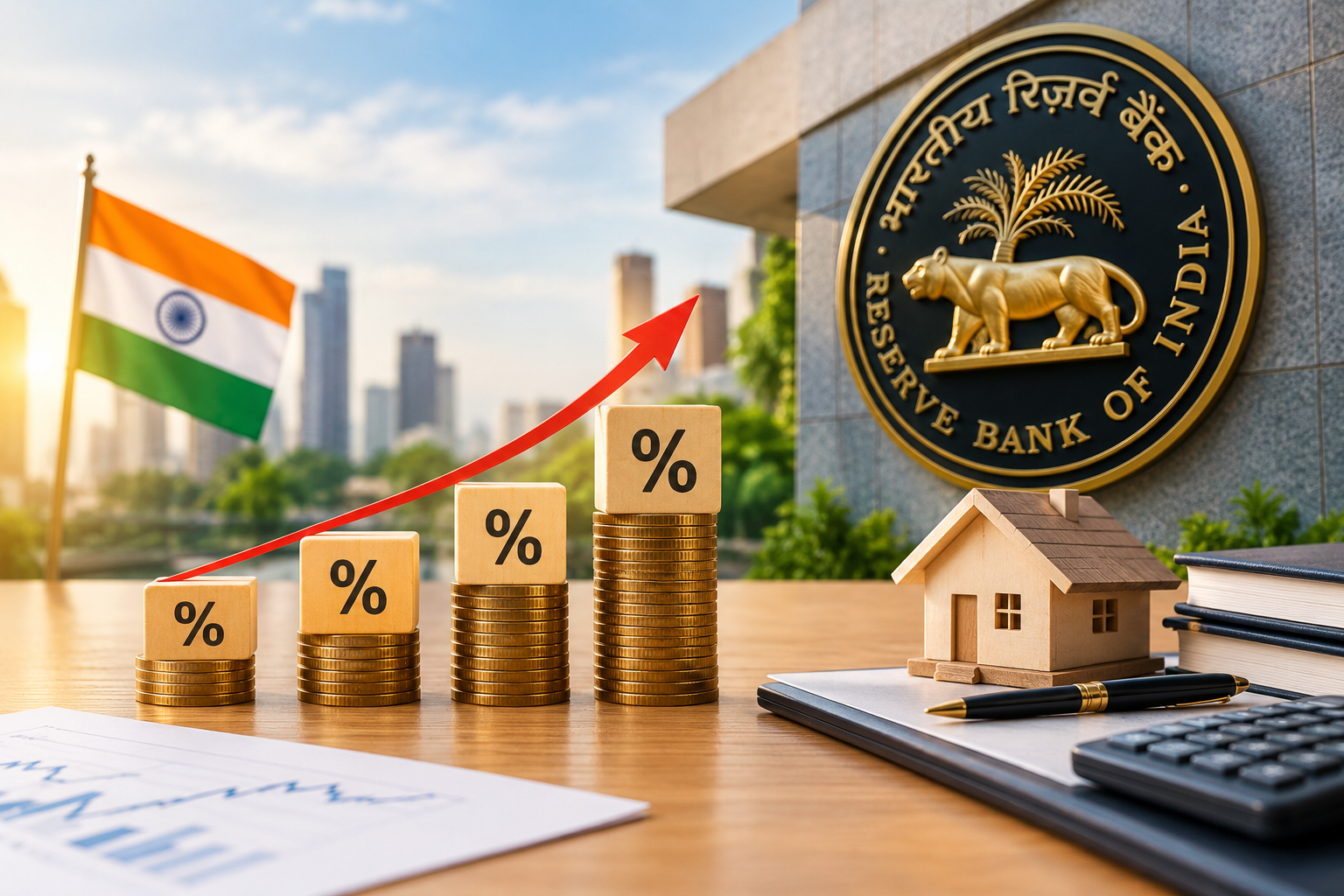
The RBI repo rate hike 2026 marks a significant change in India’s monetary policy direction. On October 7, the Reserve Bank of India Monetary Policy Committee (MPC) voted to increase the policy repo rate by 25 basis points from 5.25% to 5.50%. This is the first time when the RBI has increased the repo rate since February 2023 and marks a change in its trend after its rate-cut period.
The reason behind such a change lies in the fact that the policymakers have two things to take into consideration at the moment. First, they must maintain high economic growth, and second, they have to deal with inflationary pressures. Hence, the RBI is now adopting a policy of “calibrated tightening” instead of the neutral position before.
Why the RBI Raised the Repo Rate
October policy is a reaction to changing economic conditions. RBI kept the repo rate unchanged at 5.25% during its previous four policy meetings after lowering interest rates by 125 basis points during 2025. Nonetheless, increased cost of crude oil, inflation worries and threats to rupee make things difficult for monetary policymakers.
Crude oil plays an important role in the economy of India because high cost of crude oil in international markets may increase the costs of fuel, transportation, production and thereby the cost of goods and services in general. RBI must make sure that temporary cost increases do not translate into inflation in the long term.
This move takes place in light of robust economic performance. Economic activity in India has not suffered but has been fairly stable. Hence, the RBI has revised its real GDP growth forecast for FY27 to 7.1% from its earlier estimate of 6.7%.
With this scenario of increased growth and inflation risk, the monetary authority has more flexibility to address price stability. Hence, the decision to raise interest rate by 25 basis points is more than an ordinary monetary policy action. It is a shift from a long phase of monetary easing and stability.
From the perspective of the borrower, there is a question of how this will affect loan interest rates. Interest rates on loans could be raised slowly by commercial banks based on their funding costs and the transmission of policy actions within the financial markets. As such, home loans, business loans and other floating-rate loans will cost more.
The impact on depositors is likely to be different. Higher interest rates could eventually lead to improved earnings on specific deposit and fixed income investments but again, this will depend on how banks and financial firms adjust their interest rates.
However, the effect will not be the same for all sectors. Banks, firms relying on credit and interest-sensitive customers will experience the shift in a different manner. The investors too will be looking closely at the communications by RBI, since expectations of future actions could affect bond prices and equity markets.
What the 5.50% Repo Rate Means for the Economy
The RBI repo rate hike 2026 and the new 5.50% policy rate show that the central bank has become more cautious about inflation, but at the same time, understands that economic growth is robust. In his latest statements, the Governor of RBI said that rate cuts in the near term are not under consideration and that further policy actions may include another rise or standstill, depending on economic conditions.
The most significant impact for individuals could be associated with the cost of borrowing. Individuals who plan to obtain a home loan, car loan, and/or personal loan might consider comparing interest rates as further declines in borrowing conditions cannot be guaranteed.
Individuals who already have floating-rate loans should keep an eye on their correspondence with their lenders as any changes in the external benchmark or lending rate may influence the interest part of the monthly payments or even reduce the loan term, depending on the bank’s policy.
The business can also reconsider its plans regarding borrowing and expansion. The companies which depend mainly on borrowed capital from banks might see an increase in financing costs in case of an increase in interest rates. In turn, good economic growth might keep helping the demand and economic activity.
For the banking industry, there could be a mix of effects. The increase in interest rate might help in the generation of returns from certain lending operations, but the banks also have to keep the expenses related to depositing and loan demands under consideration. For this reason, it is essential that apart from considering the RBI’s decision, the investors also consider how well each bank handles margin, deposits, and loans.
The development also holds significance for the bond market. An increase in interest rate normally creates an upward pressure on the yield while future RBI actions could impact the prices of bonds.
The rupee and the effects of imported inflation form another dimension. A more stringent monetary policy can help in maintaining macroeconomic stability, but currency dynamics would be impacted by various domestic and global issues. International crude oil prices, geopolitical issues, and foreign investments would keep affecting the Indian economy.
As an investor, the important point to understand here is that the October monetary policy cannot be seen in terms of the hike of 25 basis points alone. The bigger context is the shift in stance of the RBI and its concern about inflation risk in light of steady growth in the economy.
Conclusion
The RBI repo rate hike 2026 is a significant milestone in India’s monetary policy and signals a stronger focus on inflation control. An increase in the repo rate from 5.25% to 5.50% along with calibrated tightening reveals that inflation control is gaining importance while the economy continues to perform well.
From the perspective of a borrower, the hike confirms the need to analyze the cost of finance. From the investor and depositor perspective, it signifies the significance of analyzing deposit rates, bond rates, equity markets and the state of the economy as a whole. Since the RBI is not ready for any rate reduction anytime soon and keeping the option open for a hike or a pause, the upcoming monetary policy deliberations will be crucial for India.
Get ahead of changes in interest rates and the economy with expert financial advice – analyze your borrowing, investing and saving strategies before the next RBI policy decision changes the market environment.