
Posted on October 6, 2026
It is the Nobel Prize in Medicine 2026 that has attracted world attention to a revolutionary discovery in neuroscience that is optogenetics. Three scientists, namely, Peter Hegemann, Georg Nagel and Karl Deisseroth were awarded for their discovery which led to the possibility of manipulating specific nerve cells by means of light. This discovery has revolutionized the approach to studying brain as it provides an extremely accurate approach to understanding the impact of neural circuits on movement, memory, behavior and emotions.
What Is Optogenetics?
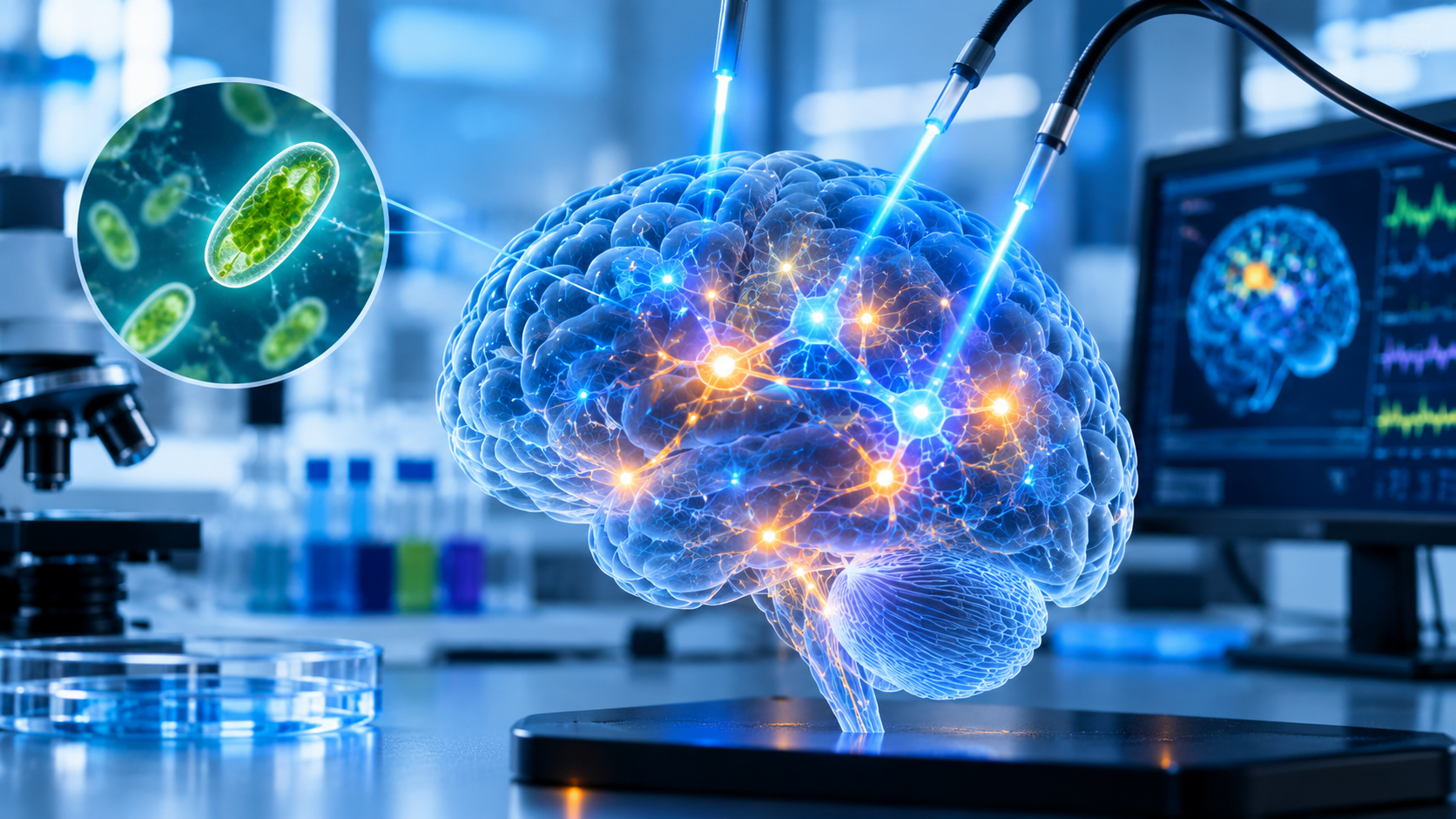
Optogenetics refers to a method of research where genetic and optical methods are used to control selected cells. It is based on the use of special proteins which react to light; they are called opsins. It is possible to add genetic information to certain nerve cells, making them sensitive to light.
If the selected cells are made sensitive to light, it is possible to stimulate or inhibit their function using light stimulation. It is possible for the researcher to see how switching certain neurons on or off influences the behavior of the cells and organisms as a whole.
This method allows researchers to achieve much higher levels of accuracy compared to other earlier used methods of neuroscience research. Previously, scientists had no choice but to affect many neurons at once. Using optogenetic method, they may study certain cells and connections between them.
How Hegemann and Nagel Helped Establish the Foundation
The history of optogenetics can be traced back to research about the way microorganisms respond to light stimuli. Specifically, Peter Hegemann was conducting studies related to the way green algae use biological mechanisms to sense light.
Later, Georg Nagel and others made breakthrough discoveries about the channelrhodopsin, which is a protein that can conduct light-induced ion movements through the membrane. It was a key discovery, since scientists were able to find a way to control the electrical activity of a cell with light.
Even though the original discovery was done just out of pure scientific curiosity, it later became a starting point for the development of neuroscience. It was understood that such light-sensitive proteins can be used to control neurons.
Why It Matters
The awarding of Nobel Prize in Medicine demonstrates that optogenetics has made an impact on the manner in which scientists conduct studies on the brain. Scientists have shifted from studying the activity of groups of neurons to examining certain neurons and neural networks with great accuracy. This has helped in making contributions to the advancement in the field of memory, motion, sleep, emotions, and behavior, among other contributions to neurological and psychological disorders. Although this technique has mainly been used in the research sector, it can also help in developing a better strategy of treatment in the future.
What Comes Next
Optogenetics research is developing continuously as researchers attempt to improve efficiency of genetic engineering, light delivery and to enhance safety. In addition, researchers are now looking into the possibilities that this technology may offer when it comes to curing certain neurological or sensory disorders. At the same time, many applications of the technology are still at the stage of experimenting and need further research and clinical studies.
Final Thoughts
Optogenetics and the effects of discoveries on contemporary neuroscience have recently received considerable coverage due to the Nobel Prize in Medicine in 2026. It has been discovered that thanks to the efforts of Peter Hegemann, Georg Nagel, and Karl Deisseroth, scientists now have a highly effective tool for the investigation of the functions of certain neurons and circuits.
Although optogenetics is not currently widely used in the treatment of neurological disorders, it is already revolutionizing the sphere of neuroscience. As this technology will continue being studied in the future, it can lead to even more discoveries related to the work of the brain.
Explore more facts about medical innovations and discover how groundbreaking science may affect the future of healthcare.