
Posted on October 13, 2026
The electoral roll cyber scam in Pune highlights how cybercriminals exploit voter ID update procedures to steal money from unsuspecting citizens. A 79-year-old Pune resident reportedly lost ₹11.92 lakh after a fraudster posed as an election official and offered help with correcting his partner’s name on her voter ID.
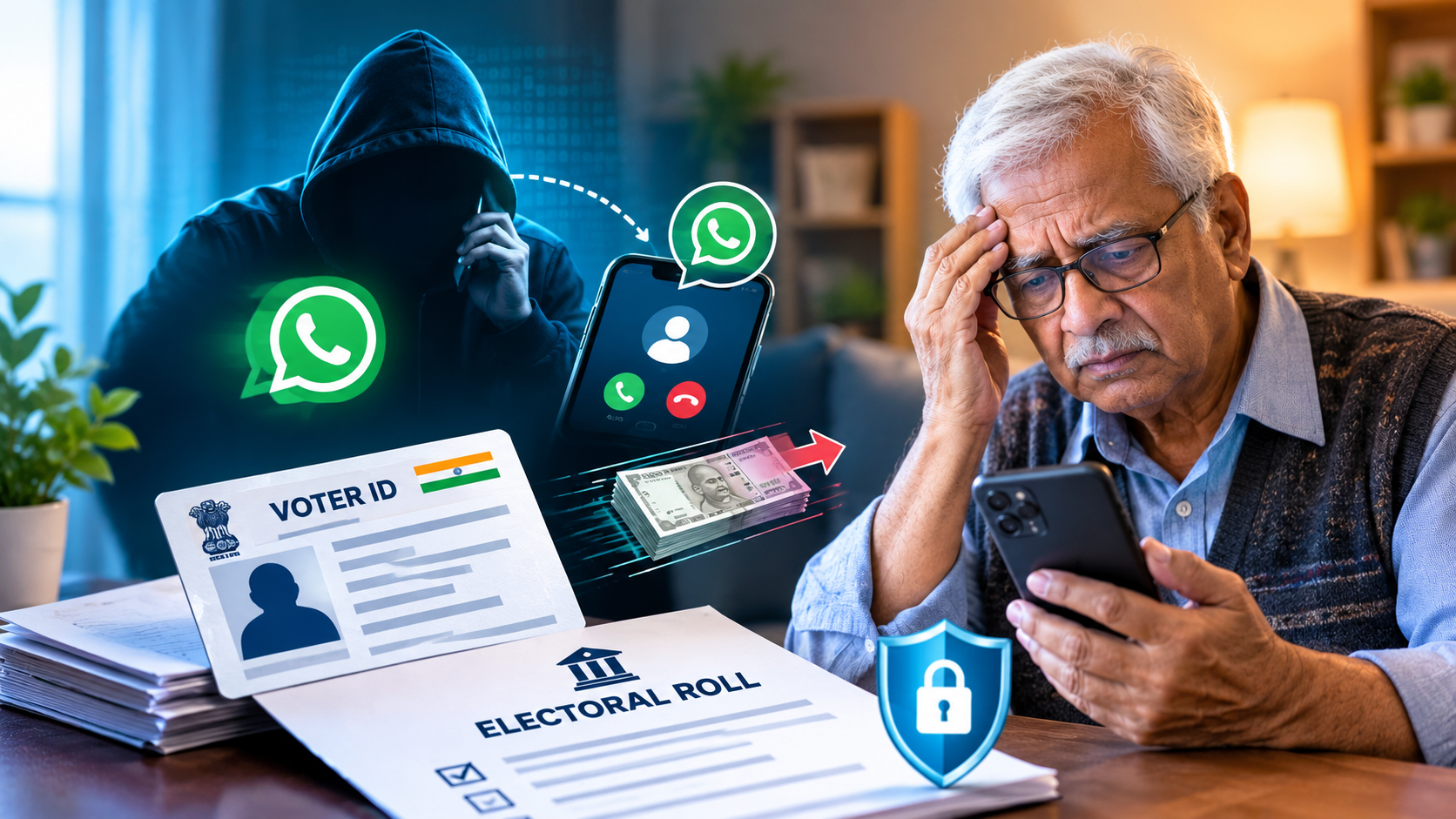
As is described in the news reports, the victim applied online to change the name of his partner in the voter identification. Then he received a call from someone on WhatsApp and mobile phone saying that the man helps with the process of change of the name. The criminal asked for personal data, including the Aadhaar details, voter ID data and photographs.
How the Electoral Roll Cyber Scam Worked
According to the reports, the fraudster asked the victim about Form 8, which voters could use to apply for corrections in their electoral roll and some details in voter ID. Mentioning an election-related official form helped to make the correspondence more believable.
Then the fraudster asked the victim for paying a processing fee of ₹5 via UPI. Even though it looked like the transaction was unsuccessful, the victim found out that there were some unauthorised transactions via NEFT amounting to ₹11.92 lakh in his bank account. Then he filed a complaint via the nation-wide cybercrime portal.
The police opened a case and started investigating the way the fraudster got access to the personal information of the victim. The officials are trying to understand if the fraud was committed through a fake website during the process of correction of voters’ ID data.
This incident shows how scammers exploit people’s trust in government services. The electoral roll cyber scam also highlights the risks of sharing personal information with unverified callers.
Why Are Voter ID Scams Becoming a Concern?
Electoral roll updates will ensure the maintenance of updated voters’ list, but the scammers may exploit the awareness about these procedures. They can impersonate themselves as Election Commission officials and threaten that there is some mistake in the details of the voter, thus there could be some trouble in voter registration.
Such kind of tactics will cause panic in many people, especially in senior citizens, who are interested in voting. The fraudsters may send them links, suspicious forms, or even messages, pretending that they are from the government office. Moreover, the scammers may try to convince them to install such applications, which provide remote access to their phones.
Another significant aspect about this scam is that voter registration or correction of details cannot require any citizen to disclose the banking PINs or passwords or even one-time password.
How to Protect Yourself from Voter ID Fraud
Keep these precautions in mind when updating your voter ID details online.
To protect yourself from voter ID fraud, never share your internet banking password, UPI PIN, ATM PIN or OTP with anyone claiming to represent election officials. Always verify unusual payment requests before sending money, and never download APK files or screen-sharing applications at the request of an unknown caller. If someone claims there is a problem with your voter information, contact the relevant election office using an officially verified phone number. Also, educate elderly family members about these scams and encourage them to verify callers before sharing personal details. Remember, genuine election officials will never ask you to reveal your banking passwords, PINs or OTPs.
What Should You Do If You Suspect a Cyber Scam?
Do act fast if you discover an unauthorized transaction or you think you have provided your sensitive data to a fraudster. Reach out to your bank immediately by dialing its official helpline number and ask for help to secure your account.
If you downloaded an app that looks dubious, disconnect your device from the internet and consult someone who is technically proficient. Use another device to change your passwords according to the instructions of your bank.
Final Thoughts: Stay Alert Before Updating Voter Details
The Pune case demonstrates the potential threat to citizens through any ordinary government-related actions by cyber criminals. The election rolls cyber scam is the reason why it is important for people to verify all communications, protect themselves from disclosing personal data and avoid unexpected demands of money and bank information.
Updating your voter records may be necessary, but one cannot forget about the importance of cybersecurity during this process, which can save you from financial losses and identity theft.
Do not wait! Verify your voter information only with authorized sources, spread the warning signals among your family and warn the elders about the potential risks of scams connected with elections.
FAQS
- 1. What is the Electoral Roll Cyber Scam?
It is a kind of cyber crime where the fraudsters pretend to be electoral officials and make use of voter registration or correction requests for stealing any important information or money.
- 2. How was ₹11.92 lakh stolen from the Pune man?
According to reports, there was a fraudster who pretended to be an electoral official and helped in correcting the name on voter ID and took some important information, after which he transferred money without authorization amounting to ₹11.92 lakh.
- 3. Can Form 8 be used to correct voter IDs?
Yes. Form 8 is for those requests which are valid for making corrections to the electoral roll or related to voter ID.