
Posted on October 14, 2026
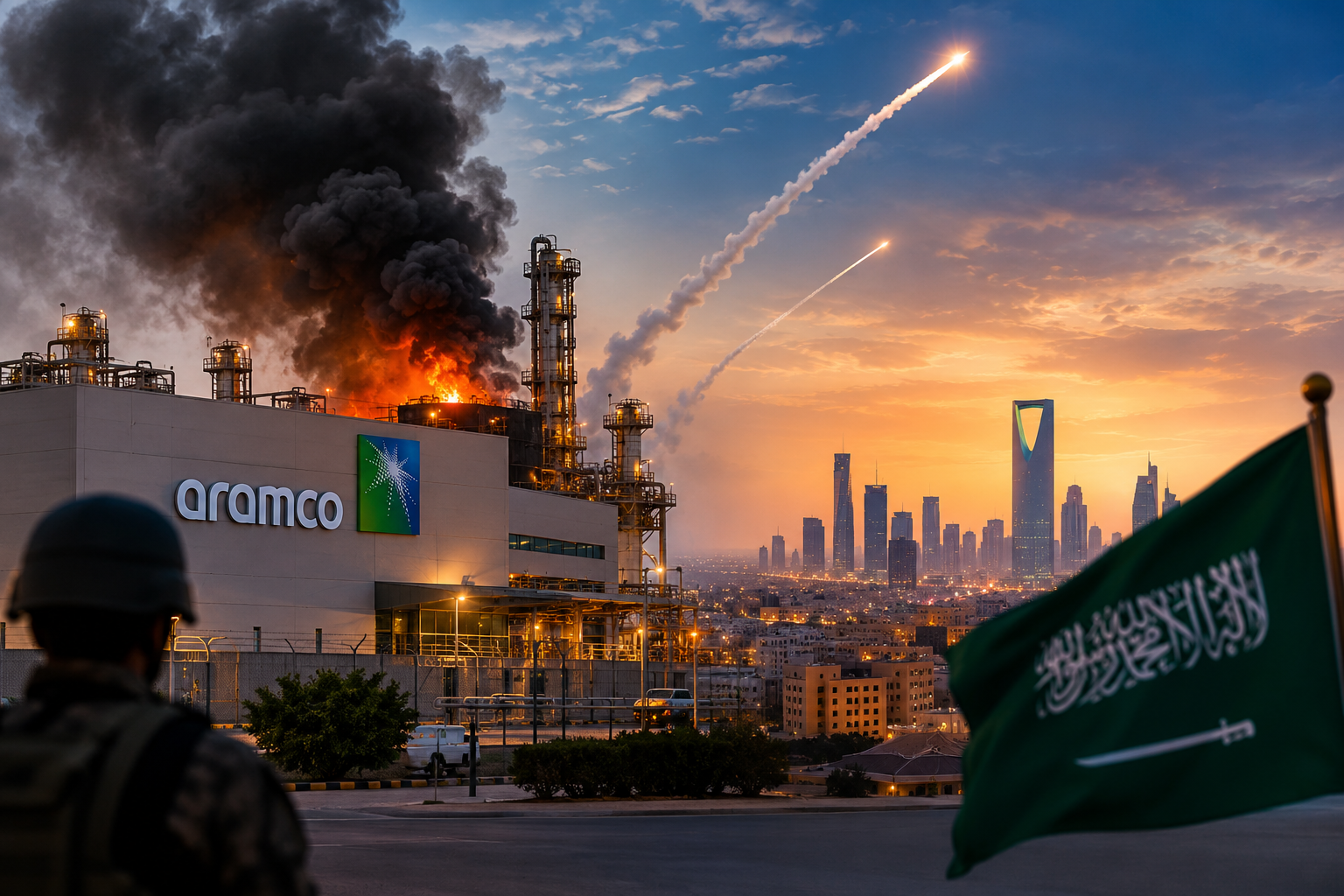
The Saudi Aramco Fire and Houthi Missile Attacks have raised concerns about growing security risks in Saudi Arabia amid escalating tensions with the Houthi movement in Yemen. It was stated that the attack on the administrative building of the state-owned oil company resulted in a fire on Tuesday. No casualties were reported by Saudi authorities from this incident. Meanwhile, two intercepted missiles that hit Riyadh have injured four people and damaged fifteen homes in Riyadh.
All these events are taking place against the background of a series of attacks and retaliation between Saudi Arabia and the Houthis.
What Happened in Dhahran and Riyadh?
As per the Saudi Arabia Energy Ministry, one of the administrative buildings related to Saudi Aramco located in Dhahran had been attacked on Tuesday evening. However, a small fire broke out in this event, but it is confirmed that no one was injured or killed in this building.
Dhahran is a city located in the Eastern Province of Saudi Arabia which is a key location for energy-related activities in the nation. Hence, any form of attack on this province will always draw international interest as it is related to energy security.
The second problem that took place in Riyadh was that there were reports by the civil defense department of Saudi Arabia that four people including two women, a man, and a child had sustained injuries due to the debris of the two intercepted missiles that fell in the residential zones.
Reports suggested that air defence systems managed to intercept the incoming threat amid reports about a hostile aerial action. Citizens were warned about the incident while security agencies monitored the situation. Even though the interception of missiles can lessen the chance of a direct hit, it may not prevent falling parts from causing harm.
The reported fire at Saudi Aramco and the injuries sustained in Riyadh took place during the ongoing escalation process which included an attack, interceptions, and retaliation actions. Furthermore, Saudi-led coalition forces conducted military actions targeting Houthi-affiliated sites in Yemen.
In any case, it is necessary to separate the official statements from statements made by conflicting parties. Information regarding the damages, injuries, and fire clearly describes the immediate incidents; however, the responsibility for the attacks needs to be assessed separately.
Why These Attacks Matter for Energy and Regional Security
The Kingdom of Saudi Arabia is one of the largest producers and exporters of oil in the world. Its corporation, Saudi Aramco, runs facilities that help ensure energy supply and international trade of the kingdom. Hence, any event related to such facilities may be interesting for governments, energy firms, investors, and shippers.
Even a small fire at the facility does not imply that oil production or international supply has ceased. It depends on the place of damage, condition of adjacent equipment, and whether or not any essential operations are still performed without any disruptions. Officials and energy experts should evaluate all these points in order to make their conclusions about production and export.
However, the fire at Saudi Aramco reveals the need for protecting industrial facilities during times of increased tensions. Although the damage is rather small, security considerations prompt firms to evaluate their emergency plans and protect their facilities.
Consequences may go beyond just the area affected directly by them. There may be effects of the building tension on market sentiments, transportations, insurance costs, and investment sentiments. Price swings in the oil may occur because of the threats of disruptions in oil supplies without the occurrence of reduction in the production levels.
The effects of the actions on ordinary citizens should also be taken into account. There could be apprehension due to missile interceptions, fallen debris, damages, and alerts issued. There could be disruption for families, while the local government would manage the emergency situation. It is important to protect civilians as military actions continue.
Escalation of the situation will make things more difficult for diplomacy as well. It may put additional pressure on regional governments to ensure that the conflict does not spread.
Conclusion
The Saudi Aramco Fire and Houthi Missile Attacks highlight how regional conflicts can threaten critical infrastructure and civilian safety. In Saudi Arabia, authorities stated that there was a small-scale fire in one of the buildings belonging to Aramco in Dhahran, with no casualties in the area, whereas four civilians got hurt and homes were destroyed by missile fragments in Riyadh.
The potential implications of the current event will highly depend on the further actions that take place, the reaction of authorities, and the functioning of the energy industry.
Keep track of the situation in Saudi Arabia and the Middle East through news updates. Learn more about regional security, energy facilities, and international affairs to realize what implications the events have for the global community.