
Posted on August 1, 2026
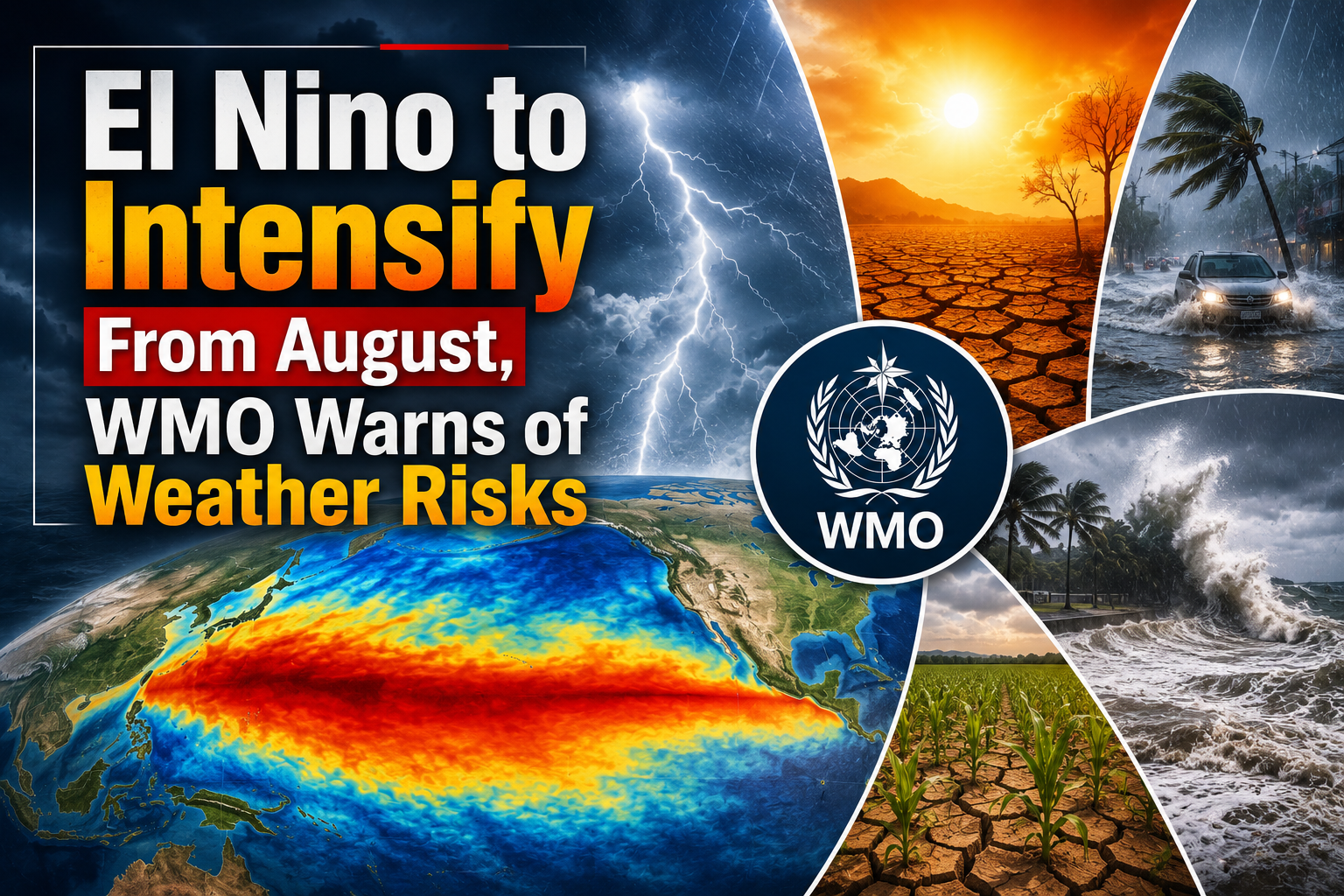
El Nino, according to the World Meteorological Organization, is expected to increase its intensity from August 2026 and consequently increases the probability of natural disasters arising from the weather impact.
Experts have noted that the warming of the Pacific Ocean in the center and east is expected to intensify and affect weather patterns in many continents. With the onset of intense El Nino, countries are expected to face extreme conditions such as heat waves, droughts, excessive rainfall, flooding, and disruptions in agriculture and water availability.
El Nino refers to the climate phenomenon which takes place due to the warming of sea surface temperatures in the Pacific Ocean. While the phenomenon occurs in a cycle of every two to seven years, it usually has different intensities and impacts every time. The latest forecast by the World Meteorological Organization predicts that the present El Nino will continue intensifying throughout the latter part of 2026.
The scientists stress that although El Nino is a natural phenomenon, its effects could become even more pronounced due to the warming of the planet. Warm oceans and atmosphere lead to more frequent extreme weather conditions, which means hotter heat waves, fiercer storms, and less predictable precipitation. The authorities and companies are urged to be ready for changes in weather patterns in the coming months.
How a Stronger El Nino Could Impact the World
A strong El Nino effect has the capability of causing a significant change in weather around the world. There will be less rain in certain areas, whereas some areas will be having too much rain that causes floods and mudslides. The changes in weather conditions may have an impact on agriculture, water supply, transport, and public health in several nations.
For India, the El Nino effect has the ability to pose threats to the southwest monsoon. Even though there are different climate effects that have a bearing on seasonal rainfalls, it has been seen that most of the times, the El Nino effect is responsible for weak monsoons. Poor rainfall can result in poor harvest, low levels of water in dams, and water scarcity in certain areas.
In other parts of the world, South America and North America may witness an excess amount of precipitation, leading to floods and the destruction of infrastructures. Australia, Indonesia, and certain areas of southern Africa may witness less rain, causing the possibility of drought, scarcity of water and fires. All these show how El Nino can affect the different parts of the world differently.
The scientists who study the climate also state that the higher sea surface temperature can contribute to more energy going into the atmosphere, making weather systems more active. There may be more heat waves lasting for a long time, while some of the tropical cyclones may turn out to be stronger.
Why Preparedness Is More Important Than Ever
The WMO has emphasized the significance of early preparation as the nations keep track of the development of El Nino. With the advancements in climate forecasts, meteorological agencies are able to give better predictions about the season, giving enough time for the nations to make preparations for any emergencies related to the weather.
Agriculture has been considered as one of the industries that will be affected by the El Nino phenomenon. In this case, there may be changes in the rainfall pattern and also temperature levels, resulting in reduced agricultural productivity. This requires farmers to plan their activities, including the process of planting and also irrigation, which are essential to avoid losses.
Water resource management also becomes an important issue, where reduction in rainfall will lead to low levels of water in the reservoirs and even decrease in rechargeable water levels. There might also be decreased hydroelectric power in places where there are sufficient water levels. The places that are expected to receive heavy rainfall should consider flood management strategies.
There are also preparations underway for the effects of prolonged heat waves. Extremely hot weather leads to an increased number of cases of heat exhaustion, dehydration, and other heat-related problems especially among the elderly, children, and those with pre-existing medical conditions. There will also be increased energy demands due to the rise in temperature and use of air conditioners by people during prolonged hot weather.
There have been suggestions that businesses should identify the risks that could arise due to changes in climatic conditions and disruptions in supply chain, transportation, and other operations that are dependent on favorable weather conditions. Businesses such as agricultural, logistics, energy, and tourism are among those that require contingency plans in case of extreme weather changes.
Another important aspect emphasized by the WMO was the usefulness of early warning systems that help in planning and preparation before the occurrence of adverse weather events.
Final Thoughts
A recent alert from the World Meteorological Organization points out the growing importance of being climate-ready in light of the expected rise of El Nino that is supposed to occur from August 2026. The forthcoming intensification of El Nino may be a challenge to the people through such factors as extreme weather conditions, including heat waves, drought, flooding, and changes in agricultural and water supply systems all over the world. Even though El Nino is one of the aspects of the usual weather pattern on Earth, the influence of El Nino may be magnified because of climate change. In order to remain updated and prepared for any events, one should monitor this field.
Remain informed of the latest climate news and weather predictions as well as any updates on the formation of El Nino in your area and worldwide.