
Posted on May 11, 2026
With increasing tension around the world adversely affecting economies across the globe, Indian Prime Minister Narendra Modi has called upon citizens to make certain “Covid-era” adjustments in order to ease stress on fuel usage, foreign exchange, and price increases. Modi’s recommendations, which include work from home, avoidance of international travel, limiting gold buying, and opting for public transport, have generated extensive debate all over the country.
This recommendation arrives amidst continued tension in West Asia, leading to disruption in crude oil prices and international trade. Being dependent on imports of a major part of its crude oil, India is at risk of sudden fuel price hikes. Such increases lead to inflation in all sectors – transportation, food items, and other necessities.
Why PM Modi Suggested Covid-Style Habits Again
In his public speech, PM Modi mentioned that citizens had managed themselves well during the pandemic by working from home, holding virtual meetings, minimizing travel, and managing their money properly. As per reports, PM Modi thinks that some of these temporary changes could benefit the country again in coping with economic stress due to global uncertainty.
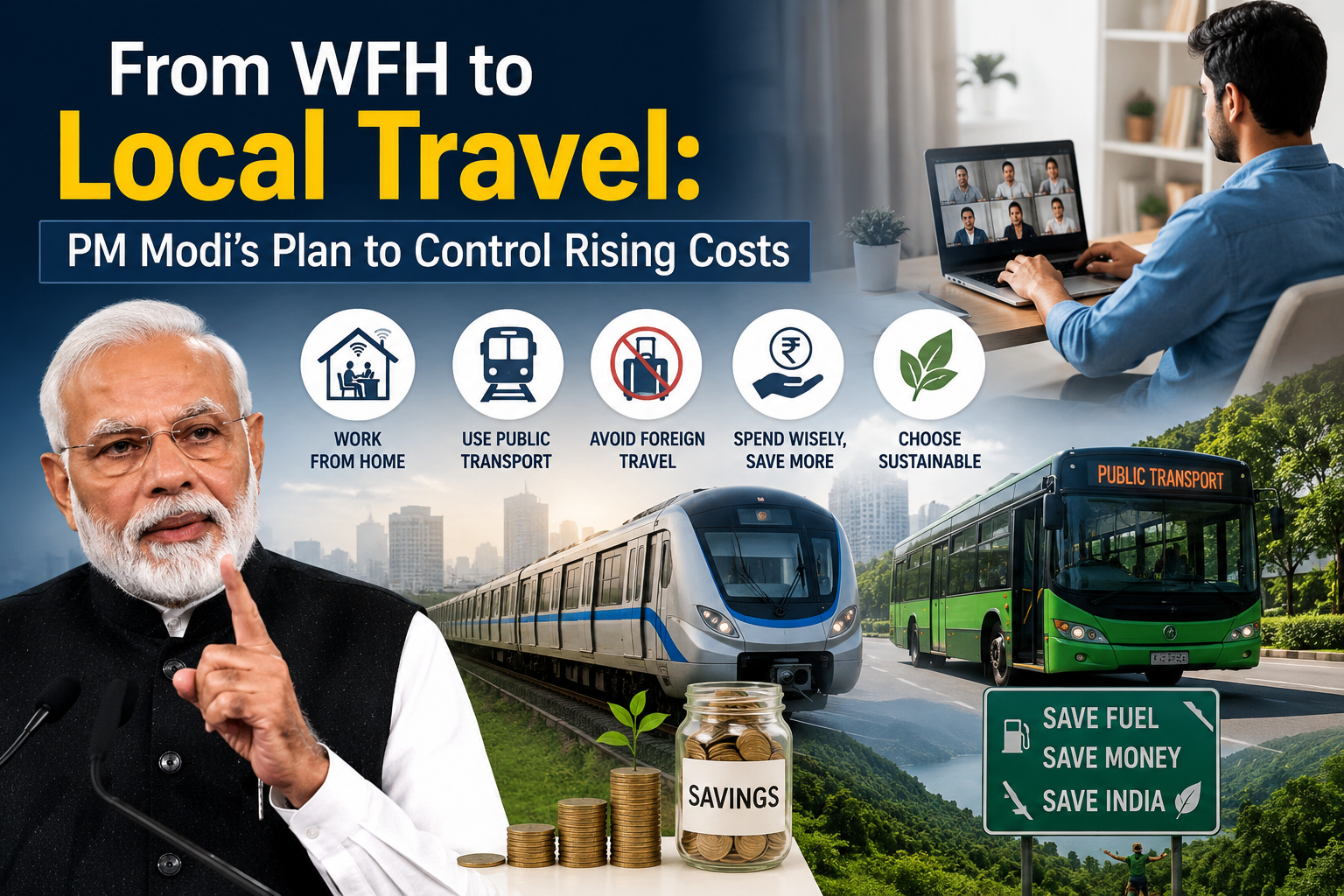
Some of the important suggestions include:
- Advise people to work from home whenever it is feasible
- Advise use of metros, public transport, and carpooling
- Discourage travel abroad and wedding trips
- Reduce gold buying
- Buy and consume local goods
- Switch to electric vehicles and live sustainably
These suggestions will contribute to decreasing fuel usage, foreign currency, and making the economy more resilient.
The Link between Global Crises and Rising Prices
With respect to the present geopolitical scenario of West Asia, uncertainty is seen in the production of oil. With the high dependence of India on imported oil, any disruption to the supply chain will lead to a rise in the cost of fuels.
This in turn will result in higher costs related to:
- Fuel for vehicles
- Cost of food deliveries
- Air travel costs
Economists say that preventive lifestyle changes can minimize the burden on the economy before the situation turns worse.
Work-From-Home Could Reduce Fuel Consumption
Among the most discussed recommendations was the implementation of telecommuting arrangements like those adopted during the pandemic period. PM Modi recommended that companies that could afford remote working systems should explore opportunities to have their employees work from home more often.
The rationale behind this approach is straightforward:
- Fewer commuter means less use of fuel
- Less pollution owing to fewer vehicles on the roads
- Savings of transport costs for the families
- Cost savings for organizations
During the pandemic period, India registered significant reduction in the consumption of fuel due to remote working systems. Flexible working arrangements, thus, could be used again to minimize unnecessary demands for fuel.
But, it must be noted that some industries cannot move online. Manufacturing, healthcare, retail, logistics, and hospitality industry need workers in person. Consequently, only certain sectors such as IT, consulting, finance, education, and administration would gain.
Why PM Modi Mentioned Foreign Weddings and Travel
The comments made by the Prime Minister regarding not getting married abroad and avoiding international holidays have garnered widespread attention on social media. The comments are believed to be an effort towards minimizing the foreign exchange outflow at this particular point in time when economic uncertainty is being faced.
Getting married abroad or taking luxurious vacations abroad requires a considerable amount of foreign expenditure. By advocating domestic tourism and celebrations, the government is looking to:
- Minimize the foreign outflow of funds
- Boost domestic tourism and hospitality industry
If more Indians opt for domestic vacationing as opposed to taking overseas trips, then India’s tourism industry will gain from it as well.
Push Toward Sustainable Living
Moreover, one other key factor behind the attractiveness of Mr. PM Modi included sustainability. The people were asked to make use of electric cars, public transport, and energy conservation strategies in their day-to-day lives.
Also, reduction in the usage of edible oils along with the utilization of solar energy by the farmers was suggested. It is relevant to note that such suggestions also reflect the overall aims of India towards achieving self-sustainability and energy independence.
Here again, the concept of responsible consumption plays an important role.
Public Reactions and Economic Debate
Reactions ranged from both ends of the spectrum across various platforms, social media as well as business community. While some citizens welcomed the pro-active step, others raised doubts about the role of a change in lifestyle in containing inflation and growing prices. Economists opined that while this kind of participation by the people may not resolve the energy crisis at the global level, it can surely help alleviate the immediate pressures of imports and domestic consumption of fuels. The future would still remain dependent on the world market of oil as well as renewable energy and the economic policies of the government.
Moreover, businesses too may require adjustment if remote work gains popularity once again.
A National Appeal for Economic Preparedness
It seems that PM Modi’s message is not so much about constraints but rather about being ready for anything. The government is calling on its people to develop some practices that could ensure stability for India in tough times.
This call also points out how connected the world is today. Any development in distant regions may affect fuel prices, transportation costs, and household expenses in India after just a few days.
Whether or not these recommendations will become widespread practices or just a topic of discussion, this conversation has raised awareness about fuel conservation, sustainable lifestyles, and prudent spending.
Given the rising concerns about inflation around the world, India may have to rely on both its policies and the cooperation of its people to address such problems.
Keep yourself up-to-date with all the latest news from the country.