
Posted on October 28, 2026
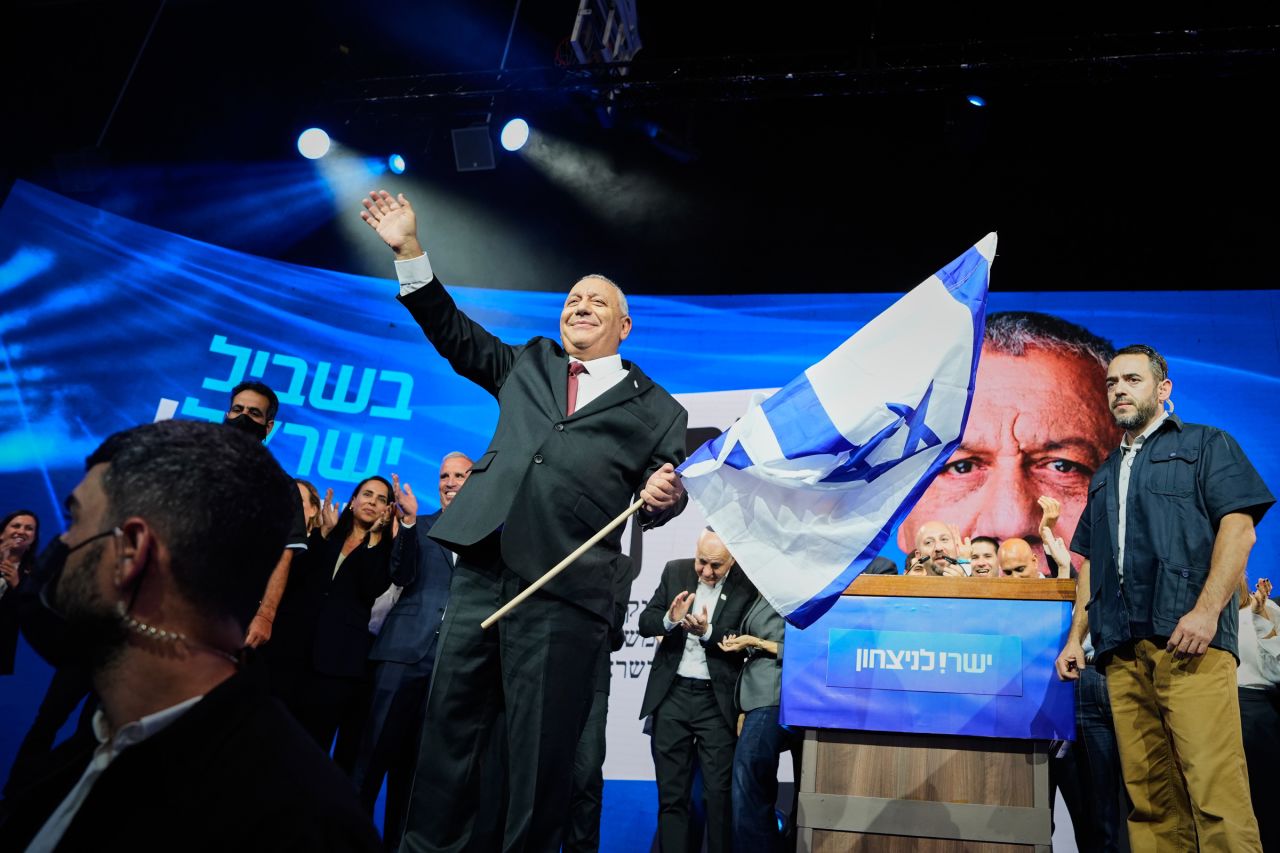
The Israeli election deadlock has created fresh uncertainty about the country’s political future, as exit polls from the October 27, 2026, general election indicate that neither Prime Minister Benjamin Netanyahu nor opposition candidate Gadi Eisenkot has secured a clear majority to form a government. Political leaders will thus be faced with the arduous task of trying to gain the support of smaller political parties in order to form the government.
The deadlock in the Israeli election is not only characterized by a close battle between two political leaders but also by differences that exist among Israelis regarding matters of national security, accountability of the government, strategy in the military, and future of the country following many years of war. Israelis entered into the elections with the weight of the October 7, 2023, attacks and the ensuing wars with Gaza, Lebanon, and Iran.
Exit polls conducted initially had the Netanyahu-led Likud bloc getting about 50 seats and the opposition bloc led by Avigdor Lieberman getting about 52 seats out of the total 120 seats in the Knesset. None of the blocs had attained the majority threshold needed of 61 seats. The parties led by Arabs were projected to get a significant number of seats, thus their importance in the process of coalition building. The numbers may turn out to be different from these initial projections.
Coalition Talks Hold the Key
The Israeli election deadlock presents a major challenge for both political camps because Israel’s parliamentary system requires sufficient support to form a government. A party may be the largest individual camp in parliament without getting enough support to make a government. This means that the leaders have to reach out to other political camps, meet the conflicting demands, and come up with an agreement that will pass through parliamentary scrutiny.
Netanyahu has been involved in the center of Israeli politics for decades and has survived through various political crises in his career. Nevertheless, his administration has been criticized due to its failure on matters of security regarding the October 2023 attacks, how it handled the aftermath, and general corruption cases that the administration denies. The advocates of Netanyahu have focused on his experience and expertise on matters of security.
The former military chief Eisenkot formed a strong political candidate in view of his background and security expertise. Eisenkot ran on a change in leadership, which appealed to many voters who sought a break from Netanyahu’s rule, even though the candidate’s own political views concerning security and Israel-Palestine conflict do not form an entirely new agenda. While having an electoral advantage, the candidate is bound to face challenges if he does not manage to get support from the parties outside his own coalition.
Small parties would thus have more power than just their representation in terms of seats in parliament. However, it may be problematic to make an agreement since some opposition party leaders have been unwilling to cooperate in forming a government dependent on Arab parties. This makes a paradoxical political situation where parties that oppose Netanyahu may have enough votes to threaten his political supremacy but still fail to form a government.
In case of a deadlock, Netanyahu will have to stay a caretaker prime minister as politicians look for some other options. An impasse can lead to further elections if no agreements are reached.
Security, Accountability and Public Expectations
The election is taking place amid the tough national climate. The current state of security, results of the Gaza war, the situation in the region, and the issues related to foreign policy have played a role in political discourse. Not only promises of parties, but also reactions of politicians to emergencies, military issues, and future plans for the country will be evaluated by voters.
The turnout of around 77.7% is seen as high, judging from preliminary data of elections coverage. High levels of participation mean that many people saw this voting as an important chance to affect the country’s future. However, despite high levels of participation, the result may not provide a clear mandate because of the fragmentation of the vote.
The new government will face certain challenges. The citizens will expect effective security strategies, good administrative services, economic stability, and increased trust to political decisions. The leaders will have to overcome internal contradictions in their alliances, especially when members of the coalition have completely different priorities.
International observers will be closely monitoring the election proceedings since the new leadership will affect Israel’s diplomatic relations and approach to conflicts in the region. Nevertheless, changing the country’s leadership will not solve all its security and diplomatic issues. Progress is possible only with the right decisions made by leaders after the election.
At the moment, the situation with the election in Israel proves how difficult it is to form a stable government when voters are divided. Polls are just an indicator of public opinion, while official results and coalitions will decide the way forward. Up until that time, it is reasonable not to predict anything concerning the country’s leadership.
Final Thoughts
The Israeli election deadlock highlights how difficult it can be to form a stable government when voters are divided and political parties struggle to reach an agreement. No matter who ends up winning, Netanyahu or Eisenkot, future leadership will have tough questions to answer regarding issues of security, accountability, and national cohesion.
Keep yourself updated on all the latest happenings around the world.