
Posted on November 24, 2026
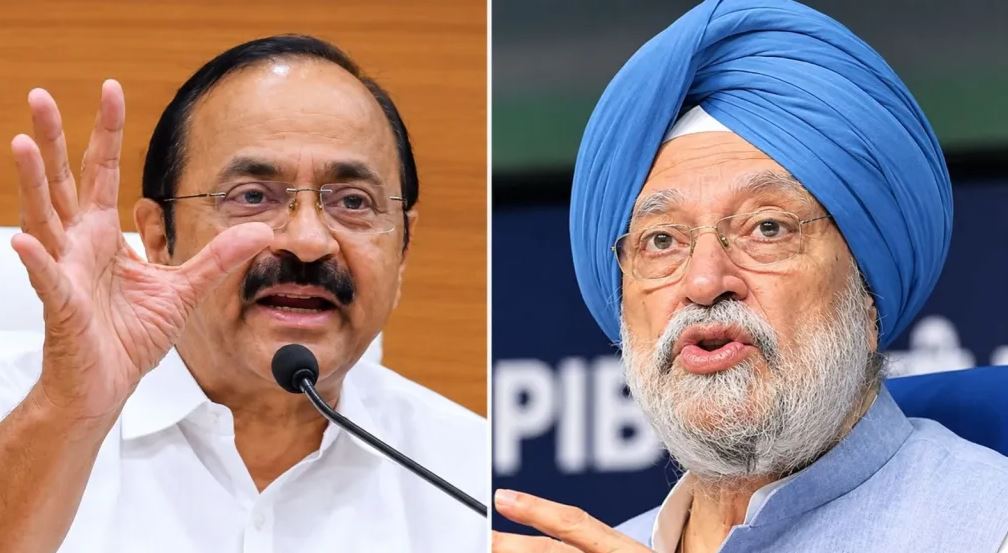
The debate over ethanol-blended petrol is gaining momentum, with the Kerala government seeking the Centre’s intervention to verify the quality of fuel sold across the state. Kerala Food and Civil Supplies Minister Anoop Jacob has written to Union Petroleum Minister Hardeep Singh Puri, requesting samples of 100 per cent pure petrol from oil marketing companies for laboratory testing.
The move comes amid concerns that some petrol samples may contain ethanol beyond the prescribed 20 per cent blending limit. Kerala wants to conduct an independent assessment to determine whether the fuel supplied to consumers meets the required standards. The issue has also gained attention following similar allegations raised by the Karnataka government.
Kerala Wants Oil Companies to Provide Unblended Petrol
In his letter to the Union Petroleum Minister, Anoop Jacob requested directions to public sector oil marketing companies to provide petrol samples without ethanol blending. The state wants to use these samples as reference material to compare the ethanol content in fuel collected from petrol pumps across Kerala.
The Civil Supplies Department has already collected petrol samples from different fuel outlets operated by public sector oil companies. These samples have been sent to regional chemical laboratories for testing.
However, the state believes that access to completely unblended petrol is necessary for a more reliable comparison. Major oil companies, including Indian Oil Corporation (IOC) and Bharat Petroleum Corporation Limited (BPCL), are understood to have access to such reference samples.
Jacob said that oil companies had initially indicated their willingness to provide the samples but later declined to hand them over. Despite repeated requests from state officials, Kerala has reportedly not received the required reference material.
The government maintains that obtaining pure petrol samples will help laboratories establish whether the ethanol content in fuel sold across the state remains within the permitted limits.
Why Is Kerala Raising Concerns Over E20 Petrol?
At the centre of the controversy is India’s ethanol-blending programme, which aims to reduce the country’s dependence on imported crude oil by mixing ethanol with petrol.
Under the programme, India has moved towards a 20 per cent ethanol blending target, commonly known as E20 petrol. Ethanol is produced from agricultural sources such as sugarcane and maize, making the initiative relevant to both the energy and farming sectors.
The government promotes ethanol blending as a way to improve energy security, reduce fossil fuel consumption and create additional demand for agricultural produce.
However, questions have emerged over whether the actual ethanol content in some fuel samples is higher than the prescribed 20 per cent limit.
Kerala’s decision to investigate the matter follows allegations made by the Congress-led Karnataka government regarding excessive ethanol blending in petrol sold in the state.
Karnataka’s Petrol Testing Raises Questions
The controversy gained further attention after Karnataka Food and Civil Supplies Minister Rizwan Arshad raised concerns about the ethanol content found in certain petrol samples.
According to his claims, laboratory tests indicated ethanol concentrations of 31.2 per cent in samples linked to Indian Oil Corporation and 30.5 per cent in samples linked to Hindustan Petroleum Corporation Limited (HPCL).
If independently verified through reliable testing, these figures would be considerably higher than the prescribed 20 per cent blending level.
However, the allegations have faced objections from the Centre and public sector oil companies, which have questioned the sample collection and testing methods used by Karnataka authorities.
This disagreement has made independent laboratory verification an important part of the ongoing debate. Kerala now wants access to unblended petrol so that its testing process can be supported by a suitable reference sample.
Kerala Warns of Action if Fuel Quality Violations Are Found
The Kerala government has made it clear that its investigation is focused on consumer protection and fuel quality rather than targeting oil marketing companies.
Anoop Jacob has indicated that strict action will be considered if laboratory findings establish that petrol supplied in the state does not meet the prescribed standards.
The government has also referred to its existing regulatory powers. Under a Kerala government notification issued in 2014, based on the Central Motor Spirit and High Speed Diesel (Regulation of Supply and Distribution and Prevention of Malpractices) Order, 2005, authorised Civil Supplies officials can inspect fuel outlets and initiate legal proceedings in cases of violations.
These powers extend to officials ranging from the Commissioner of Civil Supplies and Consumer Affairs to Taluk Supply Officers.
The state is therefore looking at the issue as a matter of regulatory compliance. The laboratory findings from the samples already collected will help determine whether further inspections or enforcement measures are required.
Centre Defends Ethanol Blending Programme
The dispute has also taken on a political dimension, with the Centre and state governments expressing different views on the ethanol-blending programme.
Union Minister of State for Petroleum and Natural Gas Suresh Gopi has defended E20 petrol, dismissing concerns surrounding the fuel and stating that the programme was introduced following extensive research and approval from the Automotive Research Association of India (ARAI).
He has also questioned allegations that petrol samples contained ethanol beyond the prescribed limit.
On the other hand, state governments seeking independent testing argue that concerns about fuel quality should be addressed through transparent laboratory examinations rather than dismissed without verification.
The disagreement highlights the need for a standardised testing process that can establish the actual ethanol content in petrol and ensure that all fuel suppliers follow the prescribed specifications.
What Happens Next in Kerala’s Ethanol Blending Dispute?
The next important development will be the Centre’s response to Kerala’s request for pure petrol samples. If oil marketing companies provide unblended fuel for comparison, the state’s laboratories may be able to conduct a more comprehensive assessment.
The results of the petrol samples already collected by the Civil Supplies Department will also be important. They could determine whether Kerala needs to initiate further investigations or take regulatory action against fuel outlets or suppliers.
For consumers, the central concern is whether the petrol available at fuel stations meets the required quality standards.
India’s ethanol-blending programme remains an important part of its long-term energy strategy. However, its successful implementation also depends on transparent monitoring, accurate testing and cooperation between the Centre, state governments and oil marketing companies.
Kerala’s demand for pure petrol samples has brought these issues back into focus. The outcome of the investigation could have wider implications for fuel quality monitoring and the way ethanol-blending concerns are addressed across the country.