
Posted on July 31, 2026
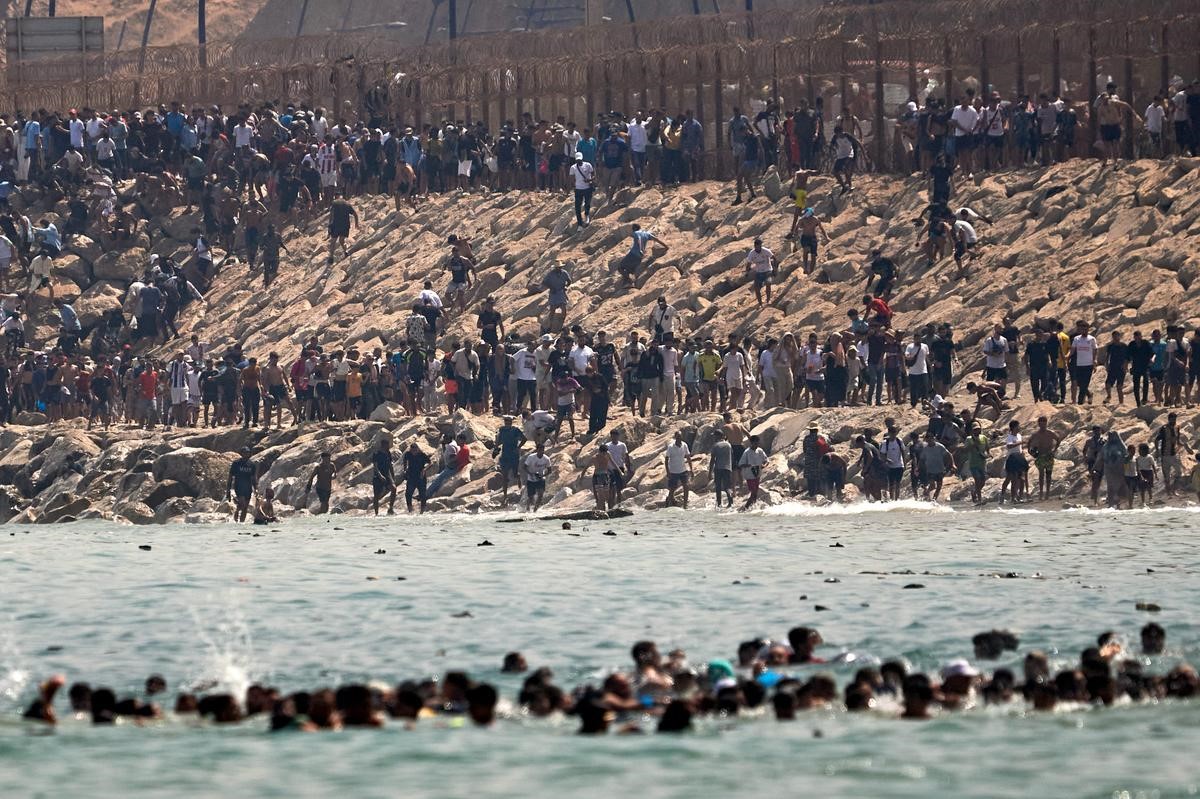
The Spanish military has been sent to Ceuta, the Spanish North African enclave, following the death of at least 18 people in what is said to be one of the biggest attempts by migrants to reach the enclave in years. Humanitarian crisis has attracted the attention of the entire world because it has brought about fears about border security, immigration policy, and the diplomatic tension that has existed for ages between Spain and Morocco.
Ceuta is in a very special place on the map. Geographically, the enclave is situated along the northern coast of Africa, but as an autonomous territory of Spain, it belongs to the European Union. Hence, it is one of the very rare African-European land borders.
As reported by the Spanish authorities, the recent crisis erupted in a scenario where thousands of migrants tried to enter into Ceuta from the adjacent country of Morocco, both via land and by sea. The migrants reportedly managed to swim past the border fences or entered the territory through weak points in the fence. As a result of the influx, emergency services were overstretched, and reception centers, which were already crowded, failed to offer shelters, food, and medical support. At least 18 migrants are believed to have died in the process while trying to cross the border.
To counteract the situation, the Spanish government increased the security measures by sending additional troops along with police to the region. The Spanish Prime Minister Pedro Sánchez is also likely to visit the site of the crisis personally.
Why Ceuta Has Become a Major Migration Flashpoint
Ceuta has always been among the most sensitive migration entry points in Europe. Many migrants originating from both Morocco and various Sub-Saharan African states try to get into the enclave, as access to Ceuta is equivalent to entry into the EU.
The border is composed of various security fences fitted with camera surveillance systems, patrol roads, sensors, and security patrolling. Nevertheless, there have been mass crossings several times within the last two decades.
There seem to be various reasons for the ongoing problem. First, recently there have been certain legal changes related to the migrants coming by boat, and this fact seems to have encouraged more people to attempt such a journey. Also, there have been speculations that human trafficking rings have used this situation and spread false information about easier entry into Europe. According to Reuters, “Spanish authorities say smuggling gangs are taking advantage of the legal changes to convince migrants to take the dangerous route into Europe.”
This humanitarian disaster takes place in the context of certain political problems between Spain and Morocco. The regions of Ceuta and Melilla are traditionally delicate geopolitical problems, as Morocco doesn’t recognize sovereignty of these territories by Spain. The issue of migration became entangled with political relations of the two countries many times before.
The European Union is interested in what is going on as the problems of Ceuta affect not only Spain but also EU border control policy.
Humanitarian Concerns and What Happens Next
There have been increasing reports from the human rights groups on deaths of migrants on the borders of Europe. The most recent case shows that many people make very dangerous journeys in search of refuge from conflicts, poverty, unemployment or in search of better economic opportunities.
The Spanish government has engaged Moroccan authorities in order to deal with the current situation in terms of identifying, accommodating and processing these migrants as well as considering any repatriation of the migrants who came illegally into Spain. It is evident that the emergency shelters, medical facilities and humanitarian organizations are still under immense pressure as thousands of migrants need to be assisted immediately.
On the other hand, there has been political debate regarding the matter with opposition parties calling for more stringent measures and humanitarian organizations focusing on safer migration routes.
According to experts, the events in Ceuta will play an important role in shaping future debates in relation to the EU’s migration policies, border control policies, and collaboration of European and North African governments. The cause of the tragic crossing is currently being investigated. Nevertheless, experts expect authorities to enhance security in order to avoid the repetition of such tragedies in the future.
The tragedy in Ceuta illustrates once again the complexity of the migration issue that Europe has to face. It should be emphasized that the problem of migration includes various aspects such as humanitarian, political, legal, and security. That is why international cooperation is crucial for its resolution.
Follow our daily news updates on international politics and events taking place all over the globe.