
Posted on April 25, 2026
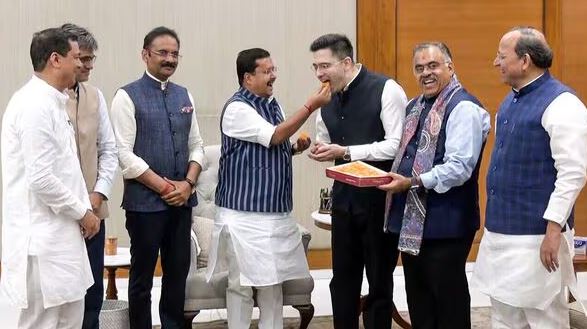
There has been a lot of talk recently about “AAP MPs leaving for BJP: will they be disqualified? See the law” that has created a lot of interest either way. Shifting party loyalties and changing political partnerships have created some uncertainty amongst people as to what happens to Members of Parliament when they switch from one political party to another and the effect that it will have when they do so within the Rajya Sabha.
With respect to the issue of MPs switching political parties in India, the anti-defection law governs the eligibility criteria for MPs’ ability to hold onto their parliamentary seats after they switch political parties today. The anti-defection law was enacted via the 52nd amendment to the Constitution of India back in 1985. It was designed, in part, to protect and encourage stability and to prevent elected representatives from switching parties simply for the benefit of the individual MP. It was voted to add to and become The Tenth Schedule of the Constitution of India and is an integral part of the determination of an MP’s ability to keep their seat if they switch political parties.
The biggest question regarding AAP MPs potentially switching to the BJP is whether they will be disqualified. The anti-defection law says that an MP will be disqualified if they are giving up the membership of their party and voting against the majority party’s direction. At the same time, the anti-defection law does provide for some exceptions.
Of the exceptions discussed earlier, “the two-thirds rule” is one of the most significant. If two-thirds of the members of a legislative party decide to merge with another party, those representatives will not have their seats disqualified. Therefore, if a large number of AAP Rajya Sabha members join BJP as a group, they do not risk losing their seats under this provision. If only one or two MPs defect individually, they may have to face disqualification.
Another key element of this process is the role of the Chairman of the Rajya Sabha, who is generally the Vice President of India. The Chairman has the authority to determine whether a member is disqualified under the law’s prohibitions or exceptions, based upon the evidence and facts submitted after a disqualification petition has been made by someone. Since it can take some time for these issues to be resolved, the Chairman’s decision can be judicially reviewed.
The phrase “voluntarily giving up membership” is defined broadly by the courts and does not simply mean to resign from one’s position formally. For example, even making a public statement to show allegiance to another political party may be grounds for disqualification. Thus, the manner and context of how MPs change political parties will be just as relevant in determining whether disqualification will occur as what parties those MPs belong to at the time of the change.