
Posted on May 19, 2026
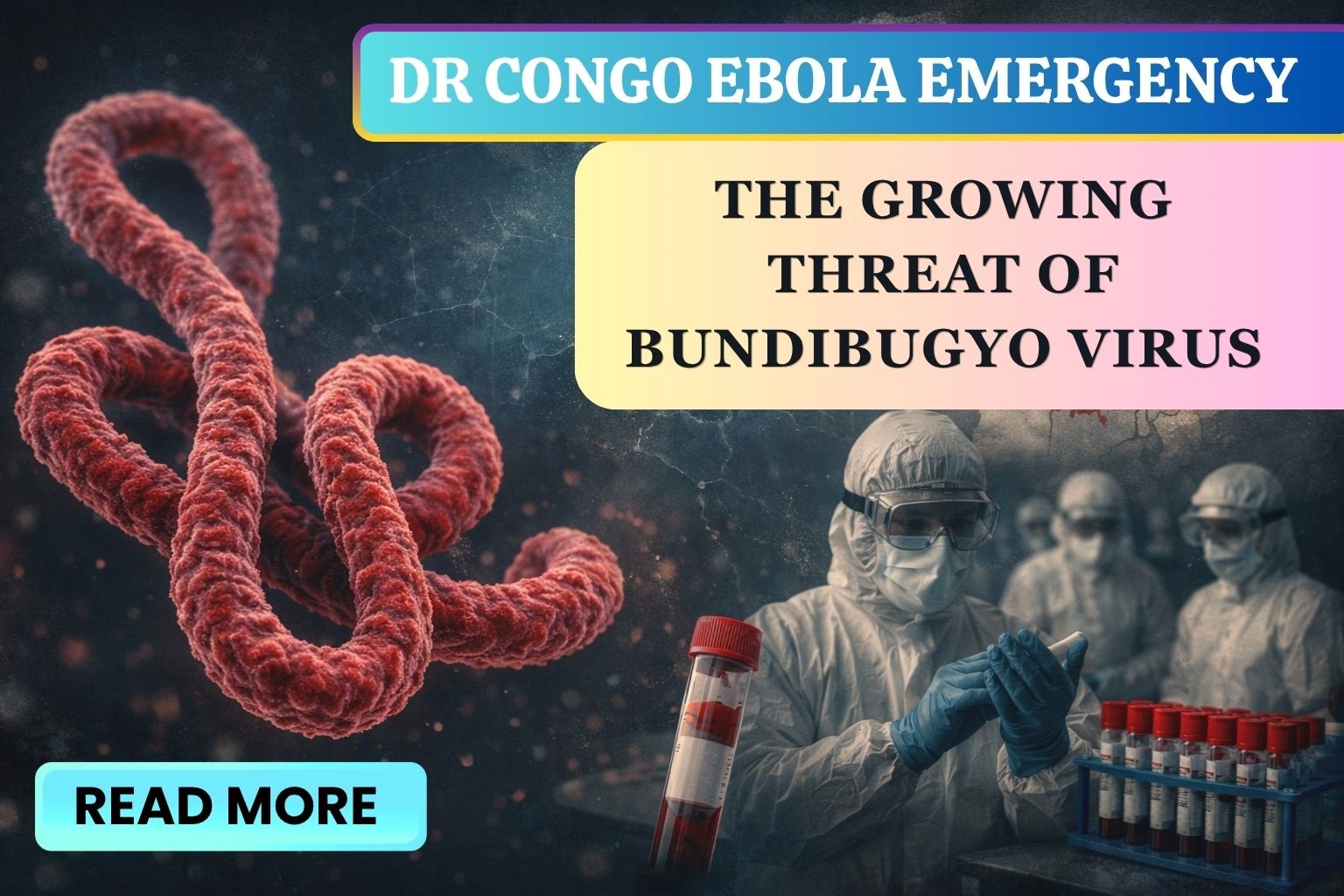
Globally, people have started worrying about the spread of the deadly Ebola disease following the declaration of the current Ebola outbreak in the DRC and Uganda by WHO as a Global Public Health Emergency. The recent outbreak of the disease is caused by the Bundibugyo strain of the virus. As of now, there are no vaccines or specific treatments for this particular strain of the virus.
According to health authorities, the Ebola outbreak has already claimed over 100 lives. Furthermore, there are hundreds of cases being investigated within affected areas.
What Is the Bundibugyo Ebola Strain?
The Bundibugyo virus is among the less known strains of the Ebola virus. It was identified in Uganda in 2007 and has been seen very rarely since. The difference between this virus and other strains like Zaire, which have available treatment options, is that this particular strain of Ebola continues to remain difficult to deal with since it does not have any treatment options.
Medical experts suggest that the mortality rate of this strain is lower compared to Zaire, but its severity is very high as it causes hemorrhagic fever and spreads quickly with direct contact with infected fluids. Early signs include fever, muscle pains, vomiting, diarrhea, and organ malfunction.
This outbreak is very serious since there have been reports of the initial tests having difficulty in identifying the strain.
Why WHO Declared a Global Health Emergency
WHO has officially designated the outbreak as a “Public Health Emergency of International Concern.” WHO has pointed out that there is a very high possibility that this outbreak will spread internationally, especially because of the frequent cross-border movement and the poor healthcare system amid civil unrest.
According to WHO figures, hundreds of cases of the infection have been reported in Ituri, Congo, along with Kampala, the capital of Uganda. In addition, some of the healthcare professionals have been infected as a result of their contact with patients during treatment, indicating the high levels of risk associated with working on the frontline.
WHO has clarified that this is not yet a pandemic situation, but the organization warned of the need for urgent cooperation between nations.
Why This Outbreak Is Different
There have been other Ebola outbreaks before in Central Africa; however, there are several issues that make this one more serious than the previous occurrences.
- Lack of Specific Vaccine
The reason is the emergence of Bundibugyo Ebola strain; there are currently no effective vaccines against this particular form. Research scientists are experimenting with various vaccines, such as mRNA-based ones, and antivirals.
- Time Lapse Before Diagnosis
It appears that the early symptoms were not recognized as belonging to the right Ebola variant which led to a certain time delay before appropriate action was taken.
- Spread Over National Borders
Uganda announced its first cases of imported Ebola infection linked to Congo; therefore, there is an evidence of international spread.
- Instability in Healthcare Infrastructure
The fact is that many of the areas within eastern Congo remain destabilized due to ongoing civil war and lack of proper medical facilities.
How Countries Are Responding
Response plans have already been put into place by governments and international health organizations. WHO has dispatched experts, while nations like the US are stepping up airport checks and monitoring of travelers from the affected countries.
Additional centers for treatment and isolation of patients are being set up in Uganda and Congo, along with monitoring initiatives aimed at containment of the outbreak. Public awareness programs are also under way to spread awareness.
India too has increased surveillance, and is monitoring developments carefully along with international health authorities.
Can the Outbreak Be Controlled?
According to the experts, the outbreak can yet be contained through continued actions. The mode of transmission of the Ebola virus disease is through the contact of bodily fluids of the infected person and not through air, hence it can be controlled by isolation, contact tracing, sanitization, and use of protective medical equipment.
Misinformation, fear, and poor healthcare facilities, among other factors, are currently the biggest barriers towards achieving control of the disease. In past Ebola disease infections, public trust towards medical professionals and late report have worsened the spread.
The international community has urged all countries not to panic but only be on high alert. The current strategies include improved airport surveillance, readiness to receive medical emergencies, among others.
Final Thoughts
The outbreak of the virus in the Democratic Republic of Congo and Uganda in 2026 is a case in point where diseases continue to pose problems for countries in today’s interconnected world. The emergence of the uncommon Bundibugyo strain of the virus in conjunction with the lack of any vaccine against the disease and instability in the region creates a grave situation.
Although specialists state that the problem may yet be managed successfully, in the next few weeks it could all come down to quick diagnosis, efficient management in the sphere of healthcare services, public awareness, and international involvement to prevent the problem from turning into a global epidemic.
Stay tuned to get more updates on emerging global health issues from outbreak information to news and analysis on critical health crises around the world.