
Posted on September 1, 2025
A powerful 6.0‑magnitude earthquake struck eastern Afghanistan on the night of August 31, 2025 (local time), leaving a devastating trail of destruction across the provinces of Kunar, Nangarhar, and surrounding mountainous regions. By early September 1, authorities confirmed over 800 dead and at least 2,800 injured, marking it as one of the country’s deadliest tremors in recent years.
The Seismic Shock: Magnitude Meets Vulnerability
The quake, occurring at a shallow depth—estimated between 8 to 10 km—amplified the shaking, obliterating poorly constructed mud‑brick and stone homes and triggering landslides in remote areas. Villages in Kunar province, especially districts such as Nur Gul, Watpur, and nearby hamlets, bore the brunt of the impact. Entire villages vanished as rescue workers navigated broken terrain to reach survivors.
The epicenter lay near Jalalabad, approximately 27 km to the northeast, with significant damage also reported in Nangarhar, Laghman, Nuristan, and Panjshir provinces. Repeated aftershocks, including a magnitude‑4.5 event, exacerbated the chaos by triggering additional slides and halting rescue operations.
Rescue and Relief: Flights, Limits, and Challenges
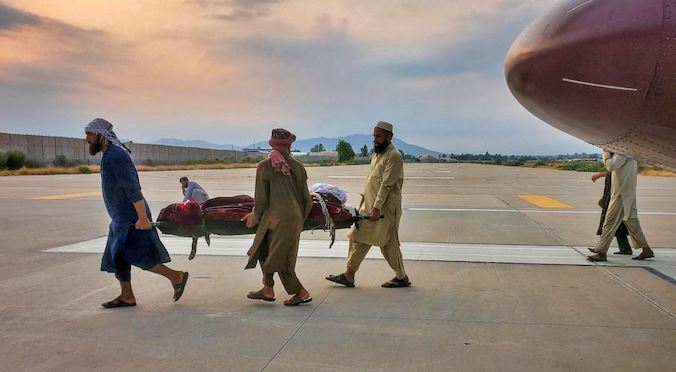
Taliban authorities mobilized military and rescue teams to affected zones. Helicopters conducted at least 40 flights, transporting 420 wounded and deceased from remote villages to hospitals. The United Nations, UNICEF, and Afghan Red Crescent also dispatched emergency responders and mobile clinics to support overwhelmed local health facilities.
Still, the relief effort faces stiff obstacles—rugged terrain, blocked roads, landslides, and damaged communications continue to hinder full-scale response. Many remote communities remain cut off, with rescue and medical teams struggling to reach survivors in time.
Humanitarian Backdrop: Aid Shortages Amid Isolation
This disaster compounds an already dire humanitarian situation in Afghanistan. Since the Taliban’s return to power in 2021, foreign aid funding has plummeted—from $3.8 billion in 2022 down to just $767 million in 2025. Restrictions on female aid workers and increased donor reticence have further hindered efforts to deliver lifesaving services.
Despite these constraints, international outreach is emerging. China has pledged disaster relief “according to Afghanistan’s needs,” while the UN Secretary‑General confirmed that UN teams are being deployed. Additionally, Iran and India have extended condolences and offered humanitarian support.
Socio‑Cultural Vulnerabilities: Women and Children at Risk
Aid organizations warn that women and children are particularly vulnerable in this crisis. In conservative provinces like Kunar, cultural barriers and the scarcity of female responders have delayed emergency care for female survivors. Many families reportedly wait until daylight to seek medical help for women, increasing risks.
Geotectonic Causes: Beneath the Himalayas
Afghanistan lies in a highly seismically active zone, where the Indian Plate collides with the Eurasian Plate—a movement of nearly 39 mm per year. The quake may have been triggered by stress along faults such as the Chaman Fault, which contributes to repeated seismic activity in the Hindu Kush region.
A Pattern of Tragedy: Earthquake Legacy
This is not Afghanistan’s first major quake since 2021. In June 2022, a magnitude‑6.2 quake struck southeastern provinces, claiming over 1,000 lives and injuring thousands more, due to similar structural vulnerabilities and isolation. In 2023, western Herat province saw further deadly tremors, leaving many homeless and highlighting the chronic gap in preparedness.
The Path Forward: What Lies Ahead
Afghanistan’s latest quake exposes the harsh intersection of natural peril and systemic fragility. Urgent action is needed across several fronts:
- Scaling up humanitarian access by negotiating with the Taliban to unblock aid routes and deploy female staff to reach all victims.
- Strengthening disaster preparedness—investing in earthquake‑resistant buildings, early warning systems, and resilient local infrastructure.
- Reclaiming donor trust, ensuring aid delivery remains apolitical and prioritized for human welfare, especially for marginalized groups.
- Rebuilding with inclusion, ensuring reconstruction efforts are informed by the needs of women, children, and remote communities.