
Posted on August 11, 2026
On 10th August 2026, a deadly 7.4-magnitude earthquake hit western Colombia, leading to devastating effects that include destruction of properties and buildings, hence creating a state of emergency in the region. The number of people reported dead during the quake is more than 20, but after rescue and assessment missions, the death toll reached 111 people.
The epicenter of the earthquake hit San José del Palmar located in Colombia’s Choco region, some 400 kilometers west of the capital, Bogota. According to United States Geological Survey (USGS), the earthquake hit at a depth of about 107 kilometers. The tremor was also felt in neighboring Ecuador, indicating the intensity and wide scope of the earthquake.
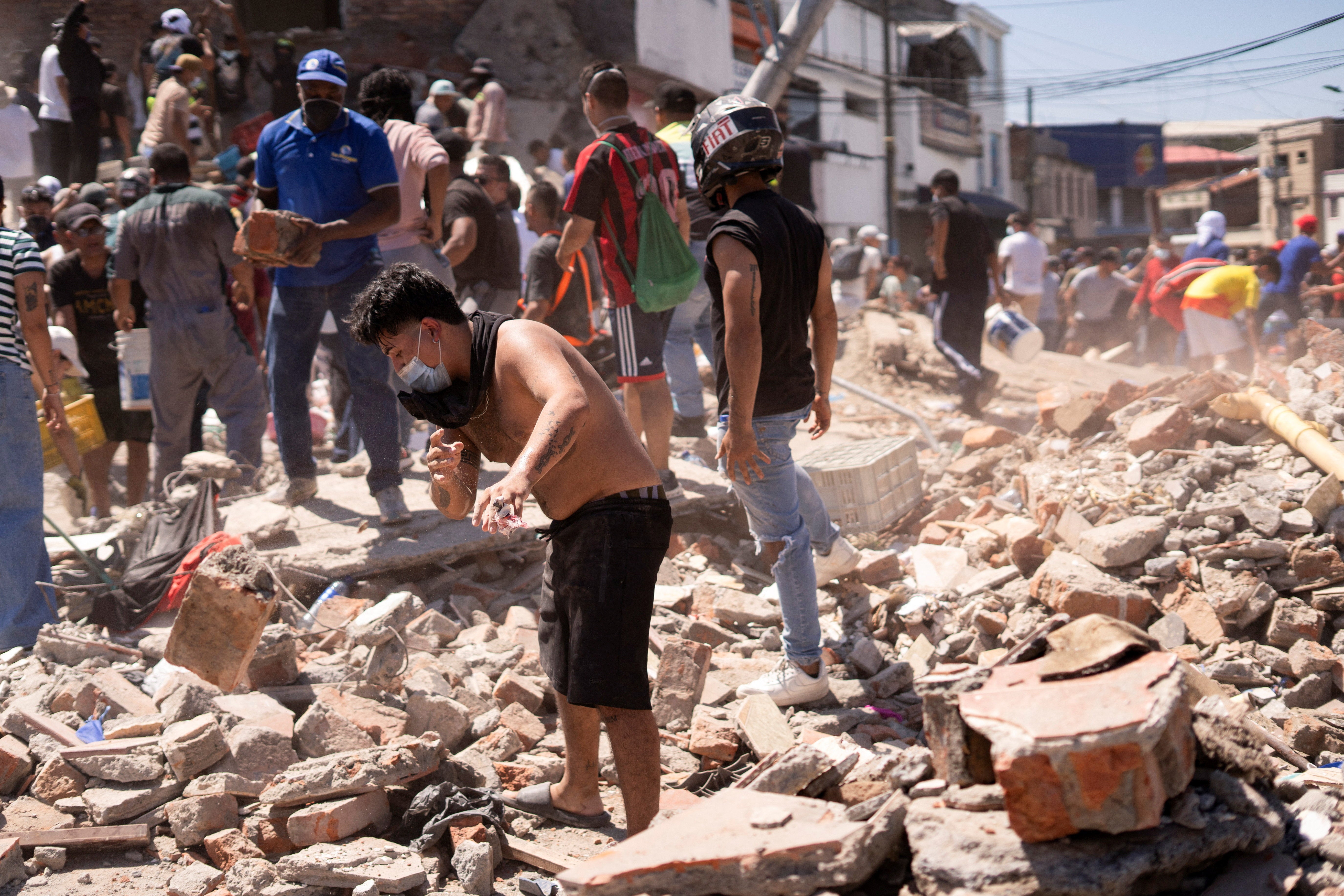
The quake led to devastation in many cities and communities in western Colombia. These cities include Pereira, Cali, and Quibdó. Manizales also experienced the collapse of the tower of a neo-gothic cathedral. Footages and images captured in affected areas show people evacuating buildings as rescue missions search for trapped individuals within the rubbles.
Pereira became one of the most severely affected areas, where 18 deaths were first reported. This figure was provided by local authorities, while Pereira’s mayor said the situation is “critical.” Casualties kept growing during assessment of damage in various regions by emergency organizations. This change demonstrates how hard it is to assess a true scale of a disaster after a big earthquake, especially when some buildings collapse and communication and transport networks break down.
Also, the earthquake posed serious problems to transport infrastructure. Colombia’s civil aeronautics authority announced that six Colombian western airports got damaged and stopped functioning. These airports belong to Pereira, Manizales, Quibdó, Armenia, Cartago and Buenaventura. Such problems can become an obstacle to quick arrival of emergency forces, medicine and other necessary materials to the affected areas.
Rescue Operations and Government Response Underway
After the earthquake, rescue forces and emergency services entered the area to look for survivors and help those who had injuries. People were reportedly trapped under debris since buildings had collapsed; search-and-rescue was therefore among the first priorities of the government. People had also evacuated because their houses were deemed at risk of collapse by officials.
President of Colombia, recently inaugurated President Abelardo de la Espriella, stated that he was in charge of the government response to the situation. In addition, he confirmed that the government will set up a coordinated command center that will organize assistance to the communities in Chocó, the Coffee Region and elsewhere affected by the disaster. In his speech, the president made a point that the government has representatives present in the area and dealing with the crisis.
This disaster is adding concerns about readiness for emergencies and infrastructure strength in Colombia. While it is not uncommon for central and western regions of the country to experience earthquakes, it is less common for them to reach magnitudes above 6. Earthquake of magnitude 7.4 is therefore rather unusual.
These latest updates also highlight the rapid changes that occur after a big earthquake. Casualties are often underestimated as rescue services manage to enter the disaster zone and hospitals register the injured. In this context, the data on casualties in Colombia can be subjected to change since the work of rescue organizations continues.
There is more than the loss of lives and property involved in a big earthquake. Disrupted transport facilities, buildings and airports disrupt the everyday life and operation of hospitals, businesses and other vital services. There can be uncertainty regarding family members who have gone missing or whose homes are still habitable. The consequences of a big earthquake can be felt for a long time afterward.
Now, the people in affected areas should focus on saving as many lives as possible and providing help for the injured. Rescue workers have to work with caution not to cause any additional casualties. Damage assessment should be carried out.
Final Thoughts
The earthquake in Colombia with an intensity of 7.4 serves as a reminder to us about the deadly effects of earthquakes as well as the importance of being prepared. With the rescue operation already underway, the immediate priority at hand is the rescuing of those alive along with the destruction brought about by the tragedy.
For all the latest and breaking news, including international, national, political, business, tech, entertainment, sports, and important world news updates, keep yourself updated. Follow us to stay updated with all the important news stories.