
Posted on September 23, 2026
However, there are other signals which show that US-China Relations are entering another crucial phase since both countries are preparing to have another high-level encounter with each other. For much of their history, the US was an integral part of the global order, whereas China was gradually developing its economic, technological and diplomatic prowess. There have been some major changes in the equation by 2026.
In an opinion article featured on NDTV, the conventional approach towards China appears to be challenged by the rising power of China in the international arena. All this is happening before another round of discussion between Trump and Xi. It raises another question: how will the world’s largest powers manage to compete with each other when no side can dictate the rules?
How China Has Strengthened Its Global Position
China’s ascendancy has been one of the most important events in the contemporary international system. The economic development, manufacturing capability, technology progress and international cooperation have provided Beijing with additional capabilities of influencing global processes.
For a long time, the US tried to maintain equilibrium between competition and cooperation. Interdependence in the economic sphere made it impossible to completely isolate the two countries economically, but at the same time, the strategic differences kept increasing. Nowadays, both sides have good reasons to defend their interests without an uncontrolled escalation.
The change in the nature of the relations can be associated with the process of shifting the international system towards a multipolar one. Countries become engaged with several great powers instead of being tied solely to one geopolitical pole.
This complicates the situation for the US, because China has become not just a state whose actions were supposed to be influenced by Washington. It became an independent strategic actor with its own agenda.
Trade, Technology and Supply Chains Are Central to the Competition
Economic relations continue to be central in the US-China Relations. Trade sanctions, technology controls, supply chain security and strategic materials are some of the issues which have become critical in the competition.
One good example of such challenges is rare-earth minerals. The two countries play crucial roles in the world’s rare-earth minerals supply chain. China is leading in this industry, but there are continuous attempts on part of the US to diversify their sources apart from China. Rare-earth minerals are useful in different sectors like electronics, renewable energy, manufacturing and defense.
Technology is yet another field where the two nations continue their rivalry. Emerging technologies like artificial intelligence and semiconductors have increasingly become part of economic power and security issues. From recent reports on the Trump and Xi summit talks, it can be expected that trade, AI, rare-earth minerals and other strategic issues will continue being central topics of discussion.
The implication here is that future talks between the US and China will not only center on trade issues but technology and industrial capabilities as well.
The Trump-Xi Meeting and the Search for Stability
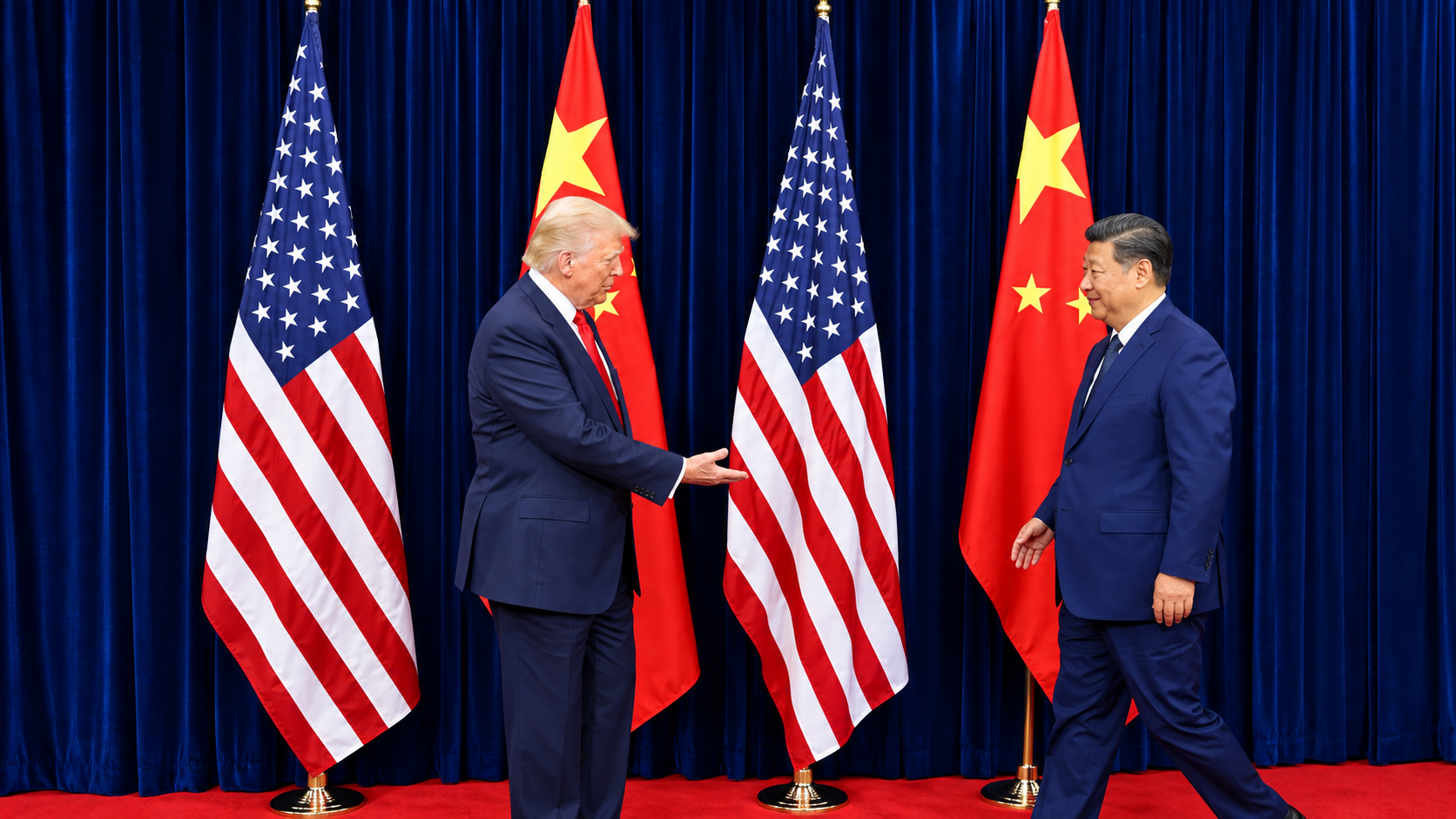
The forthcoming encounter between the US President Donald Trump and Chinese President Xi Jinping only serves to further complicate the evolving dynamics of the relationship. As per current reports, there are factors on both sides which will allow continued dialogue despite continued differences regarding issues related to trade, technology, and geopolitics.
The goal does not have to be solving every conflict. Instead, continued dialogue can serve the purpose of ensuring that competition does not turn into confrontation.
For the US, negotiations with China involve a delicate balance of domestic and international considerations. The same applies to China as well.
Thus, we have a relationship which is marked by both competition and interdependence.
Why the World Is Moving Beyond a Simple US-China Rivalry
It will be very hard to comprehend today’s global order from just the conventional view of the US-China relationship. There are now other major states and regional bodies as well as rising economies who have influence in international relations.
China’s growing connections with nations in other parts of Asia, Africa, the Middle East and other areas are part of that process, even as the United States keeps its wide-ranging economic, military and diplomatic connections with nations throughout the world.
This has resulted in an international system where nations can collaborate with the US on some issues while at the same time enjoying robust economic and diplomatic links with China on others.
What the Changing Balance Means for Global Markets
Consequences of the US-China relationship extend far beyond that of diplomatic relations. Companies keep a keen eye on any news regarding trade tariffs, tech limits, rare earth resources and manufacturing because such developments could affect the global supply chain.
Companies may look into diversifying their businesses due to the risks of geopolitical disturbances. This will likely result in investments in other manufacturing hubs, mining supply chains and tech ecosystems.
For consumers, such developments will impact the availability of products, manufacturing costs and prices. And for governments, such trends pose questions of industrial policy and economic resilience.
What Comes Next for US-China Relations?
US-China relations are set to be characterized by competition and selected cooperation in the future. The two countries cannot afford to ignore each other, given that they have stakes that are too significant.
The issue is no longer about who wields more influence but about how the two governments leverage their strengths and deal with disagreements.
The emerging dynamics reveal just how fast the international power structure may shift in favor of a resurgent China and a persistent American presence internationally, among others.
Conclusion
US-China relations are entering an era where the classic understanding of diplomatic equilibrium is likely insufficient in explaining the power equation. The increasing power of China has transformed the dynamics of competition even as the US tries to find new ways of safeguarding its economic and strategic interests.
The Trump-Xi meeting is important not only in terms of these two countries but also for international business, technology, logistics and diplomacy. Whatever comes after will be determined by the ability of both parties to deal with their competition without letting any disputes compromise the greater global security.
Keep yourself abreast of the latest happenings in international politics, diplomacy, business, and geopolitics through our latest news updates.