
Posted on November 9, 2026
Delhi Air Pollution has become a serious concern after the city witnessed a sharp decline in air quality following the Diwali celebrations on November 8, 2026. Although authorities had enforced Stage III restrictions under the Graded Response Action Plan (GRAP), pollution levels continued to rise, creating fresh concerns about public health and environmental safety.
As per the latest air pollution levels monitored by the authorities, the AQI for Delhi was recorded at 483 at 8:10 in the morning on November 9. Around 15 different AQI measuring points showed AQI values of above 400. Some areas in which high pollution level was recorded include Vivek Vihar, Burari Crossing, Jahangirpuri, Rohini and Bawana.
The rising Delhi Air Pollution levels highlight the challenges of controlling harmful emissions during the post-Diwali period, particularly when existing pollution sources combine with unfavourable weather conditions.
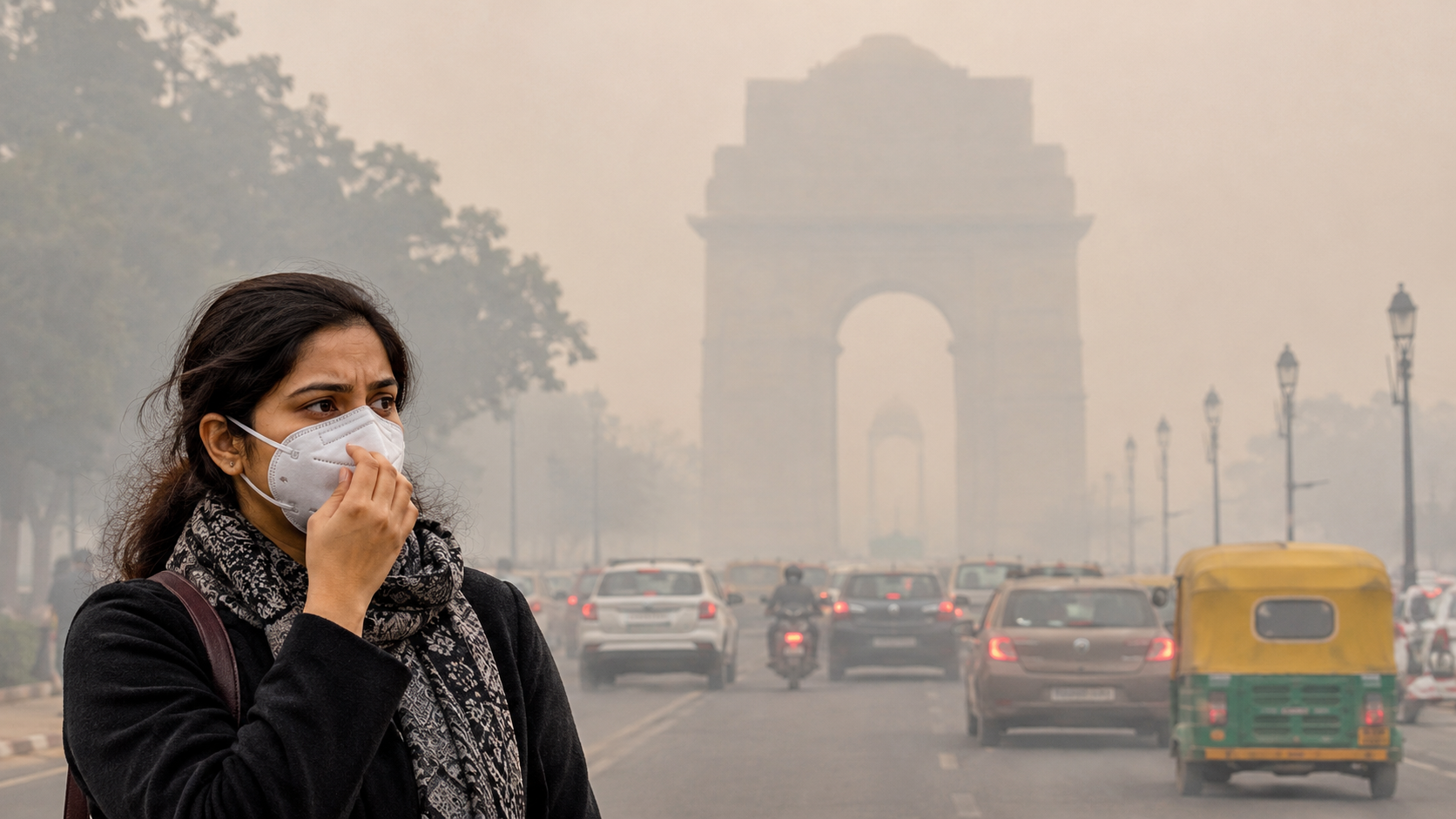
The smog layer had not only increased the pollution level but had also reduced visibility from road and residential areas. Even some landmarks were hardly visible due to the smog level.
It has been shown that this rapid deterioration of air quality can happen rapidly due to the interaction between the emission from festivals and existing pollutants.
Why Delhi’s Air Quality Deteriorated After Diwali
Firecracker emissions continue to be a critical issue after Diwali celebrations. While certain restrictions have been placed on fireworks and their pollution levels, celebrations in some regions added more smoke and dangerous particles to the environment.
Fireworks cause pollution in the form of fine particulate matter including PM2.5 and PM10. The most hazardous among them is PM2.5 since it causes harm by entering the lungs and even the blood system.
However, firecrackers are not the only reason for pollution problems in the region. The city has its own sources of pollution in the form of car emissions, construction activities, and industrial emissions. Smoke from agricultural residues burned in neighboring regions can cause pollution, too.
The weather makes the matter even worse during winter. The cold climate, low wind speed, and stagnation of the atmosphere do not allow pollutants to spread properly; rather, pollutants remain in the vicinity of the earth’s surface and form a blanket of smog.
A temperature inversion may cause the problem to become worse as well. When there is a temperature inversion, a warm layer of air above blocks the cooler air and pollutants below from going upwards, thus causing pollution problems with normal amounts of emissions as well.
The recent deterioration clearly shows that short-term measures cannot help solve the environmental issues of Delhi. Pollution needs to be controlled through the whole year instead of the winter period only.
GRAP III Restrictions and the Growing Health Concerns
The CAQM invoked GRAP Stage III before Diwali in the NCR region owing to the deteriorating air quality forecast predictions. This was done after evaluation with respect to weather and air quality forecasts.
As per GRAP Stage III, some restrictions have been imposed to curb emissions and curtail some activities which lead to pollution. Some of the restrictions which are imposed include prohibition of non-essential construction and demolition activity, restricting some vehicles from operating and also hybrid mode for classes 1 to 5 students.
All these restrictions will help in lowering dust pollution, vehicle pollution, etc. The pollution levels rising in the post-Diwali period reveal how difficult it is to control multiple sources of pollution.
The health consequences of all this can be very severe for humans. Long term exposure to such poor air quality can increase the chances of getting respiratory issues, can make one suffer from asthma and also affect those suffering from heart diseases and lung diseases.
When the AQI falls into the “severe” range, even healthy people can face breathing problems and other health symptoms. For those who live in heavily polluted areas, extra care is needed.
Residents can minimize outdoor activities, especially if there is thick smog. They can wear an N95 mask, close their windows when there is excessive pollution, avoid any strenuous physical activities outdoors and seek medical advice if they have breathing problems.
The problem of pollution should not be solved only through governmental restrictions; residents, businesses, industries, and transport operators should all do something to make the air clean. Using public transport, avoiding unnecessary trips by car, preventing dust at construction sites and limiting the use of firecrackers are just some ways to achieve that.
The latest case of air pollution in Delhi is just another reminder that the problem of pollution should be managed much better in the future. Better transportation system, environmentally-friendly industrial process, good waste management, better monitoring and cooperation with the neighboring states will all be needed.
Final Thoughts
Delhi Air Pollution after Diwali is not just a seasonal environmental concern but a long-term challenge that requires consistent attention. The increase in AQI despite GRAP Stage III restrictions highlights the importance of addressing pollution sources and improving air quality management.
Take action and contribute to making Delhi breathers: choose environmentally friendly decisions now.