
Posted on February 12, 2026
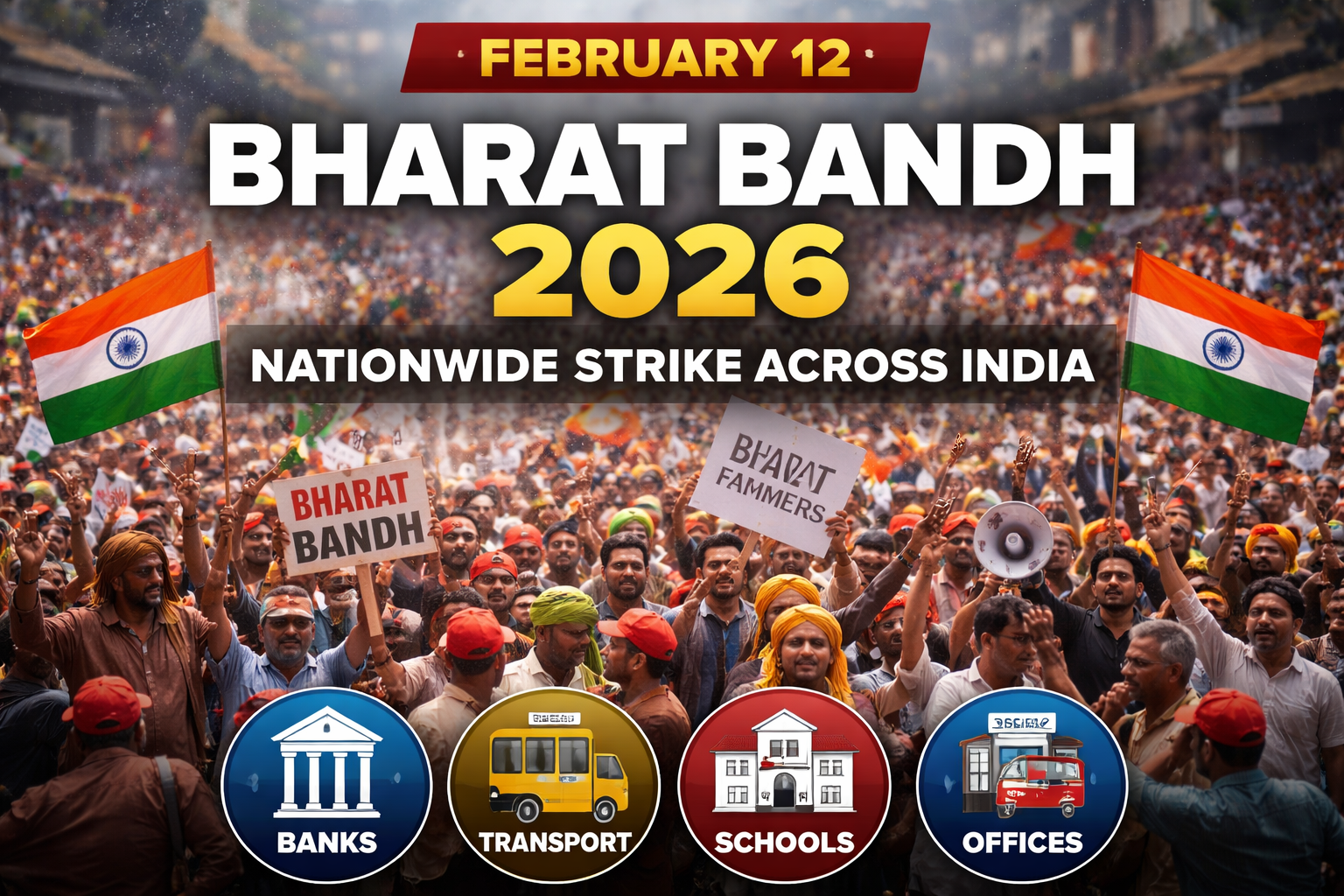
That is to say, today i.e., on Thursday, February 12, 2026, India witnessed a huge countrywide Bharat Bandh or a general strike in the form of a protest on the roads by the millions of workers and farmers across the nation due to the policies of the government. The strike is initiated by more than 10 central trade unions across the country, along with the support of all the farmer organizations and labor workers of the informal sector.
Why the Bharat Bandh Was Called
The nationwide shutdown seems to have been largely fueled by movements against recent government measures, such as the introduction of labor codes, changes to agricultural-related government initiatives, and proposed changes to the national economy. Currently, the labor unions have initiated the shutdown, citing multiple issues with the labor codes, which they claim have less stringent rules for laying off employees and have undermined social security measures for millions of people. Farmer organizations have begun to raise alarms as well regarding potential changes to their way of life.
The leaders of the trade union movement stated that they expected over 30 crores workers to join the strike across over 600 districts, making this one of the largest labor movements in the recent past. Protests and marches were taking place across the state and countryside from early morning.
Impact on Daily Life and Public Services
The impact of the Bharat Bandh has been state-wise as some sectors have been affected vastly:
Banks and Financial Services:
There were reports that some bank employee unions, including those from large public sector banks, were part of the strike. Even though these banks, like the State Bank of India, were open, there were reports of slow bank transactions, lesser staff, and delayed services, including cheque transactions. While there were reports of online services functioning as usual, there were reports of lesser activity from bank branches themselves.
Transport Services:
Public transportation also suffered a huge blow. In Kerala and Punjab, reports were seen of buses and state transport vehicles being off the roads as drivers and staff had joined hands to support the bandh. Road blockades and rallies also resulted in traffic jams across various cities. Though train and flight services were available, it was recommended that passengers plan to leave early, as schedules were liable for delays. Metro routes were available in metropolitan cities, but last-mile connectivity was affected.
Schools and Colleges:
The impact of the strike was also felt in education institutions, where a fluctuating response was noticed. So, in states such as Kerala, Karnataka, and Odisha, schools were closed, or student attendance was low due to the support for the strike by local formations of unions.
Markets and Local Businesses:
Similarly, some small markets and shops in places with high bandh support were closed, while others decided either to open or not, depending on location. Some places in Rajasthan, like Ajmer and Kota, had several business centers open.
Government Offices:
In these protests, a large number of employees participated, due to which attendance in various administrative offices remained thin. In Kerala, it was announced that it would be a “dies non” or “no work day,” which means that if employees were absent due to the bandh, they would be doing so on a “loss of pay” basis unless there were compelling circumstances.
While the strike paralyzed most parts of the city all through the day, all emergency services like hospitals, ambulances, medical stores, and utilities functioned normally to ensure that public safety and essential support did not come apart.
Political and Social Reactions
The strike has elicited sharp reactions across the political spectrum. The opposition leaders pledged solidarity to workers and farmers, while demanding the government rollback policies and listens to the vox populi. Their opponents in power branded the bandh as a political strike, stating, “Reforms were necessary for accelerating economic growth, jobs creation, and gains to workers’ rights in the long term.”
In Punjab, for instance, the bandh received support from the Aam Aadmi Party, illustrating the participation of regional political parties in the farmers’ protest. Farmers’ organisations claimed that this showed participation driven by rural apprehensions on trade treaties and long-term sustainability of agriculture.
What to Come
With the Bharat Bandh winding down in the evening, many analysts described the strike as an important barometer of worker and farmer sentiment across the country. The scope of involvement, however, is what is pressuring both the policymaking circles and dissenting parties to more actively involve themselves, especially, of course, within the coming months.
The strike will redefine discussions surrounding labor regulations, agricultural policies, and the interplay between economic reforms and social checks at least within the next two years, i.e., until 2026.
Continue to this space for live updates on Bharat Bandh as the impact of this phenomenon is felt.