
Posted on April 28, 2026
In a major administrative overhaul, the Union Territory of Ladakh has been expanded from two districts to seven, following the approval of five new districts by Lieutenant Governor Vinai Kumar Saxena. The decision marks a significant milestone in the region’s governance and is expected to transform service delivery in one of India’s most remote and geographically challenging territories.
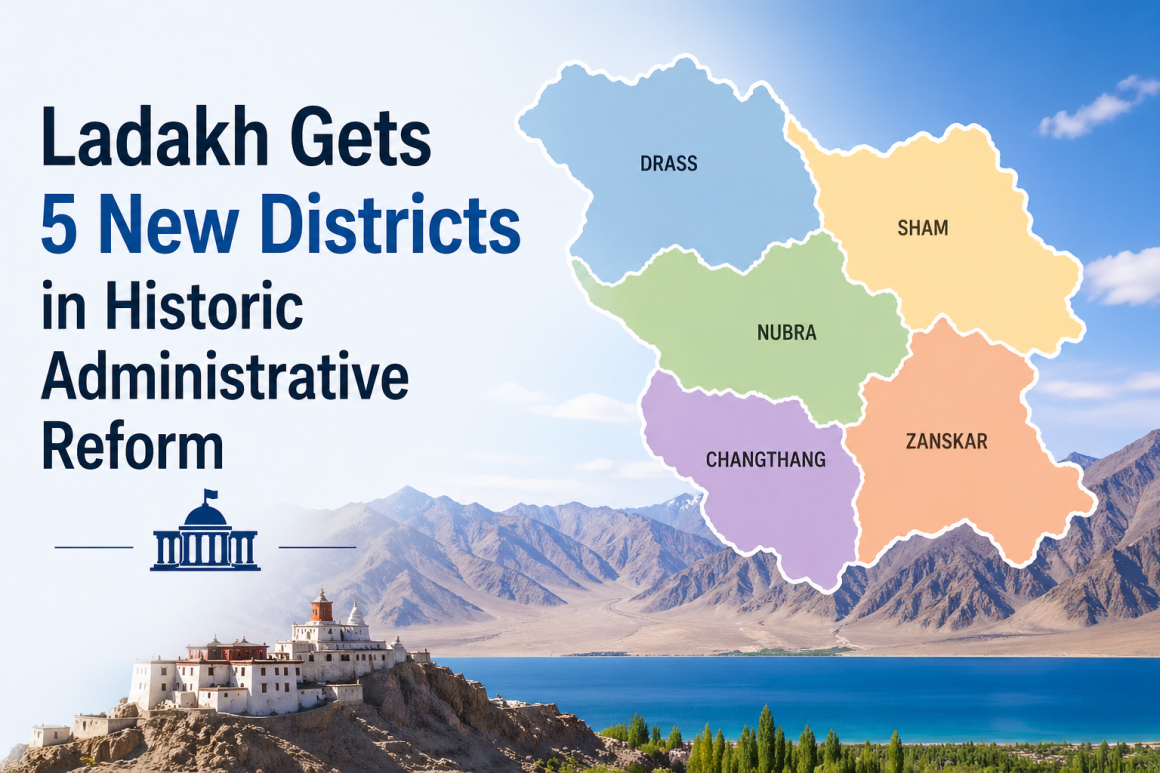
The five newly created districts Nubra, Sham, Changthang, Zanskar, and Drass have been carved out of the existing Leh and Kargil districts. With this move, Ladakh’s administrative structure has been fundamentally reshaped, fulfilling a long-pending demand of residents who have long struggled with accessibility to government services.
From Two to Seven Districts: A Structural Shift
Until now, Ladakh had only two districts Leh and Kargil spread across vast mountainous terrain. The sheer size and harsh geography of the region often made governance difficult, especially in remote areas cut off during winters.
With the addition of five new districts, the administration aims to decentralize governance and bring decision-making closer to the people. Officials have described the move as a “historic” step aligned with the vision of building a more developed and inclusive Ladakh.
The decision had earlier received approval from the Ministry of Home Affairs in 2024, indicating that it is part of a broader long-term strategy for administrative reform in the Union Territory.
Addressing Long-Standing Public Demands
For decades, residents in regions like Zanskar, Nubra, and Changthang have demanded district status due to the challenges posed by distance and terrain. In many cases, citizens were required to travel for days to reach district headquarters for basic administrative tasks.
The creation of new districts is expected to significantly reduce these hardships. Government offices, including those related to revenue, policing, healthcare, and welfare schemes, will now be established closer to local populations.
According to officials, this will lead to faster processing of documents, improved access to essential services, and better implementation of government schemes in remote Himalayan villages.
Boosting Grassroots Governance
A key objective behind the move is to strengthen grassroots governance by decentralizing administrative powers. With more districts, local authorities will have greater autonomy and flexibility in addressing region-specific challenges.
Each new district will have its own administrative setup, including Deputy Commissioners and district-level offices. This is expected to enhance coordination between government agencies and local communities.
Experts believe that such decentralization is particularly important in Ladakh, where weather conditions and terrain often hinder centralized governance. During winter months, several areas remain cut off due to heavy snowfall, making local administration essential.
Economic Growth and Employment Opportunities
Beyond governance, the creation of new districts is expected to stimulate economic growth and generate employment opportunities. The establishment of district headquarters will require new infrastructure, including administrative buildings, roads, and communication networks.
Authorities have already initiated plans for developing district headquarters in key locations such as Diskit (Nubra), Nyoma (Changthang), Padum (Zanskar), Khaltsi (Sham), and Drass.
This infrastructure push is likely to create jobs in construction, administration, and allied sectors. Additionally, improved governance may attract investment in sectors like tourism, renewable energy, and local handicrafts.
Officials have also indicated that the move will open “new avenues for growth, employment and entrepreneurship” in the region.
Strategic Timing and Political Context
The announcement comes just ahead of a scheduled visit by Union Home Minister Amit Shah to Ladakh, suggesting a broader political and developmental context behind the decision.
Observers see the move as part of the Centre’s efforts to address local concerns and strengthen administrative outreach in the region. It also follows ongoing dialogue between Ladakh’s civil society groups and the central government over issues of governance and representation.
Since becoming a Union Territory in 2019 after the reorganization of Jammu and Kashmir, Ladakh has undergone several administrative and policy changes aimed at improving governance and accelerating development.
Significance of the New Districts
Each of the newly created districts holds unique geographical and strategic importance:
- Nubra: A high-altitude valley near the Siachen Glacier, known for its strategic location and tourism potential.
- Changthang: A vast plateau region near the China border, home to nomadic communities and important ecological zones.
- Zanskar: A remote region long cut off during winters, with strong cultural identity and tourism potential.
- Sham: Often called the “Apricot Valley,” known for agriculture and scenic landscapes.
- Drass: One of the coldest inhabited places in the world, strategically located near the Line of Control.
By granting district status to these regions, the government aims to ensure more targeted and inclusive development tailored to local needs.
Infrastructure and Administrative Preparedness
To support the new districts, the administration has already begun groundwork, including land identification, infrastructure planning, and recruitment drives. Reports indicate that hundreds of gazetted and non-gazetted posts are being created to staff the new administrative units.
This indicates that the restructuring is not merely symbolic but backed by concrete plans for implementation.
A New Chapter for Ladakh
The creation of five new districts marks a turning point in Ladakh’s administrative journey. For residents of remote villages, the move promises tangible benefits shorter travel distances, faster access to services, and improved government responsiveness.
It also reflects a broader shift toward decentralized governance in India, particularly in regions with challenging geography and diverse local needs.
If implemented effectively, this decision could significantly improve quality of life in Ladakh and set a precedent for similar administrative reforms in other remote regions.
As Ladakh transitions from two to seven districts, the success of this initiative will depend on timely infrastructure development, efficient staffing, and sustained policy support. However, the intent is clear: to bring governance closer to the people and unlock the region’s full developmental potential.