
Posted on May 5, 2026
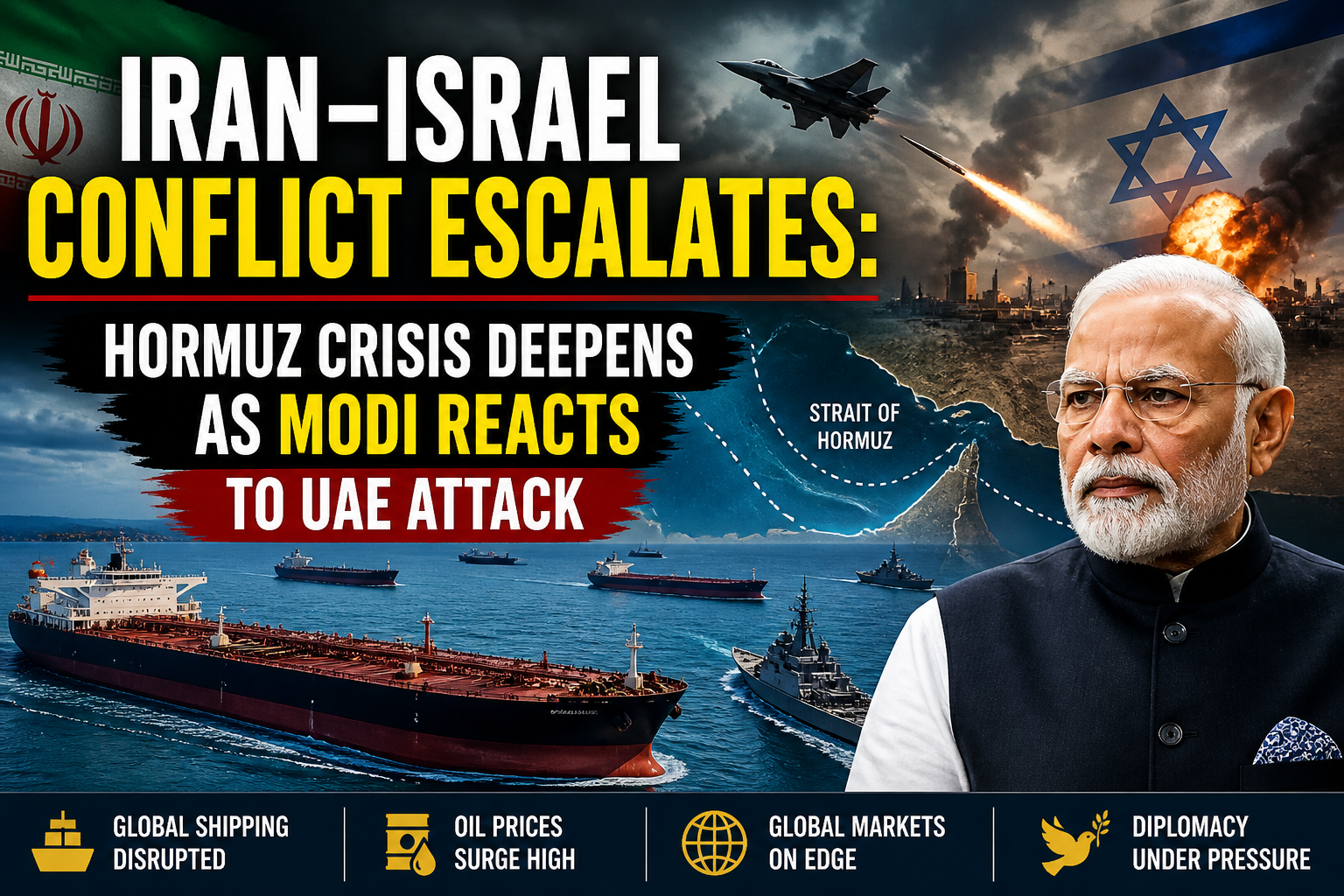
The current cease-fire agreement amid the Iran-Israel conflict is under pressure due to heightened tensions in the strategically important Strait of Hormuz. Although a temporary ceasefire agreement had been achieved between the parties, it soon became a political struggle involving Iran, Israel, the United States, and other nations.
Imminent Collapse of Temporary Ceasefire Agreement
This temporary ceasefire agreement was established in April 2026 due to the efforts made by Pakistan, aiming to control the increasing likelihood of war between the two countries. However, this ceasefire was found to be extremely fragile since one of the main conditions was the reopening of the Strait of Hormuz for international shipping, which has yet to be fulfilled.
Iran still has restrictions in place at the strait, which, according to their officials, is under pressure from the USA due to military intervention and a naval blockade of Iranian oil exports. On the other hand, the USA is claiming that Iran violated the ceasefire with continued attacks on merchant ships and their allies’ infrastructure.
Why the Strait of Hormuz Matters
The Strait of Hormuz is considered one of the key chokepoints in the international waterways network. Prior to the outbreak of hostilities, the strait accounted for almost 25% of all seaborne crude oil exports worldwide and nearly 20% of LNG transport.
Since late February 2026, conditions have considerably worsened. Due to Iran’s aggressive policies, which include laying mines in portions of the strait, the capture of passing ships, and intimidation of shipping operations, the number of tankers has dropped dramatically, compelling many vessels to wait outside the strait.
This has led to an international crisis, which has very serious implications economically for global business and energy markets.
Increasing Military Tensions
There have been several reports in recent times about increased military tensions. As per reports, the Iranians have launched attacks through drones and missiles against ships and other infrastructure assets in the Gulf region. The United States’ forces have targeted Iranian boats and ramped up naval activities to protect the passage of ships through the strait.
The deployment of warships by the United States to protect commercial ships under its “Project Freedom” project has only added to the tension. It must be noted that Iran has issued statements stating that any presence of foreign military forces will be considered a provocation.
Prime Minister Narendra Modi strongly condemned the recent attacks on the United Arab Emirates that injured three Indian nationals, calling the targeting of civilians and infrastructure “unacceptable.” According to reports, the incident occurred in Fujairah amid escalating tensions linked to the Iran conflict, prompting India to express solidarity with the UAE and call for an immediate halt to hostilities. He also emphasized the importance of ensuring safe navigation through the Strait of Hormuz for regional stability and global energy security.
Iran’s Strategic Position
- It has become clear that Iran has considered it an advantage to control the Strait of Hormuz.
- In its attempt to limit access to the strait, Iran is seeking to force the US and other countries to lift economic and naval embargoes imposed on it.
- The Iranian authorities have even talked about imposing a toll or coordinating ship passage through the strait, thus claiming superiority over the strait.
However, Iranian authorities have also said that this would not be all, implying that they might go further in their retaliation.
Global Economic Shockwaves
The effects of the situation are already seen in world markets. Prices of oil have gone up to multi-year highs with the price of Brent going above $114 a barrel because of the possibility of disruption in supply for quite some time.
Countries relying heavily on energy resources will face difficulties including inflationary pressure and shortages. The International Monetary Fund has even issued a warning regarding the possibility of more negative consequences on the economy due to instability in the region.
Some shipping firms have even stopped their activities or changed their routes, which has resulted in rising costs and delays in the movement of goods from one place to another.
Diplomatic Efforts Struggling
Though there have been several rounds of talks, no significant progress has been made diplomatically. A peace plan has been put forward by Iran, which includes many clauses, but the US seems hesitant about it, particularly about the threat that exists because of Iran’s nuclear weapon program and its role in the region.
Efforts have been made by Pakistan to become the mediator in this situation, but the attempts seem unfruitful, and accusations of violating the ceasefire agreement keep coming from both sides.
The problem of trust becomes an important aspect here, where one side feels that the other is aggressive because of their activities or refusal to allow the ships to pass through.
Risk of a Wider Conflict
This scenario poses many dangers. An increase in tension in the Strait of Hormuz might attract other countries, both from the Gulf region and internationally, thus expanding the regional conflict into an international crisis.
Israel’s role in other conflicts, especially those in Lebanon, makes the situation even more complex. Continuous fighting and military campaigns in other areas become another factor contributing to the unstable situation.
It is predicted that if diplomatic efforts are not made soon, there will be no ceasefire, and a full-scale war will commence again.
Conclusion
The Iran-Israel war ceasefire hangs by a thread, as the Strait of Hormuz becomes the focal point. The regional skirmish between Iran and Israel has quickly escalated to become an international affair.
In view of the mounting hostilities and the failure of diplomacy, the whole world watches, knowing that the outcome will have consequences that extend far beyond the Middle East.
Stay updated yourself on all kinds of new and existing conflicts around the globe!