
Posted on September 4, 2026
One of the most important festivals in India is Janmashtami, which is observed in remembrance of the birth of Lord Krishna. This religious figure was wise, naughty, and taught people about righteousness. People celebrate this event not only because of their devotion but also as a reason for family meetings when people pray, sing songs, fast, eat special dishes, and have fun.
According to Indian tradition, Lord Krishna was born on the eighth day of the dark fortnight of the month of Bhadrapada. The religious figure was born in the town of Mathura to his mother, Devaki, and father, Vasudeva, who were jailed at that time by King Kansa. This birth symbolized victory of good over evil, and devotees still believe that the life and teaching of Krishna serve as an inspiration for people to live by truth, duty, mercy, and righteousness.
Celebration of Janmashtami
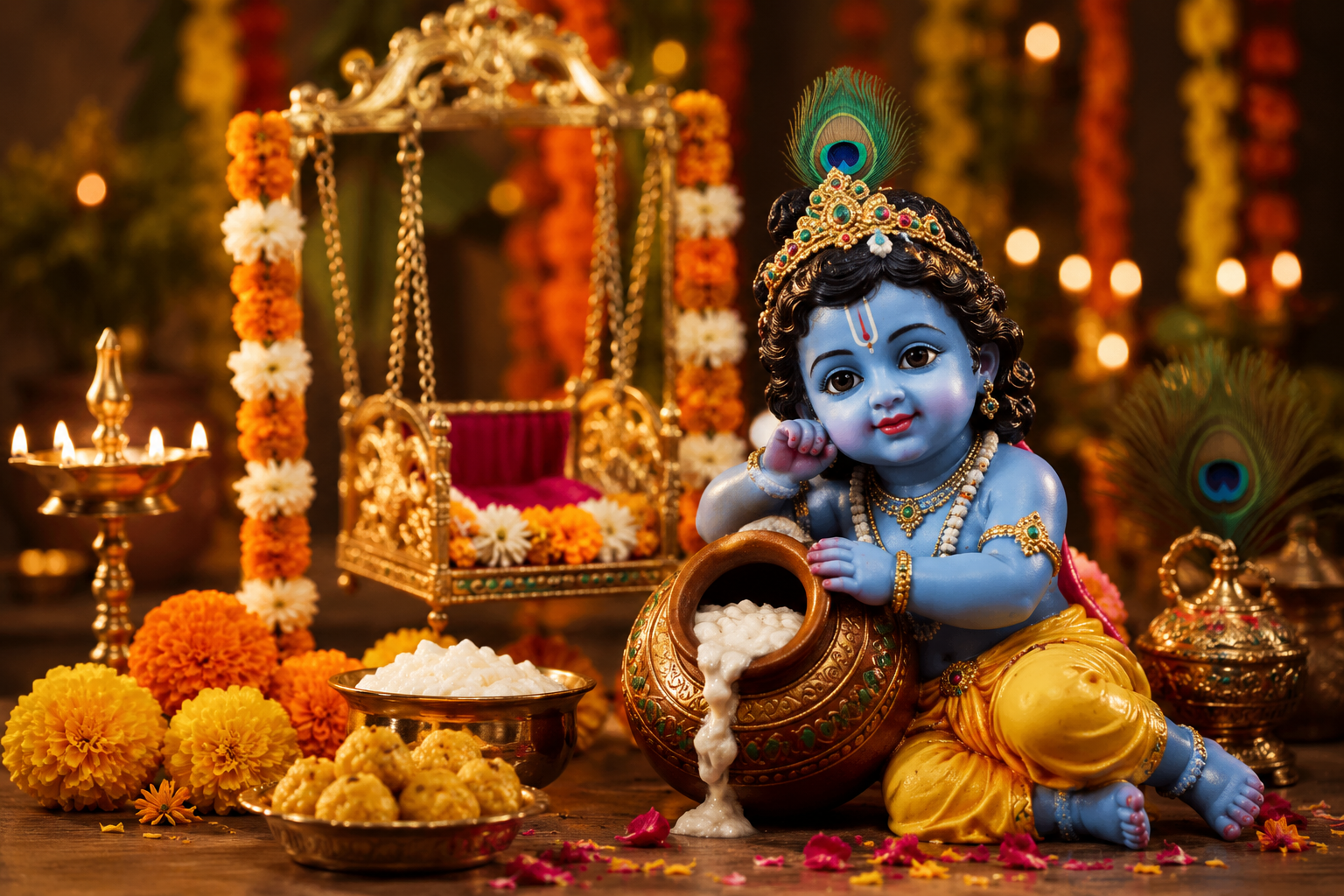
The celebrations of Janmashtami usually begin when people fast throughout the day. Houses and temples are decorated using flowers, lights, colorful materials, and pictures of baby Krishna. People cook sweets like makhan, mishri, kheer, peda, etc. for offering.
The highlight of the festival occurs at midnight as it is believed to be the time when baby Krishna was born. People visit temples, where they chant bhajans and sing Krishna’s name while doing aarti and praying. The small idol of baby Krishna is kept in beautifully decorated cradles.
Dahi Handi and Childhood Days of Krishna
Among the most vibrant traditions of Janmashtami is Dahi Handi. It is based on legends about how much Krishna loved butter and curd. Teams of people organize human towers in order to break a pot with curd or some other offerings. It symbolizes cooperation, energy, and playfulness connected with the childhood days of Krishna. Dahi Handi celebrations are very common in Maharashtra and other regions of India.
Regional Celebrations of Janmashtami
Different parts of India celebrate Janmashtami in their own special way. Mathura and Vrindavan hold a special place because of their historical connection with Krishna. During the holiday, temples and streets are full of religious songs, performances, Ras Leela, decorations, and lots of devotees. In 2026, special celebrations of Janmashtami will be also held in Mathura, Vrindavan, Dwarka, and other cities of India.
In Bhubaneswar, there is also an ancient temple Ananta Vasudeva that is related to Janmashtami celebrations.
The Meaning of Janmashtami
Besides being a festival, Janmashtami also symbolizes the values of faith, bravery, compassion, and triumph of righteousness over evil. The lessons imparted by Lord Krishna inspire individuals to accomplish their duties with integrity.
Janmashtami is thus not only a religious festival. It is rather a festival of devotion, culture, family, and eternal values.