
Posted on August 7, 2026
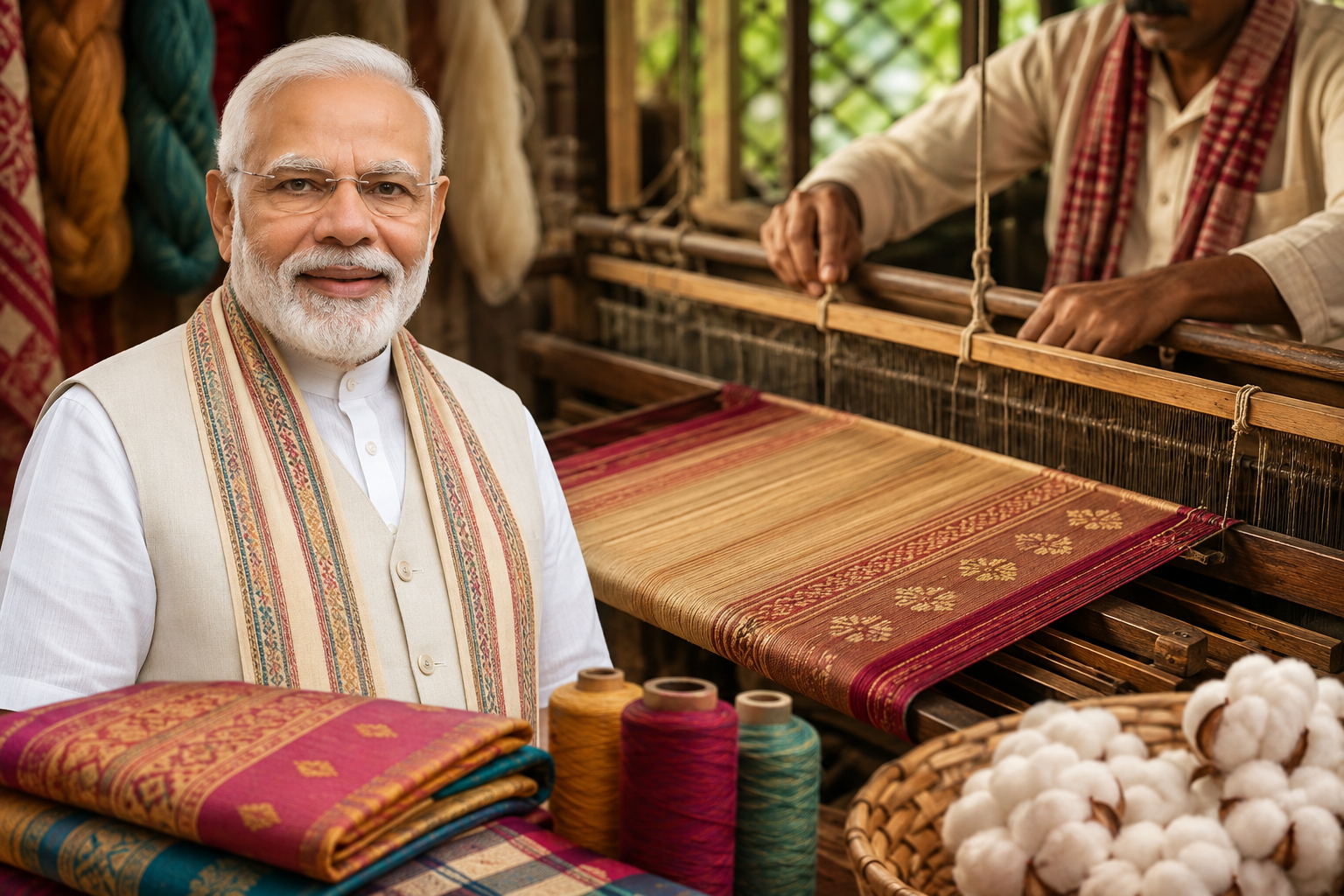
PM Narendra Modi sent wishes to the people of the country on National Handloom Day on August 7, underscoring the handloom tradition in India and honoring the weavers and artisans across generations who have been preserving India’s handloom tradition. Through his message, he brought to focus the need for providing support to India’s weaving community and making their handloom tradition visible.
Every year, National Handloom Day is celebrated on August 7 to mark the Swadeshi Movement that had begun on the same day in 1905. It marks the link between India’s traditional commitment to indigenous goods and the current movement to promote local products.
PM Modi Highlights India’s Handloom Heritage and the Role of Weavers
In his National Handloom Day message, PM Modi has paid homage to the skill, creativity, and dedication of India’s weavers and artisans. He pointed out that the weavers and artisans of India have been nurturing the art of weaving for many years now.
The handloom industry of India encompasses more than just apparel and textile industry. Sarees, shawls, fabrics, home furnishing, and other products made through handlooms are representative of distinct cultures of various regions. It carries the expertise that has often been transferred within families from generation to generation.
The vast size of the industry is also a testament to its importance to the livelihood of villagers. As per the fourth All India Handloom Census, there are approximately 35.22 lakh handloom weavers and allied workers in India. Women constitute more than 72% of the labor force. Moreover, there are 28.20 lakh handlooms in India and nearly 90% of them are based in rural parts of the country.
As a result, promoting handloom products is not just a cultural but also an economic matter. Consumers buying these products will create demand for the crafts and enable these products to sustain the communities engaged in their creation through weaving, dyeing, designing and other processes involved.
National Handloom Day also demonstrates that traditional crafts can remain relevant within the framework of a modern economy. Designers, entrepreneurs and electronic trading places have become more actively engaged in introducing handloom products to new consumers. Easier access to various online websites will enable craft persons to present their products to a wider audience not only within their local communities but also throughout India and even abroad.
The Government’s initiatives in this direction also continue to develop. Programs like the National Handloom Development Programme and Raw Material Supply Scheme aim at promoting handloom production and providing different kinds of assistance. The initiative known as e-Pehchan will also be helpful for handloom workers to get electronic identification and benefit from some government programs.
Citizens Urged to Buy Handloom and Promote It Online
One of the important aspects about PM Modi’s popularity is that he emphasized the need for citizens to participate in the promotion of India’s handloom legacy. Before the occasion of National Handloom Day, he urged the citizens to buy handloom items and post their experience on social media.
In particular, PM Modi advised to make videos of their favourite handloom items, including the popular GRWM format of videos. It is possible to blend traditional Indian fabrics with modern-day social media trends and thus attract younger generation to learn about, wear and market handloom items.
Thus, this initiative adds a modern touch to the campaign. Social media can be a powerful platform for turning the traditional practice of handloom promotion into an interactive one. A photo of a handloom saree, a video of a handwoven dress or a post about the history of a certain fabric can acquaint people with local handicrafts.
It also forms part of a broader strategy of promoting indigenous products by making them a daily choice for the consumer. Consumers should not confine themselves to viewing handloom merely as special occasions’ clothing but integrate handloom items in their normal dressing as well as office wear, festival costumes, and even interior decoration.
For younger generations especially, digital storytelling could be a way of building a link between heritage and their way of life. The use of the craft and regional aspects as well as story telling behind handloom products could lead to greater appreciation of the makers of these products.
National Handloom Day is thus a chance for consumers to think past the product. Every handloom article is a result of time, effort, creativity and manpower. Choosing real handloom articles creates a demand for these qualities and ensures that they continue being developed.
This is a time when consumers are increasingly developing an interest in products with cultural significance, craftsmanship and localized origins. Through merging traditional crafts with contemporary design and digital marketing strategies, the Indian handloom industry has the potential to reach larger markets both domestically and internationally.
Final Thoughts
PM Modi’s speech on National Handloom Day talks about an easy yet effective manner in which Indian citizens can contribute towards supporting India’s weavers appreciating, buying, and promoting handloom products. The importance of the day lies not just in commemorating fabrics, but in acknowledging the artisans who preserve India’s cultural legacy through their expertise.
On the occasion of National Handloom Day in India, increased consumer awareness and online publicity will go a long way in ensuring that the traditional crafts have their rightful place in the contemporary life of Indians. Promoting handlooms will eventually translate to promoting artisans, rural economy, and cultural diversity inherent to Indian textiles.
Celebrate India’s rich handloom legacy by opting for authentic handloom products and supporting the weavers behind them.